World Wise Schools

POSTED ON BEHALF OF MAGGIE MEENEHAN

World Wise Schools is an amazing collection of resources conceived and supported by the Peace Corps to help teachers provide real world cross-cultural understanding and learning through a global education format.  This site integrates global understanding and cultural awareness in core content area’s including: art/music, foreign language, health, language arts, science, social studies, environmental education, geography and even TESOL, for grades K-12.  The Lessons Plans are varied, hands-on, student centered and thought provoking.  A few of the sample topics of the lessons are:  traditional greetings, narrative cartoons, making books on comparing water access, Kenyan sign language, conducting interviews, global food security, educating girls, and What is Wealth?   All of the lessons deal with cross- cultural issues and bridging the communication gap between peoples of the world.  Videos slide shows, stories, folk tales enhance the lessons, and classroom speakers can even be contacted to visit your classroom for free!

World Wise Schools began in 1989, under then Peace Corp Director Paul D.  Coverdell.   In addition to the many, many lesson plans available there are several other programs that would attract the interest of teachers.  One is the Correspondence Match Program, in which a teacher signs up to have a direct relationship with a Peace Corp volunteer in the field, where they commit to exchange e-mails, letters, video’s, and photographs with each other for two years.  Students become part of this exciting exchange of cross-cultural understanding.   The relationship can develop naturally – no timetables or defined expectations, just communication.

There are also ideas for Service Learning Projects, Language Lessons, Podcasts and E-books and an E-Newsletter.    It is truly a wonderful resource for global understanding; students can easily make connections through meaningful contact with Peace Corp Volunteers and with the people and region selected.  Regions include: Africa, Central and Eastern Europe, Asia and the Pacific Islands, and Latin America and the Caribbean.

Clearly, this web site addresses the twin Goals of Community Building and Skill Building in Peace Education.   As we build community throughout this world, we become more aware of the needs, wants and desires of others, AND more aware of how our needs, wants and desires are connected to theirs.  We are brothers and sisters on this wildly, spinning, water planet.  We need each other, we must help each other, and we must learn to live with each other in peace.  This web site gives us the tools to increase our communication skills with others across the globe, building real skills towards peace.

Go to: peacecorps.gov/wws/about

Reframing Thanksgiving

Thanksgiving cartoon

In his much-acclaimed book Lies My Teacher Told Me: Everything Your American History Textbook Got Wrong, James W. Loewen evaluates the misrepresentations and often omitting of historical truths in textbooks, explaining how myths of our history continue to be perpetuated today. The third chapter of his book, “The Truth About the First Thanksgiving,” offers a sobering and at times much more interesting outlook on one of our most celebrated holidays.

The “First Thanksgiving” story many of us have been taught involves Pilgrims coming to America on the Mayflower, landing at Plymouth Rock, and sharing in a bountiful feast with the Indians (most likely involving a giant turkey and an overflowing cornucopia, one of my favorite things to draw in elementary school). I have a distinct memory of dressing up as an Indian, complete with a leather dress and feathers in my braided pigtails, while other classmates wore Pilgrim attire, for our very own reenactment of the First Thanksgiving. Activities like these are fun for young students because they involve playing make-believe, dressing up in costumes, and eating yummy food.

But Loewen would argue that there are a lot of mistruths behind this story. What many of us don’t know, or at least what isn’t being conveyed in most American history textbooks, is that a devastating plague had swept through North and South America before the Pilgrims arrived. Loewen tells us that “for decades, British and French fishermen had fished off the Massachusetts coast…it is likely that these fishermen transmitted some illness to the people they met. The plague that ensued made the Black Death pale by comparison…within three years the plague wiped out between 90 percent and 96 percent of the inhabitants of coastal New England,” (70). The epidemic spread west, not stopping until it reached the Pacific Coast.

When the Pilgrims got to Plymouth, which, as Loewen points out, was likely not their intended destination, they found not “virgin wilderness,” as is it often characterized, but entire established, settled villages decimated and abandoned, the ground littered with corpses because no one was left to bury them. The Pilgrims faced no threat from the Indians when they arrived: “Massasoit, the Wampanoag leader, was eager to ally with the Pilgrims because the plague had so weakened his villages” (72). Loewen goes on to point out that Pilgrims stole food and crops from what few Indians remained alive, some even robbing their graves.

There is also the story of Squanto, who some of us may remember as being the Indian that knew how to speak English and taught the Pilgrims how to plant things. But what many textbooks leave out is how Squanto learned the English language, and the near-mythical journey and toil that he endured under the hands of British and Spanish slave traders. After being captured by a British captain and taken back to England, Squanto served 9 years as an employed slave, then returned back to Massachusetts, only to be seized again by another British slave raider and sold into slavery in Spain. Squanto then escaped from slavery and Spain and returned to Massachusetts by way of England and Newfoundland. When he finally arrived, he found his home village Patuxet – aka Plymouth – in ruins. He had no other choice than to comply with the Pilgrims, and “as translator, ambassador, and technical advisor, Squanto was essential to the survival of Plymouth in its first two years” (84).

Loewen shares other fascinating information about this time, including cannibalism in the early Virginia colony, and concludes this about our celebration of Thanksgiving:

“The civil ritual we practice marginalizes Indians. Our archetypal image of the first Thanksgiving portrays…the Pilgrims in their starched Sunday best next to their almost naked Indian guests…The notion that ‘we’ advanced peoples provided for the Indians, exactly the converse of the truth, is not benign. It reemerges time and again in our history to complicate race relations. For example, we are told that white plantation owners furnished food and medical care for their slaves, yet every shred of food, shelter, and clothing on the plantations was raised, built, woven, or paid for by black labor. Today Americans believe as part of our political understanding of the world that we are the most generous nation on earth in terms of foreign aid, overlooking the fact that the net dollar flow from almost every Third World nations runs toward the United States.” (86)

So even though Thanksgiving is a great time to enjoy being with family and loved ones and practice gratitude for the gifts we have been given, it’s important to know the real history behind this holiday. By being cognizant of these historical truths, we are recognizing the marginalization of Native Americans in our history, reframing history and changing the perspective of one of our country’s most significant events. Awareness of these truths, whether in a classroom setting or maybe even integrated into your own observance of Thanksgiving, can also help foster community building. By acknowledging marginalized groups and gaining a better understanding of our collective experience, we are taking ownership of our learning and creating new ties that unite us as a community of learners and Americans.

Loewen, James W. Lies My Teacher Told Me: Everything Your American History Textbook Got Wrong. New York: New Press, 1995.

  • Read an excerpt from “The Truth About the First Thanksgiving” on google books
  • Find the entire book on Amazon

Gopher Peace and the Peace Rangers

Last year I took a wonderful Peace Education course led by a fabulous educator and advocate for nonviolence. At the end of the semester she gave each of the class participants a gift of a peace education resource that can be used with elementary and middle-school aged children. Published by Peace Education International, the Gopher Peace workbook series provide students with a wealth of wonderful, interactive games and activities all aimed at promoting peaceful thinking and behavior. The workbooks include self-esteem building activities, word and math problems that once solved reveal important messages about how to treat others, exercises that reveal our own prejudices, games that help us identify violent behavior, crossword puzzles that help us identify “feeling” words, and picture games that help us become familiar with body language messages. In addition to activity books for students, Gopher Peace and the Peace Rangers also has a resource book for teachers which includes lesson plans that help students promote peace within their classroom. The lesson plans help teachers learn how to create a safe classroom container, and then provide a wide variety of activity ideas. Lessons include learning about how families show and receive love, what qualities make someone a friend, how to identify bullying behaviors, how to identify feeling words and the ways that our bodies communicate information, and how to communicate anger without using violence. As the lesson plans progress, they venture into more complex understandings of peace and conflict resolution tools such as the classroom “Peace Table” where children bring themselves when a conflict arises between peers. The teacher and students become familiar with and tolerant of other cultures, explore personal meanings of peace and war, and study influential peacemakers such as Nelson Mandela, Desmond Tutu, and Carl Sagan. Gopher Peace also has a variety of story books that depict individuals confronting bullies and negative behavior, and learning how to deal with such situations.

The Gopher Peace resources would be most effectively used in elementary and middle-school classrooms, but could also be very valuable in non-formal educational settings such as after school programs. The fact that the Gopher Peace resources are so fun and interactive, making learning like a game, really creates the opportunity for a wide array of applications.

All of the Gopher Peace resources, especially if used together, support all seven pillars of peace education. Skill-building is especially supported through interactive class lessons and games that familiarize students with conflict resolution, empathy, and team work. Gopher Peace nurtures emotional intelligences by helping students understand the emotions of anger and hurt, and how to peacefully resolve issues that lead to “negative” feelings. Through exposure to peace activists, particularly from underdeveloped nations, students have a chance to reframe history and their views of the world. All the activities and lessons in Gopher Peace allow students to explore a wide variety of approaches to peace through games, problems, simulations, and activities.

As the Gopher Peace work book does include some math and word problems, these lessons could feasibly be integrated into standard class periods. However, to get optimal use out of these wonderful resources, it would be very valuable to have a class period, even just once a week, dedicated to learning about peace through the Gopher Peace lesson plans and activity books. The Gopher Peace and the Peace Ranger story books should be displayed on the classroom bookshelf so that students can have access to them at their leisure. The beauty of these resources is that they holistically integrate lessons about peace, understanding, and conflict resolution into a classroom in a way that does not require an extensive change to the education system. These resources give teachers and students a way to learn about peace now, within the educational framework that we currently function within. Check out the awesome, interactive Gopher Peace website!

http://gopherpeace.com/#

Operation Ceasefire

Operation Ceasefire is a project that was developed by David Kennedy, a self-taught criminologist and director at the Center for Crime Prevention and Control at John Jay College of Criminal Justice in New York City. Kennedy developed the idea for Operation Ceasefire after visiting a public housing complex in south-central Los Angeles in 1985. Kennedy’s visit had a powerful impact on him as he witnessed the impact of drugs, gangs, and violence on this community. Kennedy dedicated his career to reducing gang and drug-related inner-city violence. He traveled around the United States, meeting with police officials and attorney generals in areas with significant drug markets, and first developed a program in Boston which has now been applied in 70 other cities. The program has been effective in reducing youth homicide rates by as much as sixty percent. “It is incredibly dangerous,” says Kennedy. “If you talk to these guys, what they say is, ‘I’m terrified … I got shot … My brother’s dead … I’ve been shot at … And they are trying to shoot me …’ That [is] their everyday world.” Kennedy’s homicide-reduction program, Operation Ceasefire, established meetings involving gang members, community members that the gang members respected, social services representatives, and law enforcement. Part of the strategy involved making it known to gang members that the police did not want to arrest them, but wanted them to stay alive and out of the criminal justice system. The police did intend to aggressively target people engaged in violent retaliation against one another. Involving the mothers of drug dealers in these meetings was also a crucial factor in reducing community violence. “We said, ‘Your son is at a turning point. He could be arrested right this minute, but we don’t want to do that. We understand how much that damages him and his community. There’s going to be a meeting in a week. Please come with your son to the meeting”. Nearly all invitees to these meetings came. This has been shown to have a significant effect on closing down open-air drug markets.

Kennedy developed this program to be implemented in informal educational settings, bringing together a diverse array of participants. Gang members, their families – especially the mothers, members of the community at large, and law enforcement officials must be involved in order for the program to be successful. Because this program is intergenerational, it does not work without involving both the older and younger generations. In a way, the older generation becomes part of the educational process by speaking with the young generation both about how much they care about them and about how much they are being hurt by these dangerous activities such as drug dealing and violence.

Community building is thoroughly upheld by this program by strengthening the relationships between generations and between gang members and the rest of society. Additionally, this project explores approaches to peace by bringing together unlikely partners aimed at achieving the same ends – eradicating violence in affected communities.

While the program itself is a peace education activity targeted at the affected communities, it would be very beneficial for students, particularly in high school to learn about this project. High school students are at the age where they are most likely to join a gang, and also most likely to suffer from gang violence. A part of the cycle of violence is that many of the gang members themselves are afraid, which leads to retaliation as a product of fear. Perhaps bringing this program directly into high schools could curb this fear and change detrimental behaviors before they start.

A Peace of Art

Roger Shimomura

While field trips are not always accessible for every classroom, one of the many nice things about living in Washington, DC is the plethora of free museums and art galleries around the city. One of those free venues is the National Portrait Gallery (NPG), a museum which, “through the visual arts, performing arts and new media…portrays poets and presidents, visionaries and villains, actors and activists whose lives tell the American story.”

NPG offers guided, interactive themed tours for school groups, several of which address marginalized societies in America. These tours are standards-based and fit into many art, history, social studies and language arts curricula. For instance, teachers can select “The Struggle for Justice” tour, which “showcases major cultural and political figures—from key nineteenth-century historical figures to contemporary leaders—who struggled to achieve civil rights for disenfranchised or marginalized groups.” Students can view portraits of Susan B. Anthony, César Chávez, Leonard Crow Dog, Ellen DeGeneres, Frederick Douglass, Martin Luther King Jr., Larry Kramer, Rosa Parks, Eunice Kennedy Shriver, and others. Seeing these portraits up close offers students the opportunity to make visual and artistic connections with the historical and literary figures they have learned about in the classroom and in texts.

Currently, there is also a temporary exhibit at the NPG dedicated to contemporary portraiture entitled “Portraiture Now: Asian American Portraits of Encounter.” The exhibit features seven artists showcasing Asian American portraiture and helps to enlighten viewers to the Asian American experience, offering “representations against and beyond the stereotypes that have long obscured the complexity of being Asian in America.” Teachers can also arrange for a guided tour of this and other contemporary portraiture exhibits at the gallery. This exhibit gives students a visual tool for relating to and understanding the Asian American culture and experience, helping them identify and break down stereotypes of a marginalized group in our society.

While seeing these portraits and exhibits up close can be a powerful experience for students, the great thing about these tours is that they are also offered online, along with lesson plans and materials for teachers to use if they are not able to take a field trip to the gallery. The tours mentioned above are suggested as suitable for grades 6-12. And even if you are not in the classroom, these are terrific exhibits to explore on your own or with a family, some friends, or a community group.

One other exhibit worth mentioning is “30 Americans,” a showcase of works by many of the most important African American artists of the past 30 years. The exhibition is at the Corcoran Gallery of Art and “focuses on issues of racial, sexual, and historical identity in contemporary culture while exploring the powerful influence of artistic legacy and community across generations.” The Corcoran does charge for admission of visitors over the age of 12, however – tickets are $8 for students and seniors, and $10 for adults. Nonetheless, the exhibition has already garnered praise; The Root calls it “massively ambitious” and says “the artists featured in the exhibit provoke, disturb, enlighten, inspire.”

These various exhibitions seek to give a voice to marginalized groups and bring attention to justice and peace in our society. Anyone viewing these collections, whether a student or an adult, is afforded the opportunity to practice community building by taking into account others’ experiences and noticing and appreciating their differences. The powerful nature of the exhibits and tours might also channel empathy and compassion, allowing viewers to nurture emotional intelligence. Viewers are given the opportunity to utilize other intelligences as well by combining what they have learned in the classroom or in texts with visual and verbal information about the subjects in the artwork, obtaining new knowledge along the way as well.

Important Info and Dates:

Portraiture Now: Asian American Portraits of Encounter
August 12, 2011 – October 14, 2012
http://www.npg.si.edu/exhibit/encounter/index.html

30 Americans
October 1, 2011 – February 12, 2012
http://www2.corcoran.org/30americans/

National Portrait Gallery Resources

Info about school programs: http://www.npg.si.edu/education/schoolteach.html

Online exhibitions and lesson plans: http://www.npg.si.edu/education/resource2.html

Professional Development Programs for teachers: http://www.npg.si.edu/education/teachprog.html

Yoga in Schools

The popularity of yoga practice has skyrocketed over the past few years. This added interest has made yoga much more widely accepted—no longer are hippies and new agers the only ones going to ashrams. As the popularity of yoga has expanded, new outlets of practice have emerged—from public museums to city jails to public schools.

The most interesting outcome of the new attention is the use of yoga and meditation in public schools. City public schools can be some of the most depressing and dangerous places to be in America. Be it decrepit buildings, harassment and bullying, physical fighting, or drugs, many of our schools do not create a peaceful learning environment for our children. How can some of our most struggling students be expected to succeed in an environment where they feel unsafe?

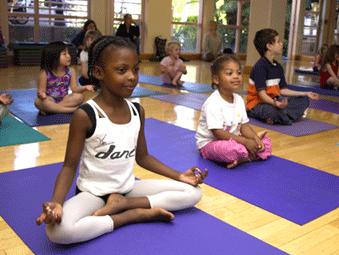
The use of yoga in public schools not only serves as exercise, it also alleviates stress, creates more peaceful interactions with others, decreases discipline problems, and can even lead to an increase in grades. Some schools go so far as offering yoga as an alternative to regular P.E. classes. Other programs are implemented in a regular classroom setting and involve more meditation and focus than physical yoga practice.

Yoga Ed is one of the frontrunners in the push for yoga in public schools. Their program started in the state of California but has become nationwide, offering instructors to teach yoga in schools and seminars to train current teachers on implementing classroom yoga. Yoga Ed even offers lists of resources on their website.  They have recommended music, children’s books, and have tips on practicing yoga in schools.

Yoga can be used in any school setting from Pre-K to 12th grade (or even into college). It seems just as effective in the lower grades (increased concentration, less fighting) as in middle and high schools (less stress). The two pillars most supported by yoga in schools are Skill Building and Community Building. Yoga is a resource that kids can carry with them throughout their lives to handle conflicts and daily problems in a non-violent way. It also creates a more cohesive, peaceful group dynamic in the school setting.

If a principal seems unwilling to set up a school-wide yoga program, individual teachers can take trainings or find meditation techniques online to use in their classrooms. Yoga is a very accessible (and often free) resource for teachers to build their classrooms into communities and alleviate discipline problems.

Also, for reference (and cuteness), here is a video of classroom yoga in Los Angeles by Sat Naam’s “Yoga in Schools” program.

Here are two other great resources for those who want to learn more about yoga in schools!

http://www.yogaed.com/resources/Non-Violence_in_School_through_Yoga.pdf

http://www.nytimes.com/2011/10/09/nyregion/in-yoga-classes-at-schools-teachers-avoid-the-spiritual.html


A Force More Powerful

What started as a book and documentary project about non-violent protest in the 20th century has evolved into a series of films, lesson plans, and interactive computer games that help teach students about nonviolence and practice the skills to achieve it. The initial book and documentary project, A Force More Powerful, highlights some of the most influential nonviolent leaders and movements in the past century and the subsequent films, Bringing Down a Dictator, Confronting the Truth, and Orange Revolution, focus further on specific incidents where citizens used nonviolent action to enact change and restore justice after disaster. The computer game, People Power, sets participants in the shoes of a nonviolent leader and inspires them to change the status quo through nonviolent methods:

People Power is built on nonviolent strategies and tactics used successfully in conflicts around the world. The game simulates nonviolent struggles to win freedom and secure human rights against a variety of adversaries, including dictators, occupiers, corrupt regimes, and to achieve political and human rights for minorities and women. The game models real-world experience, allowing players to devise strategies, apply tactics and see the results.”

These resources are best used with students in High School/University settings. Between the difficult stories covered and the complex legal issues discussed, the subject matter is trickier to approach with younger students; however, it may be possible to adapt some of the stories about nonviolent activists to approach with younger grades. In my mind, there are two ways that this resource could be effective: either as an integrated part of a formal social science class (i.e. history, government, ethics, etc.), or as part of a workshop/training in a non-classroom setting. The videos could be used to make a “movie series” focusing on non-violence, which could be presented in classrooms or in a workshop setting, but in either situations, it would important to leave some time to discuss the movies after the viewing, both to make sure students understand the film, and to give them time to process what they’ve seen. In the event that there is the time/desire to do a more formal and long-term unit on nonviolence, the movies can be combined with the lesson plans provided, and students can play People Power. Incorporating these different multimedia approaches and adding an interactive element can help give students a deeper look into the lives of nonviolent activists and consider what nonviolence really means to them.

These resources embody two pillars of peace education: Reframing History and Transforming Conflict Nonviolently by teaching students about some of the most inspirational parts of modern world history, ones that are not often covered in traditional classes, and providing real-world examples of nonviolence in action that can be discussed, dissected, and followed.

Want to learn more about A Force More Powerful? Short on class time but still want to know what the movie is about? Check out the free study guide for an overview and ideas.

Rev. James Lawson and the Nashville Sit-Ins

This past week, Rev. James Lawson – the prolific civil rights leaders and nonviolent action trainer – gave the opening keynote address at the Fletcher Summer Institute for the Advanced Study of Nonviolent Conflict.  In this address he talks about his experience working with youth in Nashville and training them in the techniques and strategies of nonviolent action; in this case, lunch-counter sit-ins, boycotts, picketing, marching, and making public statements.

Rev. James Lawson – FSI 2010 Keynote Address from ICNC on Vimeo.