Village Game – A Practice in Nonviolence

Background

This simulation is originally adapted by Karen Ridd, Training for Change, in Thailand, 1995, from a game led by Pom, Thai student and grassroots environmental activist, 1994. The exercise was sourced from 350.org, a international grassroots movement advocating for dismantling the fossil fuel industry and building a world of community-centered renewable energy for all. 350.org provides trainings and resources for facilitators already involved in the climate change movement or those just starting out.

Context

This activity is best suited for high school students, college-age students, and adults. This activity can be conducted in 45 minutes, but more time is recommended to have a more robust discussion and debrief following the activity. This simulation can be delivered as a stand-alone activity, but it is best suited as an activity in supplement to discussion of nonviolent tactics, movements, or specific group goals.

This activity is best done with at least 2 facilitators, but if the activity is delivered in a shorter timeframe (>45 minutes) there should be one facilitator per group. Groups can be anywhere 3-10 but smaller groups are recommended.

Goals

The goal of this training are to provide an opportunity for participants to experience nonviolent action. This can be utilized in a variety of ways included:

  • Experiential learning for students studying nonviolent movements
  • Opportunity for budding activists to experience a situation where their community is threatened and action needs to be taken
  • Team building for existing or new activists groups to practice collective action
  • Scenario planning for real life situations participants may face

This activity also provides groups an opportunity to build their ideal community and share their experience and values. Please note that this might not be well suited for participant groups who have experience significant community destruction that has not address as it may be triggering.

Implementation

The below implementation is the adapted 45 minute delivery of the the village game. Village game run times are typically between 1-2 hours.

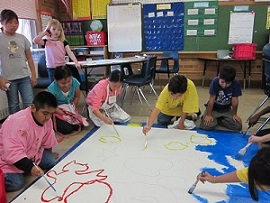
Set Up: Activity should be set up in advance. Set up tables with newspaper and numerous markers. This activity can also be done on the floor if desired. If you attackers will be using markers instead of tearing newspapers exclude red marker for your participants. Attackers will use red markers during their attack. Newspapers can be prepped with landmarks such as rivers, mountains, roads as needed to get the participants started.

Introduction (3 minutes): Prime the group by establishing that there are no rules besides physical violence/destruction of property in this activity. Expanded ground rules may need to be set given the location and context, but it is imperative to emphasis creativity for this exercise especially with unexperienced groups. Divide participants into groups consisting of at least three individuals and and assign a facilitator to each group (this will be referred to as village facilitator). If participants are known before the delivery time can be saved by making assignments in advance.

Building Villages (10 minutes): Prompt villagers to begin making their dream village. This can be done in the plenary or by the village facilitator. Encourage creativity and connection to the village by prompting questions as needed. Peaceful music can be turned on to create a more immersive simulation. It is critical during this portion of that participants get ideas onto their newspaper. Inform participants that they will be presenting their village to the other village groups.

Touring Villages (5 minutes): Have groups hold their newspaper village up and talk about the important features of their village for one minute. Groups can also walk around and “tour” the other villages.

Revising Villages (2 minutes): Invite participants to return to their village and add any remaining items as desired. Ask participants to remove chairs if tables are being used. Facilitators who who are playing the role of attackers should change their outfit in some way such as adding a tie or clipboard to denote their changed role. If there enough facilitators, attackers should be in addition to village facilitators.

Village Attack/Defense (10 minutes): Music should be changed to construction, destruction, or other appropriate sound track depending on the antagonist role. Attackers should introduce themselves to the whole group and explain who/what they are. Some antagonist examples are: Oil/Fracking company, Corporation, Government group, or another group with asymmetrical power.

Attackers will then begin destroying villages by scribbling out or ripping off different sections of the newspaper village. Keep the attacks minimal to avoiding overly-distressing villagers or causing them to give up. Attackers should move away from the village to give them time to plan/recover between attacks. Village facilitators can begin prompting participants that they can be creative in their reactions or asking them questions about the attack.

Attackers should return to the village as many times as needed to destroy more sections of the village. As time continues and if participants do not take action, village facilitators can prompt the participants with ideas to prevent further attacks. Potential ideas are: negotiating, sitting on the village (if on the floor), covering the village up, blocking the attackers from the village, picking the village up and hiding it from the attackers. Attacks should continue until villagers successful stop attackers or time finishes. If there is more time is available the activity should continue until attack is successful stopped.

Debrief (10 minutes): Depending on the purpose of the simulation debrief discussion should be adjusted. Below are some example debrief ideas depending on the goal of the simulation. Since debrief time is so short facilitators should provide participants with a resources or additional ideas to explore on their own. If time allows or additional activities are planned alongside this simulation the debrief can be more expansive.

  • Experiential learning for students studying nonviolent movements
    • Ask participants about barriers to action in saving their village. Connect barriers to nonviolence movement participants have studied.
    • Explore conversation about ideas that surfaced versus reading about nonviolence versus participating and nonviolence simulation.
  • Opportunity for budding activists to experience a situation where their community is threatened and action needs to be taken
    • Ask participants about their inital reactions or feelings that surfaced in this activity?
    • Explore how participants felt during the village destruction and what prompted them to act.
    • Provide resources to nonviolent tactics or action steps if participants wish to become involved in activist settings.
  • Team building for existing or new activists groups to practice collective action
    • Ask participant how it felt to collective build their ideal village and what they learned about their fellow participants.
    • Ask participants about the group dynamics while under stress in this activity. Have them explore how group actions effect nonviolent movements.
  • Scenario planning for real life situations participants may face
    • Discuss what worked and what didn’t work and apply to participants’ context. Provide resources or ideas about nonviolent tactics.
    • Explore the differences that might occur in the simulation versus real situation. Additional role playing may be utilized or participants can share learnings from their experiences.

Resources

These resources are not expansive, but rather a starting place for facilitators that will depend on context and participants.

Music and the Mobilization of Nonviolence: Conflict Skills/Peacemaking Facilitation Activity

Designed by Yong June Kim

Background/Contents

Art is a powerful medium to de-escalate the tension of conflict when it is utilized at an appropriate time. Especially, music could bring strong emotional connectivity among people worldwide; it has been constantly used as a simple but strong tool to overcome social oppression and to strengthen the voice of the public with a nonviolent approach. This activity, Music and the Mobilization of Nonviolence, aims to teach how music could greatly impact emotional connectivity and de-escalation of conflict and contribute to a significant nonviolent movement against conflicts we face in our society. The activity was fully conducted online; due to this condition, the online meeting software Zoom was the main tool to proceed with the activity. Since Zoom provided an interactive whiteboard and screen-sharing option which enable the participants to be simultaneously engaged throughout the activity, it was sufficient to facilitate the exchange of emotions and ideas that are stimulated from the session. The resources for this activity are gathered based on self-research; one song deeply connected to social conflicts is selected per genre: Blues, Gospel, Rock, Hip-hop, Classic, Grassroot music, etc.

This type of education could be effectively utilized in any group regardless of age or community level when it is conducted in an informal setting since it is based on experiential learning; however, it could be especially practical for students at the K-12 level. As music itself contains entertaining elements, it could help the students maintain their focus and be fully engaged by actively listening and watching music videos during the activity. The debriefing questions are also based on their emotions and feelings that are directly reflected by the musical contents; this simple discussion could make them feel comfortable and safe to learn the key points of this activity that music itself could connect people and contribute to peacebuilding processes in the long term perspective. Furthermore, they will have the opportunity to have a deeper understanding of the backgrounds of musical genres and pieces that they are used to listen but are not actually aware of the hidden stories they embody.

Implementation

  • Activity Time Duration: 45-60 minutes, depending on the number of songs an educator would like to use.
    • 3 min: Brief introduction and learning objectives
    • 10 min: introduction of a particular genre (it would be helpful to go through research or ask for support from those who have musical expertise during the preparation.)
    • 10 min: Music introduction, listening (4-5 min) and debriefing (5 min) activities #1
    • 10 min: Music introduction, listening (4-5 min) and debriefing (5 min) activities #2
    • 10 min: Music introduction, listening (4-5 min) and debriefing (5 min) activities #3
    • 10-15 min: Review of the activity, simple quiz activities about the music based on debriefing
  • Orientation of the Session: The educator may have multiple sessions, introducing one genre for each session. The first session, however, needs to introduce the overall learning point, which is the music’s impact on peacebuilding and the mobilization of the nonviolence movement in society. Guiding the main theme at the beginning session will help both educators and students to be consistent with understanding the music’s role in the strategic peacebuilding process while engaging in the activity throughout the sessions. For example, sessions could be categorized like the example below:
    • Session 1: Introduction_How Music Helps Strategic Peacebuilding?
    • Session 2: Understanding the Origin of Blues Through Learning the Black History
    • Session 3: Learning Gospel through Analyzing Amazing Grace
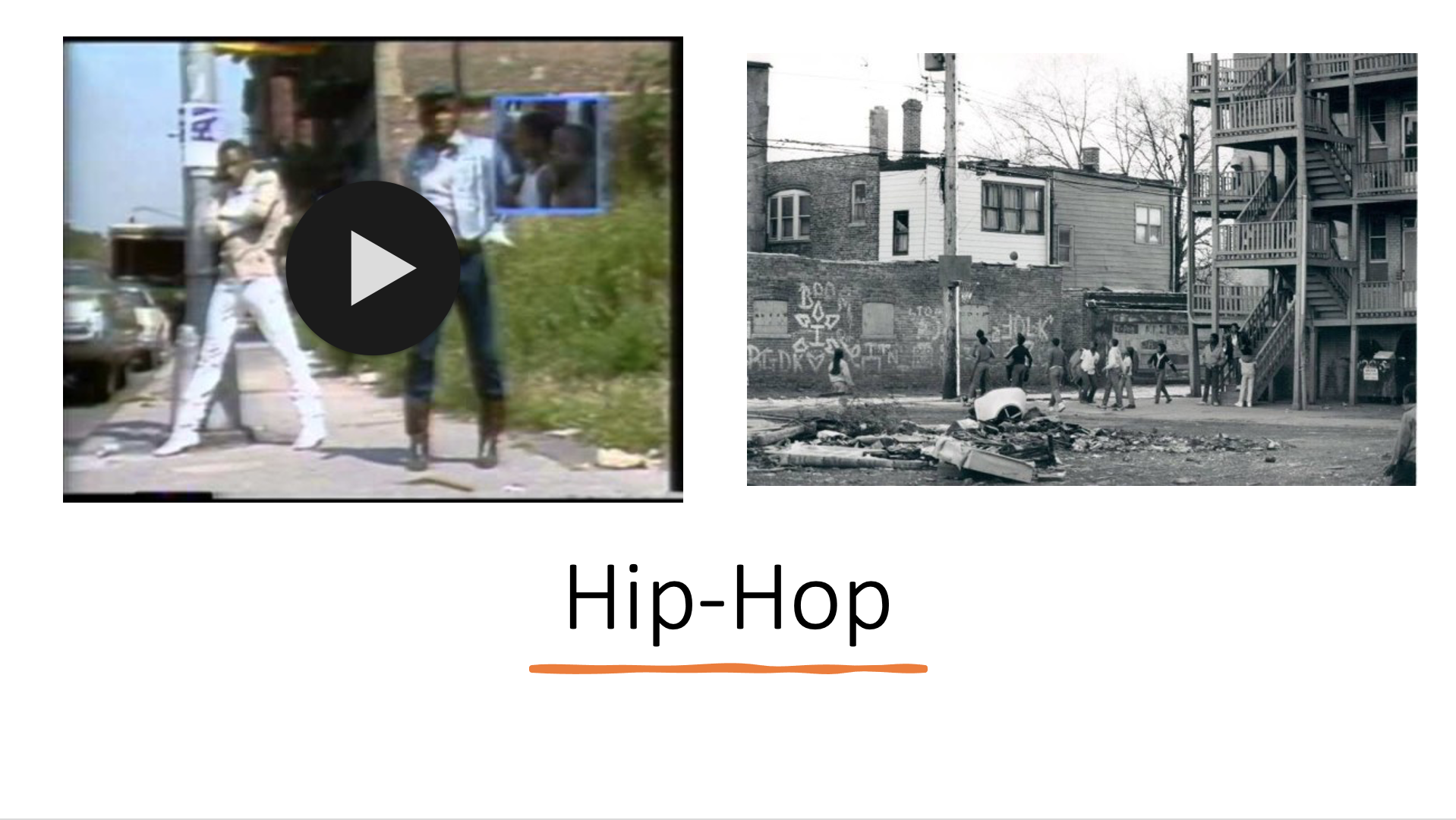
    • Session 4: How did Hip-hop Become a Powerful Medium for Raising Voices for Social Issues
    • Session 5: Rock for Peace
  • Each session will start by introducing two to three songs that are relevant to the genre. The educator may briefly introduce the background of the songs and share the lyrics with the participants to help them have a better understanding of the contexts. The facilitator could also have a simple quiz about the music so that the participants can guess the information about the music, providing much more interaction during the session.
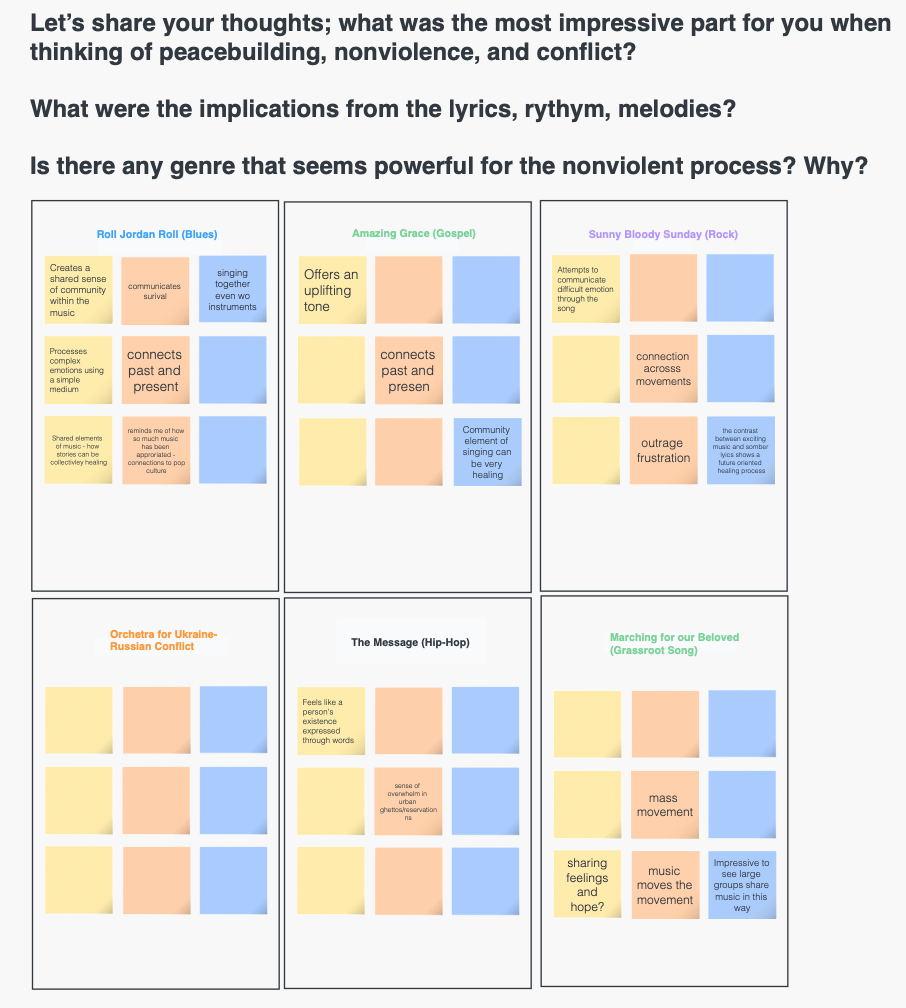
  • After appreciating those musical pieces, the educator can move into a debriefing session. When it is conducted online, shared whiteboard and brainstorming programs  through Zoom or Mural could be utilized to have students engaged in the activity. When it is conducted in person, however, the educator may use a large size of paper so that the participants could simultaneously add their thoughts of impression and engaged emotions to the paper. The Questions after listening to the musical pieces could be like below:
    • Let’s share your thoughts; what was the most impressive part for you when thinking of peacebuilding, nonviolence, and conflict?
    • What were the implications of the lyrics, rhythms, melodies?
    • Are there any other elements that seem powerful for the nonviolent process? Why?
    • If you want to introduce other songs you particularly find relevant, please share and explain why it is connected to the topic.

Goal

The objective is to connect music with peacebuilding and the nonviolence movement by emphasizing its contribution to emotional connectivity between groups, individuals, and communities. Through such experiential learning processes utilizing basic senses that are based on auditory, visionary, and somatic senses, it aims to help students to maintain their interest in learning in non-academic approaches. Also, this activity could help the students have better accessibility to understanding past and current major conflicts that are occurring worldwide by appreciating the musical pieces that directly reflect them. By doing so, it could facilitate the process of conscientization (Freire, 1970), which enables the participants to understand the social issues that could be directly related to themselves in a critical manner. The contents illustrated below could be the main learning objectives:

Resources Used for the Activity

Musical pieces that are used for the activity could various depending on the educator’s preferences or participants’ suggestions through discussion at the beginning of the session:

  1. Freire, P. (1970). Pedagogy of the Oppressed. Seabury Press.
  2. B.   Shank, M., & Schirch, L. (2008). Strategic Arts-Based Peacebuilding. Peace & Change, 33(2), 217–242. https://doi.org/10.1111/j.1468-0130.2008.00490.
  3. 12 years a slave – choir song – ”roll jordan roll” 2013
  4. President Obama Sings Amazing Grace (C-SPAN)
  5. Grandmaster Flash & The Furious Five – The Message (Official Video)
  6. U2 – Sunday Bloody Sunday
  7. ‘Stop the war in Ukraine’: Orchestra plays national anthem in central Kyiv as Russians advance
  8. [경향신문]19차 촛불집회 광화문에 울려퍼진 ‘임을 위한 행진곡’

*This activity was designed by Yong June Kim, an undergraduate student at George Mason University’s Carter School for Peace and Conflict Resolution, based on Dr. Arthur Romano’s Graduate Course (CONF 695) “Peace and Conflict Resolution Pedagogy” in Fall 2022. 

Taking violence prevention seriously in middle schools

Christa Tinari, founder of Peace Praxis and co-author of Create a Culture of Kindness in Middle School, joins Nonviolence Radio to talk about the real meaning of kindness and some practical tools that can help us to show kindness with justice in more areas of our lives.

Check out the podcast here: https://www.stitcher.com/podcast/metta-center-for-nonviolence/peace-paradigm-radio/e/53362364

SChool Peace Sign Photo for Cover 2

Guide to Preventing and Responding to School Violence

POSTED ON BEHALF OF AUDREY VAN GILDER

I’ve chosen to loosely relate my final blog post to my Peace Learner Commitment. That commitment was made as a result of all I’ve learned about gun violence while interning at the Brady Center, and in an effort to start spreading the word about intercepting gun violence, I’d like to share this resource with you.

https://www.theiacp.org/LinkClick.aspx?fileticket=MwvD03yXrnE%3D&tabid=378

This Guide to Preventing and Responding to School Violence is a pretty technical examination of all the pragmatic steps that need to be in place should the worst happen – the worst, in this case, being gun violence in a school. As much as we as teachers and caregivers hope that this never touches us, the fact is, America sees a frightening amount of gun violence on a daily basis, substantially more than any other developed nation. Many of these mass shootings (considered at least four people injured or killed by one shooter at one time) happen in schools.

This document is a very thorough resource for not only teachers, but administrators, parents, community leaders, and public safety officials. It is appropriate to implement in full or in part at the discretion of a school. The important thing is that adults in schools are aware of the threat of gun violence. Not only must official emergency preparedness policies be in place, but teachers have a responsibility to keep an alert eye and ear out in order to discourage talk of violence among students. There are often warning signs of the potential for violence with weapons; the answer to confront this threat is not arming more people, but in increased communication among responsible adults about how to address and respond to violent crisis, should it unfortunately occur.

The way I interpret this resource, it can be used as a way to build a safe community. This pillar of peace education can be addressed by an unlimited number of strategies – this is just one to develop in order to serve a community if gun violence ever does become a reality. In addition, this document is a tangible method of skill building for adults in a school. It should be integrated with the crisis response plans that schools already have, and can be the worst-case-scenario guide for schools that already are committed to building peaceable communities.

As sad as it is to acknowledge, many schools in America are stuck in violent environments, in neighborhoods that experience gun violence every day. Realistic measures must be taken by people in charge to make every effort to ensure no gun crosses the threshold of their schools.