
Developed by: Sara Tolba-Rezk
Resource
Living in and working in a pluralist society, such as the United States of America, diversity is not only the norm, but the ability to navigate the complexity of cultures every day is the expectation.
Visitors to the United States, through the many international education and exchange programs may find themselves outside of their element while immersed in a society that conflicts with the norms of their own.
The resource introduced today is the book, “The Culture Map” by Erin Meyer (Meyer, Erin. The Culture Map: Breaking Through Invisible Boundaries of Global Business. Public Affairs (2014)). This book outlines the different aspects of cultural contexts, and helps readers understand their own styles. It surfaces the challenges that could arise when communicating with those from other cultures while also touching on the issue of generalizing, and the nuance that always comes when dealing with others. This understanding is important for those being immersed in a culture different than their own, as it would help curb communication breakdowns. By gaining that understanding, international students/visitors may have a smoother experience during their program.
Context
This 90-minute suggested workshop outline can be used by international program administrators and educators who would like to teach about intercultural conflict: international exchange programs, study abroad, pre-departure orientation programs for those expecting to travel to different cultures. The activities could also be reworked for use with any groups of diverse students: shared housing/dormitories, student life activities, intercultural conflict workshops.
The outline is designed for college-aged students, however, it can be adapted for travelers of any age. This activity can be integrated as part of the pre-departure or arrival orientation program. If they are 16+, it might be beneficial to assign them to read one of the recommended additional resources (see list below) prior to the activity. If they are younger, the main concepts can be introduced to them during the session.
The additional resources noted below can be helpful to support students beyond this workshop. When advising students, the introduction of these concepts could help students navigate conflict by reflect on other’s cultural conflict styles while also considering their own approach to situations.
Goals
- Increase awareness of cultural differences, cultural nuances and intercultural communication styles
- Reflect on own style and how it might promote/hinder communication
- Practice cross-cultural challenge scenarios and responses
Timeline (90 minutes):
- 00:00 – 00:05 Ice Breaker/ Into to Topic
- 00:05 – 00:15 Understanding Communication: Cross-Cultural Communication
- 00:15 – 00:45 Cultural Spectrum
- 00:45 – 01:15 Intercultural Challenge Scenarios
- 01:15 – 01:30 Closing Reflections
Implementation
Preparation and Materials:
- Classroom space with large wall to wall gap to allow for students to line up on a spectrum. Classroom should also be flexible to allow for small groups.
- Printout of Scenarios, one scenario per group
- A/V to play video
Ice Breaker: How do you say hello? (5 minutes)
When you have a group of international and U.S. students representing different cultures and backgrounds, you will likely have a variety of ways to say hello in the classroom. This activity may help introduce cultural differences, and how even through saying hello small conflicts may arise.
- Activity (4 minutes): Ask each student to model how they say hello in their culture when greeting an acquaintance, a family member, and someone from the opposite gender. You can expect that this may be varied: for instance, Northern African (example Egypt) cultures may kiss on each cheek but not touch the opposite gender (some cultures may be ok with a handshake); Latin American (example Brazil) cultures may hug and kiss everyone, including new acquaintances. If you have a large group, instead of having everyone participate, you can ask for volunteers representing different cultures. When each person goes, you can ask: Are greetings different in your culture? Who wants to share a different example next?
- Model how people say hello in the host community (the United States for instance).
- It is important to acknowledge that “different is not wrong”, and that it is important to be mindful of how each greeting may be perceived in a different context. Ask the group to reflect on what it would be like for a Brazilian to greet Egyptians while visiting Egypt, and what it would be like for an Egyptian to greet Brazilians while visiting Brazil. Ask: What may be something that they should be aware of? How might not understanding the cultural nuances lead to conflict?
- Debrief (1-2 minutes): This is an opportunity to recognize the beautiful ways by which people around the world greet each other. You can also use this opportunity to introduce some potential boundaries that the students/visitors may want to be mindful of with new U.S. acquaintances (for instance, kissing, touching, personal space, etc).
Concept Intro: Understanding Communication: Cross-Cultural Communication (10 minutes)
Share the following video with the group (5 minutes):
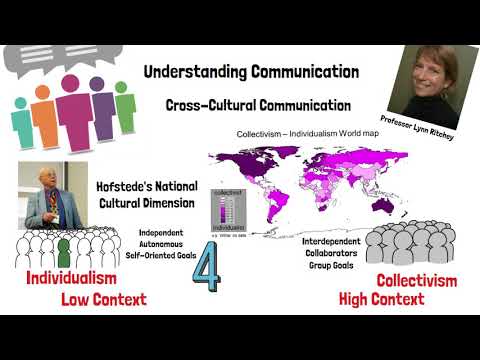
Quick Debrief: Ask (5 minutes):
- Give an example of how people give negative feedback in your culture. Would it be direct or indirect?
- When speaking with someone older than you, how formal/informal can the conversation be? Are there any ways by which you are expected to show respect? What would happen if you do not follow that expectation?
Cultural Spectrum (30 minutes)
This activity is built on The Culture Map, eliciting reflections from the group on their own cultures when it comes to the different cultural aspects: communication, feedback, power dynamics, etc.
Explain (5 minutes) to the class that they will stand along the spectrum, in the spot that they feel represents their own preferences. They can choose to stand at either end, or anywhere in between. Explain that you will read out each characteristic (listed below) and provide examples. Students/visitors can ask clarifying questions as they choose their spot.
Reflection on each characteristic (5 minutes each – 4-5 characteristics). After every characteristic is posed, and the students have chosen their spots, ask: Why did you choose that spot? How does this style show up in your community? Where would your grandparent/ older relative stand, if they were here, and would that change where you are standing now?
Cultural characteristics – choose 4-5 characteristics, as many as the time will allow:
- Communication: High Context (nuance, not direct, must also read what isn’t being said and body language) or Low Context (direct, people mean what they say)
- For example: a group of friends are at a party. One wants to leave. In a high cultural context, the person might say “oh look at the time, it is getting a bit late” and may stand off in the corner not engaging in much conversation. In a low context culture, the person might state “I want to leave now.”
- Evaluating, when giving negative feedback: Indirect (provided softly, cushioned with positivity, and subtly) or direct (to the point, honest, frank)
- For example: Giving a student feedback, indirectly that might sound like “I like how you mentioned xyz, and your approach was great. You could think about including abc. Doing that will certainly enhance the paper”. Those who prefer a direct approach might say “the paper needed more work on xyz.”
- Leading: Hierarchical (high regard for boss, high respect for elders and age – even if within peer group, multilayered) or Egalitarian (boss works directly with staff/team, flat structure)
- For example: In a hierarchical society, at school, students may be expected to stand up when their teacher comes into the classroom. In an egalitarian society, teachers/professors may make small talk and joke with the students – and may ask them to call them by their first name.
- Deciding: Top-down (decisions are usually made from the boss down to the team/individual) or Collaborative/Consensual (decisions are made in groups with mutual agreement)
- For example: In a top-down community, students may wait for instruction from the professor/teacher/supervisor – and they may not question it. In a collaborative community, students may be expected to share their opinion. The professor/teacher may designing an activity/assignment in collaboration with the students.
- Trusting: Relational (to gain trust time and effort must be put in to develop and maintain relationships and trust) or Task-based (you are trusted because of the work you deliver)
- For example: In a relational society, it may be expected to build a relationship and gain trust of the other person before starting to work with them. This requires getting to know them through intentional outreach. In a task-based society, you can simply start working with a new peer without much introduction.
- Disagreements: Avoid Confrontation (passive approach, may beat around the bush, fear of negatively impacting the relationship) or Confrontational (disagreements are directly stated, differing views are acceptable)
- For example: In a non-confrontational way, disagreements might look like subtle cues of withdrawal or slight change in tone. Instead of saying “no” or “I disagree with…”, they might say “I will consider this”. In a confrontational culture, they may say “I don’t think that will work”, “I disagree with this approach”, etc.
- Scheduling: Flexible time (it is ok to shift dates/times around, time seen as a suggestion and not a commitment) or Linear time (deadlines are rigid, scheduled meetings are expected to be upheld)
- For example: Those coming from societies that are used to flexible times may show up to a 7:00pm party at around 7:30/45pm. The hosts may provide an earlier time in the invitation, knowing that people will arrive later. Those who schedule with linear time will say 7:00pm, and expect people to arrive between 6:55pm-7:00pm.
Adaptation: These characteristics are based on the Culture Map by Erin Meyer. However, an adaptation could also be made to adjust this activity and use Geert Hofstede’s Six Dimensions of Organizational Culture, which looks at culture through the lens of: individualism/collectivist, power distance, femininity/masculinity, tolerant/avoidance to uncertainty, long-term orientation, indulgence.
Intercultural Challenge Scenarios (30 minutes)
This activity has students work on different cultural clash scenarios, and work together on ways that they could respond to the conflict.
Group work (10 minutes): Break the class into groups of 4-5, and provide each group with a different scenario. Explain that they will have 10 minutes to come up with a response to the scenario. The response should include: the timing of when they will approach the individual/group, how they will approach the conversation and what will they say?
Ask participants to ensure full participation from the group. Each individual should voice their opinion, and the group should collaborate together on their shared response. They should choose one person who will present their response to the larger class.
Scenarios:
Scenario 1: Your professor assigned you with a group of 4 students to work on a class project. The team all grew up in the United States and you are the only international student. In the few meetings that you’ve had so far, they have worked quickly to build up the different components of the project. You are not used to this collaborative approach, and have not been speaking up in the meetings. You’re not used to voicing your opinion to people you don’t know well, and not sure how to let them know that you do not agree with the pathway they are headed on. You have been silent in hopes that they will recognize your disagreement. You also were excited to be assigned to this group, as they seem to be really kind, and you were hoping to build new long-term friendships.
Craft a response that includes: the timing of when you will approach the individual/group, how you will approach the conversation, and what you will say.
Scenario 2: You are living in shared campus housing with three other students. They all have different personalities and cultures. You’re very excited to make new friends and you’ve all been getting along well. The semester started out great, until one incident that changed everything for you. One day, you had a few friends over (including a few older alumni) hanging out in the living room. Two of the roommates approached the group and said, “you are being very loud, we’re trying to study. We don’t appreciate your loudness”. They asked you and your friends to keep it down or go hang out somewhere else. You were shocked at their directness, and their insensitivity towards your guests. It was very embarrassing, especially in front of your older guest. How will you respond?
Craft a response that includes: the timing of when you will approach the individual/group, how you will approach the conversation, and what you will say.
Scenario 3: You were tasked with training another student worker who joined the team. You have been working there for over a year, and are very confident with the daily tasks. You were excited to be given the responsibility of training the new student worker. You’ve noticed that the new trainee has been extremely kind, bringing food to share, inviting you to coffee, and has been overall courteous. When you explained the tasks to them, they confirmed “yes, yes” that they understood what was asked of them. However, you’ve noticed lately that they rarely show up on time, and this has impacted your ability to clock out as scheduled. You also noticed that they still don’t seem to be fully understanding their assigned role, and despite reminders tasks go undone. They haven’t asked any questions or even let you know that they are struggling. You want to address this issue, but you are also aware that there seems to be some kind of cultural disconnect. How will you respond?
Craft a response that includes: the timing of when you will approach the individual, how you will approach the conversation, and what you will say.
Presentations of Responses (10 minutes): Each group reads out their scenario and explains their response. Allow time for the other groups to provide feedback, ask questions or suggest further approaches to the scenario.
Debrief (10 minutes):
- Have you found yourself in a similar situation?
- What role do you think culture is playing in the scenarios?
- If this scenario happens to you, how would you relate to the person as it relates to your culture?
- What are the assumptions being made about the behavior of the different characters in each scenario?
- What are the potential cultural contexts of these people (high context (indirect), low context (direct)? How did the different cultural contexts create the clash?
- What questions could be asked to spark a conversation about cultural expectations/behaviors?
- What else might they consider when creating their response? Would gender play a role? What about age?
These scenarios were developed for college-student age, but can be adapted for different age groups and contexts.
Closing and Reflections (15 minutes)
Ask the group to reflect on the activities.
- What is something new they learned about themselves, or someone else?
- As they reflect on the culture map, is there anything they agree with/disagree with?
- What does it mean to be mindful? How can one be mindful of the differences in cultural contexts?
- Reflecting on the scenarios, if they found themselves in these situations, who might they go to to bounce off ideas on how to respond?
- What is one cultural aspect they would like to take home with them?
Additional Resources:
- Geert Hofstede’s Dimensions Maps: https://geerthofstede.com/culture-geert-hofstede-gert-jan-hofstede/6d-model-of-national-culture/
- Geert Hofstede’s Six Dimensions of Organizational Culture: https://www.youtube.com/watch?v=yKKruTRQ_2A
- Business Speaker Erin Meyer: How Cultural Differences Affect Business https://www.youtube.com/watch?v=zQvqDv4vbEg
- Business Speaker Erin Meyer: The Language of Negative Feedback https://www.youtube.com/watch?v=IwBPfbEeynw
- https://globisinsights.com/career-skills/communication/high-low-context-communication-survival/
- McIvor, Melissa. High- Vs. Low-Context Communication Survival Guide. Globis Insights (2022)https://globisinsights.com/career-skills/communication/high-low-context-communication-survival/
- https://www.globis.ac.jp/stories/8-scales-to-chart-a-culture-map-for-better-management/
Audience: This resource will be shared with international education program administrators.


As someone who has led trips with students abroad and worked with a mix of students from around the world in the US, I can say administrators working in these areas constantly need new ideas for programming. One of the strongest aspects of the lesson is the way it encourages participants to move beyond stereotypes and engage with cultural differences through empathy, curiosity, and open dialogue. I especially admired how the activity emphasizes active listening and perspective-taking as essential peacebuilding skills rather than treating cultural understanding as purely academic knowledge. This work is complex and this is a highly relevant resource for fostering inclusion, mutual respect, and stronger cross-cultural connections with international groups.