Strange Days on Planet Earth

POSTED ON BEHALF OF KATIE KASSOF

“Strange Days on Planet Earth”, a special miniseries produced by National Geographic for PBS, explains the interconnectedness of natural and made-made systems on earth in an easy to understand way.  It’s formatted a bit like a detective show starting with a problem, like an increase in baboon population in Ghana, and traces it backwards to the root cause, like over fishing in our oceans.  Many global problems are explored.  Ultimately the show provides an excellent explanation of the ripple effect, something that happens in one part of the earth can have severe effects somewhere else entirely.  Two episodes are available on Netflix Streaming and the entire series (two seasons with six total episodes) is available for purchase from PBS online.  There are educational resources available for middle school aged students on the PBS website as well.

The way I envision using this film, though, is with a high school environmental science class, documentary film class, or combination thereof.  I think that by focusing on this film with an older group of students, we can delve deeper into the educational content as well as the communication styles employed by the movie.

This film will be watched as inspiration for a one to two month production project.  Since the film explores a problem and works backward to the cause of the problem, then gives viewers a solution to the problem, this is an excellent opportunity for the students to recreate the template.  They will research a local environmental problem of their choice, becoming an expert in the problem, its cause and steps to overcome said problem, and develop relationships with people working on the solution.  Then they will develop a targeted communication plan including determining their target audience, the format of their film, and writing the script.  Finally, they will create a 3-5 minute documentary which will explain the cause and effects of their chosen problem and present at least one solution.  Expanding the project might include creating other materials to go with the film such as a website, call to action event in cooperation with a non-profit in the area, or a screening of the film for the community.

This project will engage multiple intelligences by having the students involved in every aspect of the production process as well as building skills necessary for effective communication of a problem, good research habits, and technical film skills.

Drug Use Prevention in Schools

POSTED ON BEHALF OF AUDREY VAN GILDER

Thinking back to my own elementary and middle school experiences, I’m becoming more aware of the shortcomings of my school district’s health education approach. While it was no doubt better than some programs found in public schools (health classes were either required electives or part of the curriculum for several middle school years), simply inserting a tsunami of information into a school day filled with many other educational priorities is usually ineffective. Specifically, my health education about drug use and abuse was limited, outdated, often unrealistic and – generally – not part of a peace-promoting curriculum.

The consequences of such programs become clear later in a child’s education, when exposure to drugs and alcohol is more common. Among certain communities, a resurgence of drug abuse has many concerned about the necessity of reforming health education programs to be more holistic, inclusive and – although it’s not always stated explicitly – part of broader peace-based curricula. This UNICEF manual for educators provides an excellent guide to developing such a program:

http://www.unicef.org/lifeskills/files/DrugUsePreventionTrainingManual.pdf

It is general enough that educators can adapt or excerpt it to their needs, but also very thorough and based on self-evaluation, skills development, and reflection. I envision American middle and high schools reworking their health education programs to take into greater account the realities of learners’ communities, pressures put on young people by society, as well as the own self-determination, problem-solving capability and autonomy of students.

I think there are great opportunities to encourage introspection and creativity within drug education programs. Young students aren’t clueless; even if drug abuse is not of huge concern to them or their particular community, attitudes toward drugs and alcohol definitely change over time, and early drug education programs must take into account this transformation. This video was created by students at my friend’s high school to directly confront drug abuse in the community with honesty and reflection: http://www.neuquaondrugs.org/

A program called CASASTART addresses this by assessing risk, basing its programs on the fact that young people who lack human and social support systems are more likely to continue and intensify substance abuse that may not be as much of a danger to young people with those systems in place. You can read more about CASASTART and many, many other alternatives to health education programs here: http://www2.potsdam.edu/hansondj/Controversies/20070111184521.html.

Two of the pillars of peace education that such an initiative will address are community building and transforming conflict nonviolently. First, a realistic peace-based drug education curriculum can’t exist within a vacuum, as I believe mine did. Honesty and pragmatism is required on the teacher’s part, as is a safe learning space and strong sense of community within the classroom. Second, if drug use and abuse is understood as a likely conflict that young people will face, steps can be taken to transform that potential for conflict – and to avoid all the other conflicts that can follow drug abuse – before it even happens. If students are encouraged to be self-aware and resilient, and have a more holistic, peaceful, and informed idea of how they might react to drugs in real life, the dangers of drug abuse in a community will be lessened.

Gender Conferences in Guinea, West Africa

POSTED ON BEHALF OF MARG BRENNAN

One of my most memorable experiences while I was a Peace Corps Volunteer in Guinea was definitely participating in Girls’ Conference, which brings together teenage girls from each region of Guinea for several days of topics, ranging from women’s rights and roles, to education, to family planning and STDs, to female genital mutilation, to study and organizational skills, to nutrition, etc. A more specific description of girls’ and boys’ conferences can be seen through the Friends of Guinea website, which is mainly run by Returned Peace Corps Volunteers and family members of current volunteers:

http://www.friendsofguinea.org/projects/gender_conferences.shtml

The video link below is from when I was a volunteer in 2009 and highlights some of the activities. Although this was not the regional conference that I participated in, it’s a wonderful view of the types of conversations and learning that went on at all of these conferences, and was put together by one of the volunteers at the conference:

The sensitizations at the end, although only in the video for a short time, were some of the most important trainings, as these girls go back to their communities and lead their own sessions and trainings with community members. The topics that were covered were things that Guinean girls often don’t ever get the chance to talk about, period, let alone educate others on.

This worked best in an educational setting as gender specific (both the boys and girls were much more easy about opening up and being honest about how they felt concerning all the issues that we discussed) and for at least middle school aged girls, although I would say high school aged is better, as they really have the capacity to have an understanding and strong opinion of all that is discussed.

The knowledge, skills and attitudes that I got to watch the girls develop over the course of the conference was amazing. Many of them had very strong opinions on the subjects, but had never been given the opportunity to have their opinions heard. The girls bonded with each other and really worked together to develop the skills necessary to be able to teach what they learned to someone else.

I had a tough time really choosing two pillars of peace that were the most applicable, but reframing history and skill building are definitely very supported by this event. These girls are living in a culture that is extremely male dominated: throughout every year in high school and college, the percent of female students decreases; several of my 9th and 10th grade students dropped out of school to be married (often as someone’s third or fourth wife) while I was teaching. There are about ½ as many literate adult females as males. Most girls are circumcised when they are children by absolutely no choice of their own. These girls were incredibly inspiring to me, as they had grown up experiencing what we would call extreme injustices and sincerely wanted to be part of a positive shift in the role they played in their country.  These girls also left the conference in general with an increased sense of confidence in their own ability to lead and teach. I facilitated a girls’ club that the girls I took to the conference were a part of. When they returned from the conference, they organized a series of plays that they performed in our community building for our town. They took what they learned and transformed it into a performance that both children and adults came to watch and understand. Watching how confident they were in their ability to pass along what they had learned was incredible to see.

What’s Good in My Hood?

POSTED ON BEHALF OF MARIA SCHNEIDER

Saturday September 29th of this year, several AU students and a GW student volunteered to work with 70 DC kids on the Chesapeake Bay in Maryland for the day. The day was divided into different workshops: canoeing/kayaking, forestry, marine life, and art with nature. This day-long retreat was the kick-of event for the What’s Good in My Hood? Initiative that will take place at several community centers across the city, those being: Lafayette, Keilworth-Parkside, Harrison, Macomb, Trinidad, Benning Stoddert, Bald Eagle, Ferebee-Hope Recreation Centers, Palisades Community Center and Chevy Chase Playground. Click here for more information!

I was first introduced to the What’s Good in My Hood? program at the beginning of September when I was put in contact with Sean Miller, an American University adjunct faculty who teaches a course titles DC Healthy Schools in the School of Teaching and Health. Sean along with several staff at the Department of Parks and Recreation staff in DC have started this program in the District of Columbia through various recreation centers across the city to increase environmental awareness, love of the outdoors, and to empower elementary and middle school youth to be active within their own communities.

This DC program is similar to the New York Restoration Project’s What’s Good in My Hood? program that DC native Akiima Price talks about in this short introductory video.

The What’s Good… program is one that can be implemented with students of various ages ranging from young elementary school through high school. Though the current program is aimed at kids ages 9-13, it could be altered easily to accommodate older or younger youth with slightly different projects, and/or more complex themes and discussions. The New York Restoration Project’s What’s Good in My Hood? Workbook can be found here and downloaded for free to bring the innovative program to any urban community through a Peace Education initiative, school program, or community organized one as well!

Through the program students would gain valuable knowledge about the unique aspects of their own communities, natural and not-so-natural resources, living versus non-living parts of where they live, where they get their food and water, and most importantly how to stay involved, voice concerns, and take action for change within their own neighborhoods through community advocacy and writing to local, state, and national legislators.

The What’s Good in My Hood? program most fully supports the Community Building and the Exploring Approaches to Peace pillars of Peace Education. Community Building is key, because not only are program participants getting to know one another throughout the process, but they are exploring their own community spaces, and working together to create more accountable and responsible community members. Students explore approaches to peace in the way that they take action collectively through advocacy and various student-led initiatives towards the end of the program process in step five that Akiima Price describes in the video—Don’t Shout, Speak Out.

Visualizing Strategies for Peace


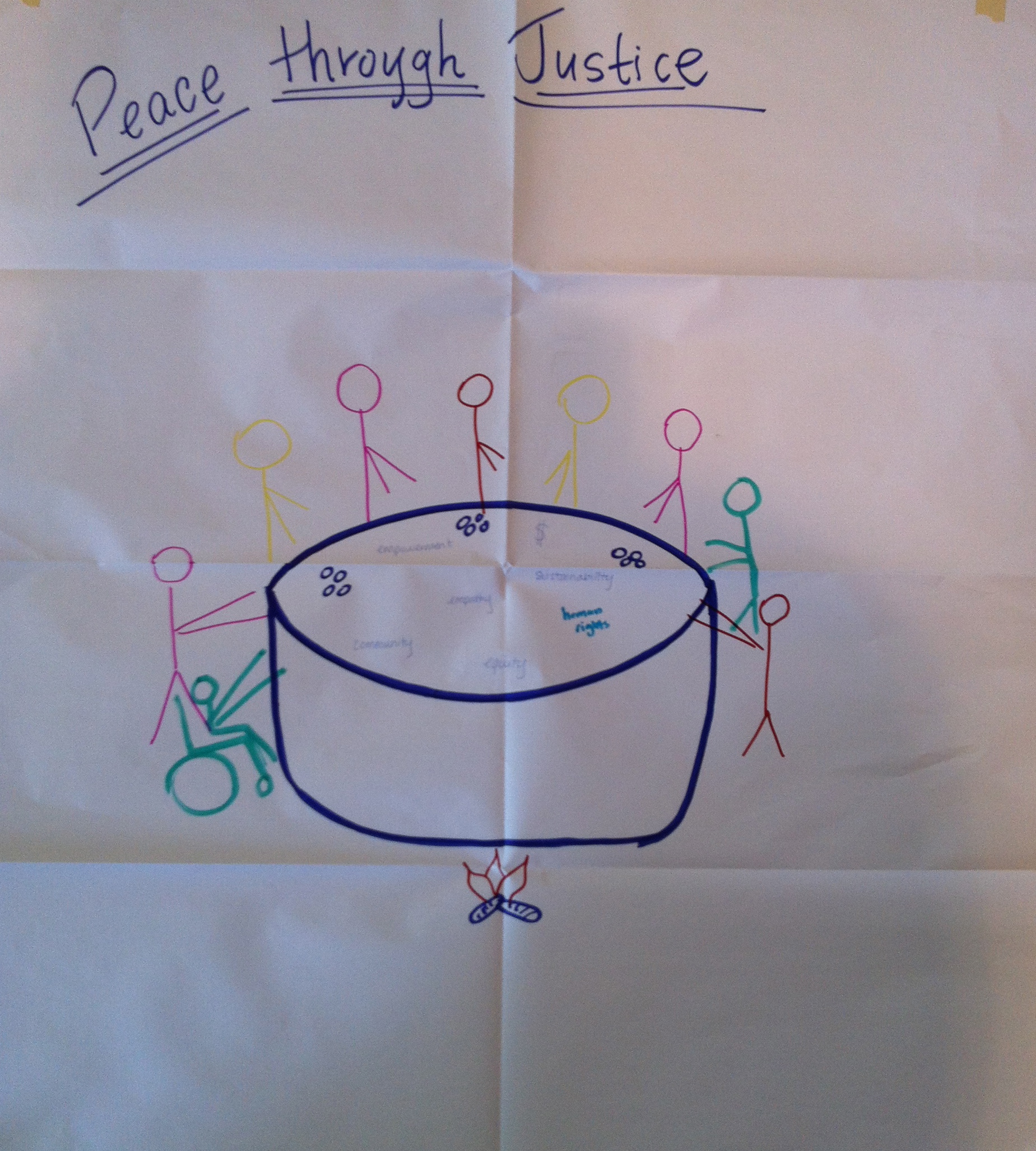
During our class on 09-19-12 we explored Ian Harris’ strategies for peace.  The class broke up into groups based on which strategy for peace they felt most aligned with their worldview.  Each groups was then tasked with creating a visual representation of that strategy.  Here is what we created.  The discussions of the artistic creations were quite enlightening.

Peace Through Sustainability

Peace through Politics (Institutions)


Peace through Justice

Peace through Transformation

The EDGE

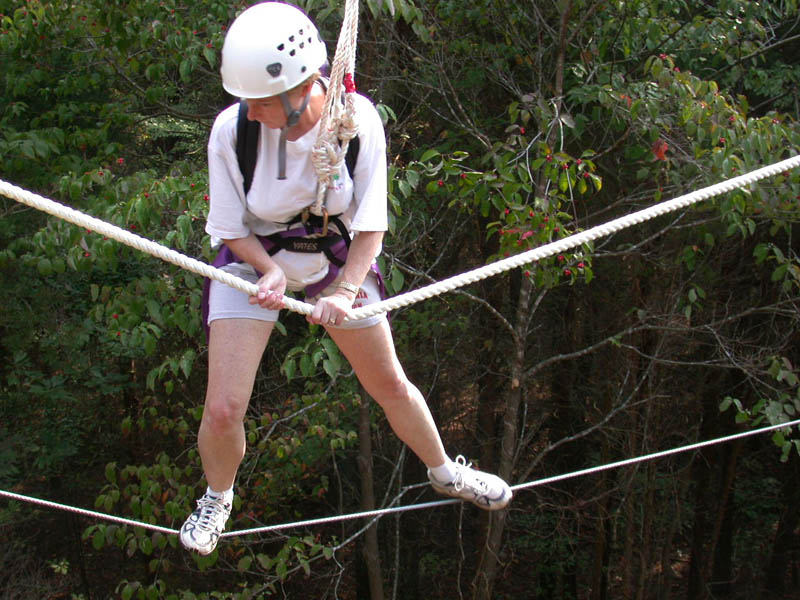
As we have learned in class, peace education is possible in many different venues, areas, as well as ways. But, one area that we may not even consider are places close to home. By this I mean our own campus at Mason! On the Prince William Campus there is a great tool that can be used for peace education called The EDGE. It is defined as an hands-on experiential learning, team building, and organizational training in the Northern Virginia/DC area.

The EDGE is a tool that could be used for any subject, age level or community, and it can also be used in a formal or informal setting. The staff at The EDGE is able to customize the experience based on the audience, and due to this dynamic feature it is able to be applied to a wide variety of educational settings. There are four main categories that groups are described as for their training: Professional, University, School, and Community.

  • For the Professional groups, the focus is on developing as individual professionals, growing as high functioning teams, and excelling as innovative organizations through the use of team building programs, professional development workshops, and consulting relationships.
  • For the University groups, the focus is on applying what is learned to everyday activities. This is done through experiences that will evolve into clear and effective communication, trust and relationship building, self-awareness, and a powerful shared experience.
  • For the School groups, the focus is on experiential learning done in small groups with facilitators who help students with the learning process through challenge course activities and the development of their thought processes as well.
  • For the Community groups, the focus is to “challenge members of the global community to better understand themselves, those around them, and their world by using innovative approaches that educate, inspire and empower.” This is done through various activities based on the Community Education program.

The overall goal of The EDGE is within their Mission Statement:

The EDGE challenges the members of the global community to better understand themselves, those around them, and their world by using innovative approaches that educate, inspire and empower.

The EDGE provides programs that will:

  • Energize your team with active and engaging programs
  • Develop skills for effective communication, collaboration and problem solving
  • Grow individual and group leadership functions through practical experience
  • Excel at identifying and capitalizing on your strengths for profound transformation

From personal experience, I have seen the effectiveness of The EDGE when I went there one Sunday afternoon with the National Pan-Hellenic Council members from Mason. We worked on building trust and an overall sense of community through out the afternoon in small groups. Even though all of our internal issues of the NPHC were not fixed in that one afternoon, it was definitely a foundation for what we have become today.

For more information, please be sure to visit the website: http://www.edgeatmason.com/

Image

Image

Image

The Embassy Adoption Program

I used this resource as an example of peace education for our most recent paper we had assigned and became extremely interested in the program ever since.

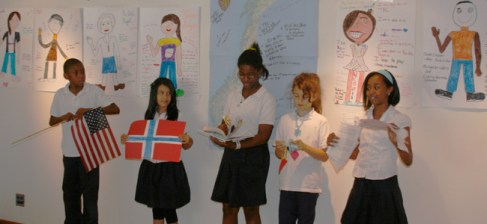
The Embassy Adoption Program works with public schools in the Washington DC to bring global education to DC public schools through DC’s international community. Since 1974, the Embassy Adoption Program works with 5th and 6th graders to engage with the concept of global education in various classrooms. The concept of the program is that a certain class is “adopted” by an embassy, establishing a connection within the local and international community. Students will then spend an entire year engaged in programs that enhance in cultural competency, increase cultural communication skills, and help children understand local and global communication. 

“Program highlights include classroom sessions, hosted by embassy representatives, field trips to gain hands-on experience with their adopted culture, a final presentation demonstrating acquired knowledge for the ambassador and embassy representatives, and mini United Nations event held between all DC public schools Embassy Adoption classrooms.” 

This program is delivered towards the educational community within DC’s public schools. The Embassy Adoption Program demonstrates innovative practices in the field of global education and offers students a variety of challenging activities. Students are partnered up with community members that strive for a better and more globalized education. The classes that are chosen within the DC area expand in pedagogical boundaries by moving students outside of the classroom. The students are able to travel to cultural centers, museums, and also restaurants to gain experience with their “adopted” culture. This is a wonderful way to be globally inclined by allowing the youth to be engaged with others around the world and within the community. 

ImageImage

I would think an educator would be extremely interested in this program, since it offers several different attributes toward global education. An educator would incorporate the concept of community building and the remaining pillars of peace education. Since the program already sets the attitude of being culturally inclined and allows students to engage with others in various environments aside from the classroom, the students should then gain a better understanding in peace education itself. In order to strengthen this resource, I strongly believe that the program be expanded outside the DC area. Several cities, aside from DC should be involved with the The Embassy Adoption Program because it offers students the wonderful opportunity to grasp various cultures and innovative surroundings. 

Goals

  • Enhance students’ cultural competency
  • Increase cross-cultural communication skills
  • Aid students’ understanding of their local and global communities
  • Offer students a variety of challenging themes and programs
  • Partner with community members who demand better schools

The Embassy Adoption Program moves away from the mainstream or tradition approaches by allowing the students within the DC area to engage in cultural experiences with people abroad. The program places students in different communities and allows them to gain a life changing experience. It’s as if the students are having the great opportunity of studying abroad and understand cultural and global topics at such a young age. This displays the understanding that our time and generations have changed; we must transition to a more globally enhanced society.  


The Embassy Adoption Program is a compelling opportunity that could only exist in the District of Columbia, and at DC Public Schools. It is an opportunity to expand students’ global understanding, increase interactive programming options, and continue on that road to becoming the highest performing urban district in the nation.

Two stakeholders that may be able to benefit from this post would be the DC school systems and specific students with the strive and motivation to be involved in the Embassy Adoption Program. This way, students in different regions throughout the US can partake in this this extraordinary program. My post will be able to reach out to the DC public system to attempt in changing the policy and allowing more regions to be involved in the program. 

Resource: 

http://dc.gov/DCPS/Beyond+the+Classroom/Embassy+Adoption+Program 

The Interrupters

I had seen clips of the documentary the Interrupters on PBS a few times, but never got a chance to watch the full length of the movie. When I finally wanted to watch it, they weren’t airing it on T.V anymore. Luckily the PBS website had the full documentary online and for this blog I will give a summary of the movie and what I thought about it.

The Interrupters

http://www.pbs.org/wgbh/pages/frontline/interrupters/

The documentary “The Interrupters” looks at the life of three Violence Interrupters and their work within a span of one year. These Violence Interrupters work with an organization called Ceasefire in the most conflict-reddened areas of Chicago, who try to protect these communities from violence that they were once a part of. The film was directed by Steve James, an acclaimed director known for his powerful portrayal and insight of communities and cultures in his movies and documentaries. Interrupters was filmed during a period of constant youth violence in parts of Chicago, in African American and Latino neighborhoods, and during a time when the United States had its eye on Chicago as a national symbol for the violence in our communities.

Founder of Ceasefire, Gary Slutkin, believes that the spread of violence in communities is similar to the spread of diseases and epidemics, “violence is like the great diseases of history…. violence as behavior, not as bad people.” For the young people in these neighborhoods, they see violence as their disease and they expect that they are going to die from this. Tio Hardiman, who created Ceasefires main program, “Violence Interrupters” explains that violence is a two-step process. The first thought is grievances; people come up with reasons to start a conflict for example, “He looked at my girl…he owes me money…he’s a Sunni…he’s a Palestinian, and so forth. The second thought is that these grievances justify the violence.” Tio, just like members of the Violence Interrupters has street credibility (because of his own personal history), which gives him full insight into the violence and minds of Chicago’s youth.

Violence Interrupters
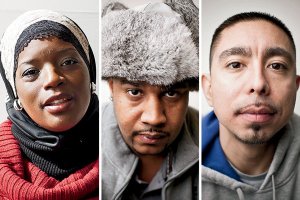
The three Violence Interrupters that are followed throughout this documentary are Amina Matthews, Cobe Williams, and Eddie Bocanegra. Amina was the daughter of Jeff Ford, one of the biggest gang leaders in the history of Chicago. In the documentary Amina is what Tio calls the “golden girl,” she knows how to get them (the community youth) to open up. Being an ex-gang enforcer and one that has lived a life in shoot outs, she knows what its like to be a youth in these communities that are plagued by violence. Cobe Williams, scarred by his father’s murder, began a downwind spiral at the age of twelve. After being in and out of jail numerous times, Cobe decided to turn his life around with the help of his family. In the documentary we see that Cobe, with his humor and general good nature, “knows how to get in, he knows the language – what to say, when to say it.” Cobe too has big time credibility with the gang members because of his past, which allows him to easily insert himself within the conflict in order to resolve it. Last, but not least is Eddie Bocanegra, who is still daunted by the murder he committed at the age of seventeen. For him, his work with Ceasefire as a Violence Interrupter is a repentance for his past actions. Playing on his strength in art, Eddie is able to and concerned with spending majority of his time with young children affected by the aftermaths of violence.  He teaches the children art, warns them of the trauma experienced by those who have come face to face with violence, and makes an effort to keep children off the streets and get them the support they need.

Throughout the documentary, the viewer is able to look into Ceasefire meetings and the conflicts that take place within the communities. Each Violence Interrupter has a past of their own, and each uses their history and knowledge of the streets to get closer to their goal, which is to “ stop the killing, and save a life.”

Youth

One of the first scenes we see is of a conflict-taking place right in front of the Ceasefire building. Amina Matthew quickly interrupts the conflict and has both groups separate.  What is profound is that even a five-year-old girl was shouting profanities and getting involved in a conflict that had nothing to do with her. Later, Amina talks to some of the youth and is able to get them to open up through different forms of communication, one form being laughter. Amina explains, “If you get them to laugh at themselves- find that soft side, not their weak side, then you ride on that.”

In these streets the youth have been brought up with the notion that “you have to stand up no matter what happens… death before dishonor.” They have been taught violence, as violence is a learned behavior. One youth justifies, “If you don’t do it, they’re going to do it to you, you go hard or it’s your life.” They say all odds are against them, they have been brought up this way, they want to fight, and that history is up against them.

One scene in the documentary that was very overwhelming for me was a still shot of a wall of names, names of all who had been killed, murdered, and shot, and in one spot someone had written, “ I am next…” This shows how deep the youths mentality about violence is, and that they think they are stuck in it, when in reality in order to break out of it they have to find change within themselves and their peers. However, in a sense they find an honor in getting killed. They want to be known that they didn’t step down, that they fought and died, and that they know that when they die, they’ll get all the hype, both from the community and the media, that they have made normal around such drastic deaths.

Tio explains in the documentary that “Once media goes back to wherever they came from, we have to step up to the plate and make something happen up over there.” He is aware that a lot of the violence isn’t gang violence, its interpersonal conflict that deals with respect and disrespect, not being accepted in an overall society where a lot of people are ostracized, and so they try to dominate their societies. Their actions go from “zero to rage in thirty seconds” and they act out because of something that upset them earlier in their day.  With this kind of anger and violence, Tio explains that they cannot mediate the conflict without full confrontation. As the documentary comes to a close, Tio explains that African American and Latino communities have been beaten for so long with poor schools, lack of jobs, hopelessness, and despair that it is “hard for people to stick with peace if they don’t have a stick that they can hold on to.”

Analysis

Although this documentary looked at the violence in Chicago communities as a whole, it also focused on specific youth whom Aminah, Cobe, and Eddie personally intervened with; Capyrsha Anderson, Lil Mikey, Flamo, Vanessa Villalba, and Kenneth. Along with these young adults, Ceasefire was able to prevent numerous outburst of violence to occur in their communities.   Its impact was beyond substantial. These Violence Interrupters were right there with each act of violence from the beginning to the end, and used their knowledge and insightfulness to the best of their ability to reduce the tension of the conflicts. Each young adult the Violence Interrupters assisted have taken a full 360 in changing their lives, sometimes all one angry person needs is someone right there beside them to show them the right path. 

Watching this documentary made me realize that these communities have been “brain –washed” into believing that violence is the only way to solve a conflict.  However, when they have member of Violence Interrupters come in and show them alternative options, it opens up a number of other possibilities for them, with a less drastic cost that wont end up affecting them for the rest of their lives.

I could definitely see myself incorporating this type of intervention and peace education into my practice. It is always useful to have those who are knowledgeable of a conflict come in and help resolve a conflict. What I liked the most was that each Violence Interrupter had a violent past of their own which they rid themselves of, and they knew exactly what was going on in the minds of the youth. Because of their insightfulness, they were able to assist the community and individual youths to a level of nonviolence.

Stakeholders:

Stakeholders that I believe will be able to benefit from my post are anyone who lives in a community that violence plays a big role in. For older community members, this type of intervention and peace education would assist their communities to a level of nonviolence for the youth. 


UNOY Peacebuilders

As a Global Affairs major, I was really interested in finding a blog topic that had a global approach and perspective to peace education. Through searching on the web, I found this amazing organization called UNOY (The United Network of Young Peacebuilders). UNOY (prounounced  ‘you know why’) is a global network of young people and youth organisations committed to establishing peaceful societies.  They have been around since 1989 and are based in the Netherlands. they consist of 49 member organizations in Africa, Asia, Europe, Latin America and North America.

UNOY’s mission is ” to link up young people’s initiatives for peace in a global network of young peacebuilders, to help empower their capacities and to help increase the effectiveness of their actions” They achieve this goal by implementing a wide range of activities in each of their main areas: advocacy and campaigning, capacity building and gender. UNOY believes that young people are an essential part of peacebuilding because:

  • Young people are more open to change
  • Young people are future-oriented
  • Young people are idealistic and innovative
  • Young people are courageous
  • Young people are knowledgeable about their peers’ realities (http://www.unoy.org/unoy/who-we-are/our-vision/)

Some projects that UNOY has implemented in 2012 include, the Educating for Peace seminar that brings together members from all over the world, the Peace of Mind educational program for students, and training courses on peace building. Members even traveled to Colombia, Argentina, and Nepal where they were able to teach workshops on issues such as human rights, democracy and gender to youth there!

This organization caters to a wide range of peace educators and students alike. UNOY has created excellent resources that can be incorporated into a classroom or community setting for youth. The beauty of UNOY is that the wide array of projects it creates can be applied in a global AND local context. Most importantly, UNOY gives  young people the opportunity to get involved!!! I would especially recommend checking out their volunteer programs if you’re interested in working on an international level 😉 Through its broad scope of activities and projects, UNOY teaches youth the necessary skills and tools needed to become peacemakers in their own communities.

A clip describing one of UNOY’s projects in collaboration with other international youth organizations:

Resources:

UNOY home page http://www.unoy.org/unoy/


Peace in Prisons

I was surfing the web to try to find a new and interesting peace project to share with everyone. I came across an article on Words of Peace Global website. This website tells its audience about things that are going on the world, as well as events, webcasts, and television schedules on several continents.

The article that I found talked about a specific peace education program that came into the Dominguez State Prison in San Antonio, Texas. The major finding in the article was that for the inmates that attended the workshop, there was only a 1% that returned to the prison.

This program is based off of Prem Rawat’s message of peace.  Rawat has is own foundation called The Prem Rawat Foundation or TPRF. His message is simple. “Peace needs to be in everyone’s life. The peace we are looking for is within. It is in the heart, waiting to be felt. It is not the world that needs peace; it is people. When people in the world are at peace within, the world will be at peace.” 

For four years volunteers for the TPRF program have taught workshops at the Dominquez Prison. The Captain of the Prison, Captain Carter is the head of the Correctional Officers and Volunteer Services. He was quoted in an interview by saying, “The offenders who attend the program, their disciplinary record has gone down. They stay out of trouble. It has a positive impact on everyone who attends the class. It is one of my best classes because of the attendance rate and the turnout. Of the seven that I have, this is by far the best.”

I think it is important for inmates to learn the meaning of peace. The reason prisons are full of prisoners is because they have committed acts that are not viewed as peaceful. Giving the prisoners something to believe in and something to strive for is something that is so important in their rehabilitation. Most people do not realize the amount of rehabilitation that goes into the prisoner’s stay in prison. A lot of the inmates in prison will be released after they serve their time. Allowing them an opportunity to learn about peace, and how they can bring it into their life is important.

On the Words of Peace website there is an interview from the Captain, which I think is something worthwhile to watch.


Resources:


http://tprf.org/prem-rawat/about-prem-rawat.htm


http://www.wopg.org/en/news/around-the-world/1269-prison-official-speaks-about-tprfs-peace-education