Building Capacity For Peace Through Art

Se Young Yoo / CONF 340 / October 21, 2019

Abstract

When talking about conflict resolution processes in culture, artistic tools and strategies have the ability to be successful. People feel touched unconsciously from the artworks. For peace to replace violence, broken relationships are re-created using an array of processes that address trauma, transform conflict, and do justice. These processes give people opportunities to create long-term, sustainable solutions to address their needs. Therefore, this article is aimed to provide a guidance that educating and building capacity for peace through art for people who are dealing with the conflict.  

Moreover, this article can be used for diverse groups of people suffering from conflicts and art therapists. The art in education can encourage and support people to gain new perspective about conflict and its transformation through movement, creative expression, and embodied experience. Such approaches seek to increase awareness of non-verbal communication, generate fresh perspectives, and enact behavioral change in the midst of conflict, chaos, uncertainty, and rapid change.

Mexican Muralism Movement

Like most countries in Latin America, Mexico has a painful history of conquering immigrants. Independence sent all of Latin America into delight, but the ensuing era of chaos brought them to despair again. Confusion has naturally led to the tyranny of the powerful. In Mexico, the famous dictatorship of Porfirio Diaz has long groaned Mexico. This was ended by the revolution began in 1910, but the revolution was only the beginning. The multi-racial population composition, the extreme gap between the rich and the poor, and the serious confrontation between the social classes, remained an urgent issue after the revolution. Those who succeeded in the revolution needed to unite Mexico, and the model presented for this was the “Mestizo.” The term Mestizo refers to the mixed race of a Spanish American and an American Indian, but from now on it describes as an ideal race for the Mexican. Thus, the movement of research began to be carried out in order to push aside an old-fashioned heritage what is now Spanish, and to emphasize the ethnic identity of other civilized European countries, especially Britain and France.

The Mexican government began the mural movement by reducing the need to create an integrated Mexican culture and providing the walls of public buildings to revolutionary artists in order to integrate the mestizo, which emerged as a new class, into the national culture and establish social homogeneity and ideology.

Mexico’s mural movement centered around Diego Rivera in 1921. Diego Rivera faithfully followed the Mestizo nationalism suggested by Minister of Education, Jose Vasconcelos or anthropologist Manuel Gamio, glorifying the Indio past as the starting point of a new national history, and portraying the mixed race, Mestizo, as the center of a new identity. Diego Rivera, Jose Clemente Orozco, and David Alfaro Siqueiros are known for three great artists of muralism. Specifically, Diego Rivera faithfully promoted the achievements of the Mexican revolution by presenting the country, the organizer of the mural art movement, as the new leader of unity. Diego Rivera interpreted Mexico’s history as a dichotomy between internal and intruders, a hostile structure advocated by Mexican nationalism, and painted murals that faithfully embodied the dichotomy of the people against the landlord oligarchs and upper-tier Bourgeoisie.
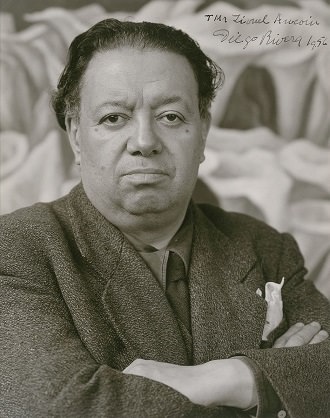
Diego Rivera (1886-1957) – one of three great painters in Mexico

Although the mural movement is strongly initiated by the needs of the government, but it cannot be seen as simply a government-led movement. Because the artists who participated had their own firm ideology and became an art movement centering on them. Thus, this mural movement is not just a political propaganda but an example of formative arts that harmonize the beauty of content and form. With the historic mission of leading the people, the artists tried to actively participate in society instead of just staying as a painter, recognizing that walls are not personal and can be a powerful mass mediator. Given the circumstances of the time when the majority were illiterate, the use of murals may have been a natural choice. It is also a reflection of the times that they have come to use a method of realism that is easy to reach the people rather than a Western modernity inclined to abstract trends. Once the purpose of mural painting was to serve as a text to the people, the realistic and descriptive way of expression would have been very effective. The goal of mural painting was to bring national unity from ancient Aztec civilians to memories of brutal conquest to independence from it and subsequent trials, and eventually hope for a new society that was acquired through revolution. Such a total history is well illustrated in one of the three great artists of the mural movement, Diego Rivera’s “History of Mexico.” The vast historical trend in Diego’s murals would have allowed Mexicans looking at the murals to look back on their ancestors and feel that their minds are connected to their present state, tying themselves and other compatriots on a single line. This creates one strong ideology, or nationalism. Also, the heroes of the revolution painted in murals would have offered them a sense of pride that was daunting and hope for the future.

The History of Mexico-mural in the National Palace in Mexico City

The Influence of Mexican Mural Movement

The Mexican muralism was an art movement that sought to popularize art which was owned only by the privileged class and, on the other hand, a nationalist and cultural movement that sought to find traditional Mexican culture by advocating anti-imperialism and anti-colonialism. Also, the mural movement itself was for the public, so in some murals it served as a spokesperson for conveying the needs of the public. Furthermore, it serves as the cornerstone of the mural movement not only in the United States but also in Latin America and African countries in the 1960s. Among the American painters who participated as assistants in the making of murals at the time were Ben Shahn (1898-1969), best known for his works of social realism, and Jackson Pollock (1912-1956), who later became a pioneer of abstract expressionism with “action painting.”

The mural movement in Mexico visually symbolizes the value or belief, history, culture and vision of Mexicans, and members of the community identify their community-related identities through symbolic works. In this cyclical process, unconscious emotions toward mural paintings are shared among community members, creating a sense of community, such as belonging and unity. After all, the mural movement serves to unify the members of the community.

Ways to use this source

In order to use this source effectively,

  • This article only provides a case of the Mexican mural movement and its effect to the society. If you are willing to explore more about Mexican muralism, you need to research about the history and background information of it.
  • Furthermore, you can discuss about the fact that limitations of artworks. Since murals painted in realistic form to make it easier for the people to understand. In other words, the artist’s subjective thoughts can be conveyed on to what people almost perfectly. In this case, the viewer becomes a passive object that simply accepts the artist’s ideas. Thus, the values and ideas that the artist possesses are very powerful. From this point, you can have a debate whether to what extent should political intervention or social reflection be allowed in art?
  • This article might be useful when discussing a non-violent social movement.

You may share this article or questions below to your students or colleagues:

  • How to find strategic ways of incorporating the arts into the conflict resolution and to create a space where people in conflict can reconcile themselves through arts?
  • Should art remain in its own area, not in any way related to politics?
  • In order to succeeds non-violent social movement such as Mexican Mural Movement, what is the most important aspect?

References:

https://www.bbc.co.uk/programmes/p05pnzp2

https://www.bbc.co.uk/programmes/p05pnzp2

https://www.moma.org/collection/terms/183

https://www.diegorivera.org/

Learning for Peace in the Democratic Republic of Congo

Cherin Yoon | CONF 340 | October 14, 2019

Education provides children with opportunities to escape poverty and motivations for building a promising future. However, conflict and fragility act as a huge obstacle to accessing and maintaining quality education.

In the Democratic Republic of Congo (DRC), nearly 7 million children aged 5 to 17 are out of school, and about half of girls aged 5 to 17 do not go to school. As one of the poorest countries in the world, the DRC has not been able to promote quality education due to numerous vulnerabilities, including the economic recession caused by decreased raw material costs, the political fragility resulting from the upsurge of social crises, natural disasters, and unstable school infrastructure.

However, education is critical to establishing peaceful, united societies. It can be greatly influential when it is equitably available, of good quality, conflict-sensitive, and relevant. It lays the groundwork for development of various aspects of the country, including economy, governance, equality, identity and culture, which can ultimately help address the variables that incite conflict.

Therefore, in the case of the DRC, UNICEF has been working to protect the children’s rights and help children fulfill their potential by connecting education and peace-building. UNICEF aims to create safe and secure learning environments and provide the youth with development opportunities, which can critically contribute to peace in the region.

To be specific, UNICEF initiated the Learning for Peace program to enhance the ability of the citizens in the DRC to live inclusively and harmoniously. The program is a partnership between UNICEF, the Government of the Netherlands, the national governments of 14 participating countries and other key advocates. As illustrated in the video below, the initiative aims to strengthen the role of education in building peace in areas at risk or affected by conflict.

Created with the support of local communities in the DRC, the film gives an overview of the UNICEF Learning for Peace Program which has impacted the lives of more than 2 million children and citizens in West and Central Africa since 2012.

The program encourages communities to incorporate peace-building activities into schools. By using school as a place to target various members of the community, it helps build bridges between conflicting parties. Teachers lead activities that promote social cohesion within the school. Children have become main actors in peace by being a part of peace committees and planning activities such as sporting events, talks and plays to raise awareness in their communities. Teenagers also had the chance to express themselves and organize activities in adolescent clubs. As a meeting point between discordant groups, schools have held community events and brought parents who used to be unwilling to get along with each other.

Two important stakeholders in this project are the government of the DRC and UNICEF. In post-conflict situations where education is very important, the government has been able to re-open schools in the villages with the support of UNICEF. The government’s support for awareness campaign to convince parents to send their children back to school shows how schools can offer a great opportunity to learn to live together again and return to peace. To successfully achieve the goals of the program, it is essential for UNICEF to actively invest in long-term, sustainable development of the program in the DRC, a conflict-affected nation that is in desperate need of a great amount of humanitarian assistance following various local crises.

References
https://www.youtube.com/watch?v=0T6JRjdbeOE
https://www.unicef.org/sites/default/files/2018-10/F_UNICEF1006_LFP_R3-online_single.pdf
https://www.unicef.org/stories/learning-for-peace-democratic-republic-congo

Beyond the Games

Junho Hong | CONF 340
October 14, 2019

Sports can be used as powerful tool to promote peace. Sports bring people together despite differences and boundaries. The International Olympic Committee (IOC) has put tremendous effort to promote peace through sports. As shown in the Olympic Truce, the IOC and the Olympic ideals seek to serve peace, friendship, and understanding in the world, through cooperation with organizations, development of educational and research programs, and communications campaigns.

The Olympic Games showed the world how to compete peacefully. They showed us that, despite all our differences, it is possible for humankind to live together in peace, respect, and harmony.

– IOC President Thomas Bach

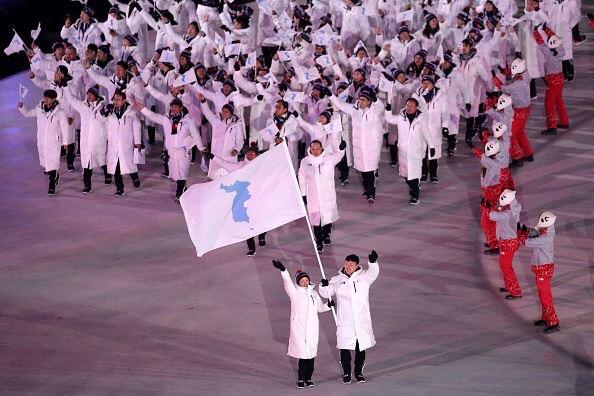
The impact of sport in peace development was demonstrated in the latest Winter Olympic Games held in PyeongChang, as North and South Korean teams marched as one in the opening ceremony of the event. Together with the joint women’s ice hockey team, the two nations marching under one flag was the most dramatic gesture of reconciliation.

Peace Education and Social Development Through Sports

Sport is a vital part of peace education especially in young ages. Sports draw people of all gender, race, and age, and can be used to promote respect and harmony. Gender is one of the primary aspects sports can contribute to promoting equality as sports can empower women in all ages, advancing gender equality. Sports can also draw children from all parts of the world to cooperate. It teaches acceptance of others, compassion, cooperation, and equality. Sports induce friendship and instill mutual respect.

The International Olympic Committee has also worked towards social development by creating the Olympic Refugee Foundation to support refugees and displaced people through developing safe, basic, and accessible sports facilities.

Highlighting their efforts to build bridges and promote reconciliation, the IOC has announced April 6th to be the International Day of Sport for Development and Peace. Through the International Day of Sport for Development and Peace, the IOC boosts the acknowledgement of peace building and education through sports, promoting that sports can help unite people and encourage a culture of peace and social development.

Founded upon the belief that sports can bring people together and build bridges regardless of background, age, race, or language, the IOC empowers sport to be a factor in peace building education.

The Rwanda Peace Education Programme: From National Trauma to Art and Education

Yihyun Andrea Kwon | CONF 340 | GMU

When Adolf Hitler committed suicide in 1945 and Nazi Germany caved in upon itself to reveal the devastation of the Holocaust, the world said, “never again.” Then, the Cambodian Killing Fields occurred. The Rwandan genocide was revealed. More recently, thousands of the Rohingya tribe have fled from Myanmar in fear of further ethnic cleansing instigated by the government. Although more than 70 years have passed since the end of the major world wars, the international community has yet to find any real, proventive solutions to major humanitarian crises around the world. We are left to deal with the aftermath of violence to the best of our abilities.

All things considered, I believe that education is one of the most effective tools for turning trauma into reconciliation and remembrance, and more importantly, changing patterns of mass violence. One successful case of utilizing education as a means of peace can be found in Rwanda, where there are six major memorials that commemorate and honor some 800,000 who were killed during the civil violence of 1994. For this blog I will specifically focus on the Rwanda Peace Education Programme (RPEP) launched by the Kigali Genocide Memorial, in which there has been significant action built around mobile art and education programmes.

The Kigali Genocide Memorial opened in the early 2000’s and is the largest of the six genocide memorials. It serves as a center, gallery, exhibit, and houses the Genocide Archive of Rwanda that does collects data and identifies about the Genocide victims. The Kigali Genocide Memorial is also the resting ground for over 250,000 victims, both named and unnamed.

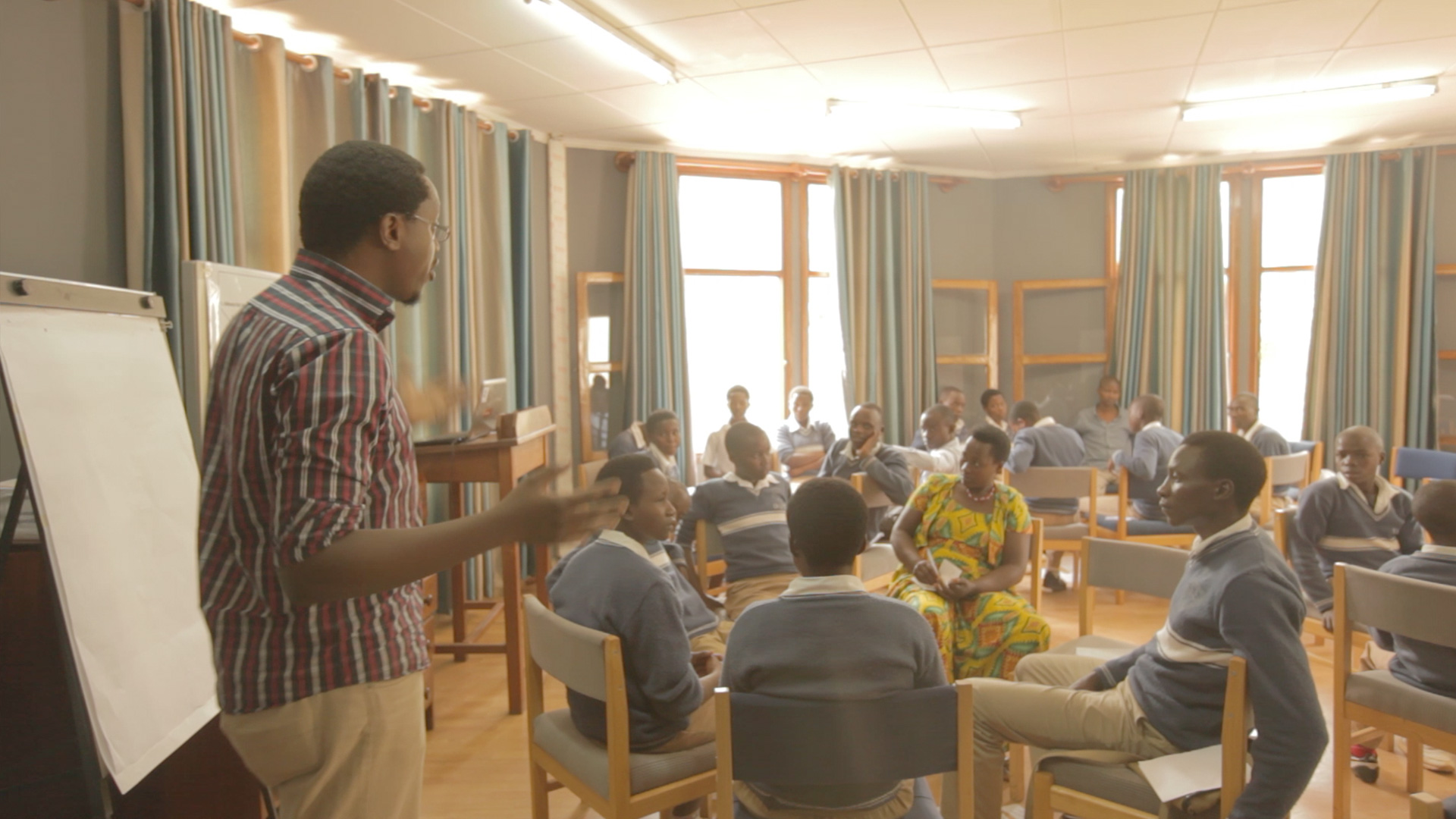
The Kigali Genocide Memorial has been extremely active with their educational programs and activities. In 2013 they launched a new ‘mobile extensions’ project with their Rwanda Peace Education Programme, in which they make external visits and set up programs in schools and communities. The major components to their Education Outreach program include: training teachers, opening school workshops, increasing community and school debates, initiating dialogue clubs, and closing with arts and drama workshops. These arts and drama workshops often include a public performance, incorporating art and story-telling and bringing to life the ideals of the program.

According to the program video available on the Kigali Genocide Memorial, the program aims to work closely with students and teachers in order to help develop critical thinking that is not always taught in schools and create an understanding of how people may act differently in times of ethnic crisis. The driving force behind these programs is to use these mobile exhibitions to tell the story of the genocide, it’s effect on Rwanda, and the forces of reconciliation that have re-built communities. REPEP is currently working with 20 communities around Rwanda to facilitate the programs, though similar programs are also being conducted the Genocide Archive of Rwanda and classrooms set aside in the Kigali Genocide Memorial.

The interactive, art-infused, story telling programme of the RPEP

One other example of how the program incorporates art and storytelling into their programs is the case of their collaboration with ‘Radio La Benevolenija,’ where they worked to infuse the program lessons into the storylines of a popular soap opera that has nation-wide popularity, helping to bring transformation to the mindset of the masses.

Two major stakeholders in this program is the Rwandan government, as well as local nonprofits. According to the International Society for Education through Art, art has yet to be formally included in the Rwandan curriculum. When I inquired about this to my good friend from Rwanda, she clarified that art education is not yet a part of the A and O levels for secondary education. However, there are several rising nonprofits working with students to use art as a tool of reconciliation and vocational training. The government is beginning to realize the increasing demand for such education and is attempting to create more after-school vocational opportunities. There is a growing need for a foundational understanding built on creativity that will lead to a new economy of art for Rwandan youth. This is already happening, with major art centres growing in Kilgali and several other regions, as well as the now infamous annual Ubumuntu Arts Festival held in the K. This is why the RPEP is important, and will continue to grow in importance, to the growing discourse around art and education in the country. The RPEP could be used as a model for creating a sustainable art program, being the largest ‘after school’ program being employed by a non-governmental entity.

Less than three decades have passed since the happenings of the Rwandan Genocide in 1994. Memories are still fresh amongst the living, as even the guides of the Kigali Genocide Memorial are survivors and victims. The remnants of the dead left in the memorial are familiar to many of the living who visit.

Art has proven to be quintessential to the process of remembrance, healing, and reconciliation. It’s a way to express the mourning of entire civilizations and restoring humanity to communities. We’ve seen it time and time again; Pablo Picasso’s 1937 oil painting Guernica depicting a bombing during the Spanish Civil War, John Lennon’s universal anthem of peace Imagine, South Korea’s Statue of Peace, Sonyeosang.

In a country still re-living the violent past that occurred only two decades ago, there is past that must be reconciled and a future that must be reshaped. For the younger generations who may not have directly experienced the genocide but are still in danger of succumbing to the same cycle of ethnic divide, it’s imperative that they are given the proper educational tools to gain understanding and empathy.

A past that must be reconciled and future that must be reshaped: The Kigali Genocide Memorial Head, a survivor of the genocide.

Consequently, art is going to continue to gain momentum as a powerful tool of education, both in Rwanda and around the world where conflict and differences divide entire societies. What the Rwanda Peace Education Programme is accomplishing with the youth in local communities all around the nation may very well be what propels into the new future.

International Organization for Peacebuilding and Palestine

Jiwoo Kim (Grace)/ Professor Romano/ George Mason University/ 07 October 2019

Interpeace and Their Work in Peacebuilding

Palestine females advocacies for women’s rights in peace and security through art activities.
  • What is this article about?
  • Why is peacebuilding necessary?
  • What are the mission and value of Interpeace?
  • Conflict example
  • Interpeace supports women in Palestine
  • How can this be used for education purpose?
  • Goal
  • Audience

What is this article about?

The article focuses on introducing what the “Interpeace” is and what it works for. There is an example of what conflict the Interpeace has interfered in order to build a peace, and what kind of peacebuilding programs or projects they have reached out to. Among numerous peacebuilding communities and associations, the Interpeace was the most interesting non-profit organization to write about, regardless those popular organizations such as the United Nations.

The Interpeace is an abbreviated word for “International Organization for Peacebuilding.” This is an organization that is independent and works to support the United Nations very actively. Furthermore, they work for a prevention of violence and building long-lasting peace for those individuals, groups, or nations whom are in conflicts. Thus, the students from all education levels, teachers, and professors may be use this article to learn about peacebuilding example, process, implementation for school activity, and the non-profit organization’s activities for peacebuilding.

spreading the peacebuilding processes and those conflicts that need such processes are one of many mission and values that are stated by the Interpeace. By doing so, the educational settings that this resource is best placed are: scholars, professionals from different organizations or peacebuilding, and students in any level who could understand the pressing issues and complexity of conflicts that need a transformation into peacebuilding. Depends on what programs or what pressing issues the Interpeace is onto, it could be formal and informal.

Why is peacebuilding necessary?

A conflict could happen in any kind of situation and any kind of relationship. It could be intercommunal, communal, international, and many more. Therefore, a peacebuilding process and its necessity are what people must learn about, in order to understand and implement one of the most preferred conflict resolution strategies.

There are many peacebuilding organizations and communities world-widely: the United States Institute of Peace, Search for Common Ground, Peace Direct, International Alert, Global Partnership for the Prevention of Armed Conflict, and so on. This is how much a peacebuilding work is important in conflicts, and its necessity is highly highlighted because peacebuilding does not only establish a peace between disputing parties, but it helps them to connect and communicate by understanding the root cause of conflicts and embracing differences.

Thus, students and professionals may learn: (1) what the Interpeace does, (2) what are their mission and values, (3) women in Palestine conflict, and (4) how can this article be used in education.

What are the mission and value of Interpeace?

The mission of Interpeace is to strengthen the abilities of societies to deal with conflicts, by transforming violence to non-violence. Furthermore, they assist the international community such as the United Nations, to be more effective in their role in peacebuilding, for the global world issues that are going on today and also seem to protract or escalate.

In order to do so, they upload current pressing issues, that talk about what approaches they desire to take for long-lasting peacebuilding, and run peacebuilding programs that they created to interact with students and citizens to have them get involved in this organization’s events such as “peace talk.” Thus, this resource is not only for those who are in profession of conflict and peacebuilding, but also those individuals in any level who are interested in peacebuilding processes and world’s pressing issues.

Conflict example

Freedom of Theatre

It is very necessary to learn about what conflicts are ongoing in nowadays. If we look at conflicts all around the world, it may seem very intractable and inevitable. Therefore, the role of international peacebuilding organizations and communities is significant. For example, there are conflicts such as, ethno-religious conflict that is going on in Myanmar and Rohingya tribe, regional conflicts between Palestinian and Israeli, and both ethno-religious and regional conflict in Nigeria. These conflicts all require the interference of peacebuilding organizations such as the United Nations and Interpeace as mediators.

Now, to inform about what the Interpeace has put its efforts on, is that they have worked for those women in Palestine to cover their rights in political, social, economic, and security decision-making. Since the country “Palestine” has a political and societal ideology that are based on male dominance, women are excluded in Palestine society. Females are not welcomed to speak for their rights nor participate in influential decisions. Therefore, they have been experiencing discrimination and lack of security issues.

Interpeace supports for women in Palestine

In order to support women in Palestine to find their equality and justice, the Interpeace launched a Palestine program called the “Mustakbalna,” in 2004. This program’s purpose is to establish a civil peace between women and the Palestinian community, that let women to be engaged in the society by strengthening the role of young women and their advocacy in peace and security in Palestine.

Under the UNSCR (United Nations Security Council Resolutions) 1325 – which is about women, peace and security – the Mustakbalna had an important role in the prevention and resolution of conflicts, peace negotiations, humanitarian response and peacebuilding. This conflict resolution recognized the power of role of women in Palestine, and gave them opportunity to practice in art works such as photography, videography, theatre, drama, technology, and so on.

The Interpeace wrote a press release about its impact on change of women’s role in Palestine, by stating that “These comprehensive training efforts helped 120 young women between the ages of 15-25 to find their “own voice” using creativity and art. Throughout the sessions, young women improved their ability to have oftentimes difficult conversations about security concerns, covering issues such as domestic violence, sexual harassment and abuse with their peers, project staff, and key stakeholders, while at the same time linking these concerns to broader reflections about UNSCR 1325 and to what extent it can be used as an advocacy tool.”

To inform the world about their lives in Palestine as women, they often take photos or videos that describe their experience in restrictions, harassment, and discrimination in Palestine. After their practices and opportunities in becoming decision-makers and women leaders in Palestine, they could actively advocate for themselves even stronger and with a greater role as women.

Resource used: https://www.interpeace.org/2019/07/strengthening-the-role-of-young-women-in-palestine/?fbclid=IwAR2LUzq2LZyPerO6s0XiDDRUIODDE9PJgu_X-mddxlX_fLrvFLmtzIayuXg

How can this be used for education purpose?

The peacebuilding is one of the most important skills that is taught to practice in conflict resolution and conflict de-escalation; thus, I believe an educator may incorporate to use this source in classrooms for peacebuilding practices.

Create a peacebuilding conference based on what the Interpeace has done, for example, the establishment of a project called the “Interpeace and Freedom Theatre Project.” People will firstly form a group which represents different organizations and parties. Then, they will discuss about a particular pressing issue, and the way to build a peace for that case. People will be needed to discuss about what peacebuilding processes they should take and how it could be implemented in such conflict.

  • Peacebuilding Conference (Time: 60 minutes/1 hour)
  • Materials
  • Laptop or Paper
  • Pen or Pencil
  • Name Tags
  • Instructions

1) Five people per group will be representing different parties and organizations.

            a. Interpeace

            b. UNSCR (United Nations Security Council Resolutions)

            c. Parties from particular pressing issue (ex: government, external forces)

            d. Peacebuilding groups

2) Ask group to discuss about a particular pressing issue. (5 minutes)

3) Parties and organizations will be sitting in a circle and discuss about the issue. (10 minutes)

4) Come up with ideas to result peacebuilding, by enabling people to participate in peace and security processes at the national level. (35 minutes)

5) Analyze and organize the peacebuilding plan that is discussed during the peacebuilding conference. (10 minutes)

– Tips for Peacebuilding Conference

            a. It is very important to discuss as many peacebuilding processes as possible.

            b. This practice/implementation is focused on having a deep discussion about a particular pressing issue, that requires scholars’ knowledges and skills that are        learned from conflict courses.

– How to use this Resource

The Interpeace offers people to read news, journals, articles, and publications that speak about pressing issues. They suggest what peacebuilding processes that people or organizations could step into, depending on cases. Furthermore, this resource gives many opportunities for those who are interested in conflict analysis and resolution, and also peacebuilding, to get involved in projects, events, peace talks, programs, and also become a member of this non-profit organization.

Goal

The International Organization for Peacebuilding aims to support those organizations such as the United Nations, to work for peacebuilding more effectively. Furthermore, this resource states what pressing issues there are, so that many people and organizations from the globe could discuss about the issues, how to prevent it, and how to create long-lasting peacebuilding. It is a very good tool to learn about the conflicts and peacebuilding programs. The Interpeace deos not only address what current issues are going on today, but also suggests resolutions.

The article about young women in Palestine could be one of the goals that Interpeace has achieved. Young women in Palestine are not protected or secured as it was mentioned in the previous section. Therefore, the UNSCR and the Freedom Theatre used creativity and art to strengthen the role of young women as advocates of peace and security in Palestine.

The types of peace education, that the Interpeace mostly support, are conflict resolution training, democracy education, human rights education, world view transformation, CAR scholars, and so on that talks about peace and prevention of conflicts. Engaging with this resource will develop student’s understandings in peacebuilding processes, and also what worldwide pressing issues there are, to implement the peacebuilding and further conflict preventions for the future.

Audience

Two stakeholders who may be able to benefit from my post are other peacebuilding organizations or community centers who would like to have a collaborative works in peacebuilding, and also those educators who teach conflicts and peacebuilding. Yet, the network is not limited to reach to this resource because it is widely open for those who are in any level of education, and for those who are interested in peacebuilding and conflicts.

Think about…

Why is peacebuilding process emphasized in conflict resolution?

How can such strategy be implemented in our real lives?

Why is peacebuilding significant?

Share your thoughts with classmates, scholars, and professors!

United Nations Peacekeeping in South Sudan

Oct 1, 2019 – Dongkeon Kim

  • Abstract and source of information
  • Background of South Sudanese civil war
  • United Nations Mission in South Sudan (UNMISS)
  • Factors that prolong dispute
  • Ways to use this resource effectively

Abstract and source of information

This article will provide some thought for students to understand UN’s effort to provide human security in South Sudan. This is not only limited to personal security, but also food security, health security, and etc.
This can be used as a study material for community and individual, mostly to those who have interest in International Relations: Liberalism theorists, and Conflict Resolution theorists.
Also, words are put in very simplified form, which could be easily accessible for middle to high school education.

What to expect from learning:
– Students can use this resource to learn about the impact of UN efforts on human security in conflict zones. It can also be an opportunity to study and broaden their thinking of how to approach long-standing conflicts despite UN intervention.
– Recognizing that conflict resolution does not end with an act of making a peace agreement, further efforts should be made to understand the root cause of the problem and present new directions to resolve the conflict.
– They must understand the other types of human security and human needs in conflicting area, further researches are recommended.

Resources used for this article
한국국방연구원 (Korea Institute for Defense Analyses)- http://www.kida.re.kr/index.do
United Nations Mission in South Sudan (UNMISS)-
https://unmiss.unmissions.org

South Sudanese Civil war

In South Sudan, two years after independence, civil war began as a result of power struggles between leaders, which is leading to the present. South Sudan’s president and vice president, Salva Kiir and Riek Machar, were leaders of the Sudanese People’s Liberation Army (SPLA) who led the struggle for independence.
After the independence, Machar, who remained in the second position, often threatened President Kiir’s power. And President Kiir’s preemptive action was the beginning of the conflict. On July 23, 2013, President Kiir accused the entire cabinet, including Vice President Machar for attempt of coup d’état.
On December 14, 2013, during the SPLM National Liberation Council meeting, a conflict broke out between Salva Kiir’s followers and Vice President Riek Machar’s followers. The next day, a high-intensity war broke out near the presidential forces and dozens died.
However, contrary to the Kiir administration’s intentions, the conflict of leadership spread across South Sudan. President Kiir is the Dinka, the largest tribe in South Sudan (15% of the population), and the former Vice-President of Mazar is the Nuer, the second largest tribe (10% of the population).

United Nations Mission in South Sudan

UNMISS’ objective is to consolidate peace and security, and help establish conditions for development in the Republic of South Sudan, with a view to strengthening the capacity of the Government of  South Sudan to govern effectively and democratically and establish good relations with its neighbours.

UNMISS (United Nations Mission in South Sudan) / https://unmiss.unmissions.org

Personal security
UN peacekeeping troops and civilian police personnel are deployed to promote safe movement of population in their community. More broadly, UNMISS work to protect civilians, create conditions conducive to aid delivery and both monitor and investigate human rights abuses.
Food security
UN Food and Agricultural Organization (UNFAO) distributes seeds, tools for planting, and fishing kits. They also provide food vouchers that can be exchanged at market, improving access to nutritious foods.
Health security
UNMISS peacekeepers work to facilitate the safe delivery of humanitarian assistance, such as food, clean water, shelter and healthcare.

To look for more information,
https://peacekeeping.un.org/en/mission/unmiss

Factors that prolong dispute

There are many interpretations about South Sudan issue, but here are some examples of factors that prolong the dispute.
(1) With over 20 years of experience in the struggle for liberation with the Sudanese government, both sides believe that negotiating condition for political resolution is achievable if opponent is exhausted.
(2) The proliferation and distribution of small weapons has created tendency to depend on violence for problem solving.

Despite the fact that there are continuous effort of signing a peace agreement, the biggest problem is that sporadic engagements are leading to creation of refugee, famine, and ethnic retaliation. Since South Sudan is firmly concerned with the issue of national sovereignty, even UNMISS efforts to monitor and implement peace agreements are limited by the South Sudan’s refusal and restriction.

Ways to use this resource effectively

In fact, it is very common in Africa that disputes emerge from the power struggles become conflict between ethnic groups. A small dispute between the powers that resulted from the conflict of interests promotes division by race and religion, leading to bloodshed among civilians, which expands and reproduces endless hatred and violence.
The South Sudan case is a notable study in that it illustrates the problems that African countries face in their development after decolonization and independence. If so, we can raise more specific questions in terms of peacekeeping.

To educator or advocate seeking to use this resource:
– This article only informs short summary of South Sudanese Civil war and UNMISS’ mandate to this crisis. Hence take the information provided here to acknowledge the issue and what has been deployed to mediate the situation. If you are willing to explore and learn about South Sudanese Civil war, they have very complicated and ongoing dispute, and you can find decent amount of resources online.
– You may share this to your students or colleagues to raise some questions or make debate. And here are some recommended questions:
▶ Does military dispatch help create peace?
▶ What are the limitation of UN?
▶ What is human security, and why is it so important?


Author and references of photo used
Dongkeon Kim (Student in Global Affairs B.A., George Mason University)
dkim68@masonlive.gmu.edu
This research has been made for the course lectured by Professor Romano [https://scar.gmu.edu/profile/view/11531]
References:
https://unmiss.unmissions.org/sites/default/files/styles/full_width_image/public/field/image/38198819621_3b1fd9f143_k.jpg?itok=f6dF9Bi5
https://ko.wikipedia.org/wiki/%EB%8C%80%ED%95%9C%EB%AF%BC%EA%B5%AD_%EB%82%A8%EC%88%98%EB%8B%A8_%EC%9E%AC%EA%B1%B4%EC%A7%80%EC%9B%90%EB%8B%A8#/media/%ED%8C%8C%EC%9D%BC:%EB%8C%80%EB%AF%BC%EC%9D%98%EB%A3%8C%EC%A7%84%EB%A3%8C.JPG

Taking violence prevention seriously in middle schools

Christa Tinari, founder of Peace Praxis and co-author of Create a Culture of Kindness in Middle School, joins Nonviolence Radio to talk about the real meaning of kindness and some practical tools that can help us to show kindness with justice in more areas of our lives.

Check out the podcast here: https://www.stitcher.com/podcast/metta-center-for-nonviolence/peace-paradigm-radio/e/53362364

SChool Peace Sign Photo for Cover 2

My Journey with peace Education

If we think of pedagogy as the “the art of teaching.” One of teaching methods is sharing the untold stories like my story .Stories matter as D.r. Sara Cobb said’ stories have gravitas; they are grave. They have weight. They are concrete.

“I believe personally in the storytelling as a way of teaching and learning.”As practitioner and peace-builder. I prefer to read any book about conflict resolution that presents stories and link them to theories, to engage the reader and present the ideas of the book in an engaging manner. Linking the practice and the theory together is my version for better peace education and this is what I will try to elaborate on today.

College Campus Identities and Policies Role Playing Scenario Skill Share

This role play lesson plan was developed by M.S. in Conflict Analysis and Resolution students at George Mason University for Dr. Arthur Romano’s Pedagogy course and was piloted in that class.


Introduction:

In the last few years there has been a rise of real and alleged incidents of bias and hate speech on college campuses which have sparked vigorous and much needed debate over these events, what happened at them, and what the proper response ought to be. Often times the complexity of those events and of the identities, beliefs, policies, and intentions wrapped up in them get swept aside by one-sided rhetoric that simplifies incidents as revolving solely around questions of race, privilege, or free speech. In order to encourage students to critically explore the complexity of these issues and the spectrum of experiences, bias, identities, intentions, and policies this lesson plan lays out a role playing scenario around such an incident. Specifically this scenario is loosely based on a real-life incident at a college around a “Tequila party” that caused much debate which highlights the difficulty of reducing any such case into a clear-cut understanding of what happened or what answers ought to be sought. Please note that the scenario and roles used in this role play are fictional and have no relation to actual faculty, staff, or students at that college.

Goal:

The goal of this lesson is to have students engage in a lively discussion about the complexity of bias incidents by taking on two different identities, or roles, of fictional actors on a college campus. Ideally the discussion and the diversity of roles whose views and priorities might not align with every student’s own views will stimulate a better understanding of how such a conflict plays out in all its complexity. Additionally students will should gain some empathy and ability to understand, if not necessarily agree, with other points of view and see how this could be useful in dealing with these incidents. Rather than having the students looking at the conflict from the outside with the intent of fixing the problem, they will instead experience it from the inside and will confront differing view points on the incident and proposed college policy.

Schedule and Time: About 45 minutes

The lesson would be broken down into roughly the following schedule:

5 Minutes Introduction

Activity and prompt read out loud and explained to the class. A copy of both should be available either on a projector or on printed copies for each participant.

2 Minutes Groups and Role Assignment 

Class divided into groups of no more than eight (including facilitators) and are given their randomized roles. Note there should be one facilitator per group.

15 Minutes First Discussion

The facilitators help begin a group discussion with each role player introducing themselves and given time to speak. The facilitators should take an active role not to shape the group’s opinion but rather to help get everyone into the mood of role playing, to ensure everyone has a chance to talk, and to keep the discussion civil and on topic.

15 Minutes Second Discussion

The facilitators have all students pass their roles to the person across from them or to the right. Then the facilitators lead the groups in restarting the discussions again but this time with everyone’s new roles. The facilitators should guide the discussion the same way as the first one; with everyone introducing themselves and the facilitators both being involved in their role and acting as moderator when needed.

7 Minutes Debrief

The facilitators will announce when the time for the second discussion is up and they will gather everyone back into a larger circle. At this point they will ask the debrief questions to check-in on the dynamic of each group and of the individual students’ thoughts and feelings on the experience of the exercise.

Materials:

A projector and computer with which to display the scenario and discussion prompt for reference during the activity. The facilitators may also instead opt to print out copies of the scenario and prompt for every participant.

Printed and individually cut packets of role strips to be handed out to each group of eight students. The slips should may be given to each participant randomly or else may be folded and pull randomly out of a container. Regardless, it is important for each group to have it’s own separate packet of roles to choose from to avoid double roles.


Scenario:

Students of a dorm at Miskatonic University have advertised publicly on social media and with fliers around campus that they would be having a “Tequila Party,” which some of them also referred to as a “Fiesta.” The party went forward and involved drinking tequila wearing sombreros, pictures of which surfaced on Facebook after the event. In the days following the emergence of those pictures, some students began to protest against the event on the grounds it was a form of racial and ethnic stereotyping. Students and college groups on both sides began to be involved in protests and writing opinion pieces in the college paper over the event and the administration’s subsequent condemnation of any stereotyping as against the Honor Code and the University’s values. The administration has asked for respectful dialogue and has gathered everyone here today who is interested in a townhall to hear student feedback on how to move forward and address any concerns.

Prompt for Discussion:

The University’s Student Life and Multi-Cultural Committee has proposed that for the duration of the academic year (approximately three months) all non-academic events must be approved at least a week in advance by a newly created Event Review Board that will screen for and prevent potential violations of the Social Code and College Values. Please note that this is a proposal and that such a Board has not been set up yet.

Roles:

President of the University

  • You are the new president of an up and coming prestigious university. You have been given the legacy of working to hit the billion dollar endowment mark for building upgrades, competitive faculty salaries, and higher scholarships. Your background is in Public Relations and Business.
    • Hidden Concern – One of the biggest donors’ sons was one of the students who threw the party.
    • Other Concern- Save the reputation of the university without causing more controversy is main goal.

Student A

  • You are one of the students who threw the party. You are genuinely apologetic for the uproar, though are uncertain as to why it was/is an issue. You didn’t do anything maliciously with the intent to hurt anyone. You see no difference between the party you helped host and the atmosphere found in any Mexican restaurant. Anyone can wear Sombreros or drink tequila without being a racist.
    • Major concern, minimize social shaming (has been repeatedly called a racist in person and on Facebook).
    • Avoid long-term repercussions on your reputation since you will graduate in two years and need to find a job.

Student B

  • You briefly attended the party but you felt a bit uncomfortable with the atmosphere and so left early. You had initially intended at the behest of a friend whose girlfriend was one of the hosts. You think that perhaps the way the party was handled could be seen as inconsiderate and you are wary of stereotyping, but you also didn’t think it was a huge deal.
    • First concern, you think that the proposal is not the right answer.
    • Also concerned with cultural awareness/sensitivity.

President of Latin American Student Association

  • The University is located in a predominately white area where most of the diversity comes from the school which itself is not incredibly diverse. You created the Latin American Student Association to embrace and show pride for the Latino heritage of the increasing number of Latino/Latina students. You also felt the Association was necessary to combat a traditional lack of inclusion on campus.
    • Concerned with addressing underlying issues of discrimination and more clearly deliberate and extreme forms of hate speech experienced by students at the university and the local area.
    • You are worried about the intent and practically of the proposed review board – is this really addressing the issue? And is it the best and only way?

Student C

  • You have a mixed ethnic heritage of Irish on your Mother’s side and Mexican on your Father’s side. You have grown up in a similarly mixed community, and identify as both White and Hispanic. You did not attend the party, but could have and had thought about it. You are more concerned with recent intimidation and hate speech by some local residents against Latin students off campus. Personally you see no difference between the party and how it is acceptable that everyone wears green and drinks whiskey on St. Patrick’s Day.
    • Concerned with protecting mixed identity – and tired of not being considered Latino because of skin tone, etc.
    • Also concerned review board would not consider the complexity of multiple identities and would exclude the concerns or thoughts of such students.

Professor of Cultural Studies

  • You sits on the Student Life Committee and are responsible for creating the proposal under discussion. You are very interested in writing about the incident in your next book and see this as a testing ground for your theories. The proposal is based on your research on top-down administrative policies to socially engineer inclusivity or other desired traits within campus cultures. You have 20+ years of experience in Cultural Studies and Administration and are a tenured professor.
    • The committee is feeling a lot of pressure from the President to resolve this issue quickly but not as radically as your propsoal (in order to protect the university image).
    • You think that the proposal is a great way to ensure future events adhere to the university’s standards and values.

Senior Class Representative

  • You have been at the University for four long fun but hard years. Every year the University provides generous funds for the graduating class to have one last giant hurrah in what is known as Senior Week. As a Class Representative is it your job to help oversee the official parties and you are also interested in attending the many private ones too.
    • You are worried about having an unrestricted good time without cumbersome interference and oversight of private and semi-public parties during Senior Week.
    • You did not attend the party and don’t see why should it affect everyone else. You see the proposal as unfair and an overstrech of administrative power into student’s private lives and rights.

Student D

  • You are a veteran activist who has been involved in campus protests before. You have been closely following the course of hate speech incidents and stereotyping at other colleges and universities and believe that the party constituting a form of racist appropriation whether the students who hosted it were too privileged to realize it or not. You agree with the proposal to create an Event Review Board, especially since there have been other events on campus that have been culturally insensitive.
    • You are concerned with how board members are selected – will it be inclusive enough and will students get a vote?
    • You also firmly believe the students who threw the party should be reprimanded in a serious fashion.


Debrief Questions:


How did everyone’s group discussion goal? Did your groups seem to coalesce around one particular view or were there more disagreements?

Did you find playing the roles you were given to be difficult? Especially if the identity and view you were given was different from your own?

How did it feel to change identities half way through the discussion? Did you find that challenging and did you gain any insights into other view points as a result?

Have any of you experienced any incidents or townhalls such as the one we role played today? In what ways did  you find the experiences different or similar?

What do you think you have learned from this scenario and how do you think it could be applied to incidents and discussions about the complexity of bias, identity, and policy in real life?