Catharsis Lebanon

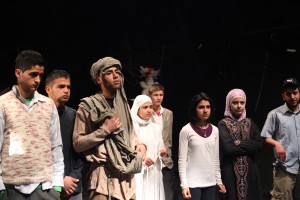
The discussions in class surrounding the topics of women and violence and the legal system reminded me of Zeina Daccache (a Lebanese actress, director and drama therapist) and the work she does with inmates in Lebanese prisons through her organization Catharsis: The Lebanese Center for Drama Therapy. Often working with those who have committed the most violent crimes, she works with inmates to deal with the emotions surrounding the crimes they’ve committed (or been accused of, as there are cases of corruption and wrongful imprisonment among those she’s worked with) and allowing them to assume roles that help them to work through the trauma they’ve experienced and to bring attention to the state of the Lebanese prison and justice system. The project is the first of its kind in Lebanon and only came about through Daccache’s tireless efforts to bring drama therapy to Lebanese prison’s that had previously been isolated from the public and the media.

The two most notable examples of her work have been in the Roumieh men’s prison and the Baabda women’s prison. In both, Daccache has implemented the same formula, but for very different audiences. In Roumieh, Daccache worked with twelve men to produce their own version of Reginald Rose’s play 12 Angry Men titled 12 Angry Lebanese. The play becomes a role reversal of sorts, where the men who had been judged all or most of their lives become the judges- debating and prosecuting the same society that played a role in their current circumstances. Many of the men had stated that the project was reinvigorating and had helped to restore a sense of humanity in themselves and others. For them, their identities were no longer just associated with being a prisoner or the crime they committed.

In the women’s prison of Baabda, the drama therapy takes on a very different context but has a similar end result. The women and the plays they perform are a discussion surrounding the gender disparities that still exist in Lebanese societies and the painful and damaging outcomes of these inequalities. Their plays often discuss the painful details of topics such as forced marriages, physical and sexual abuse, rape, and neglect and try to break the through the veil of shame and silence that these topics are often shrouded in. In the CNN interview (posted below), Daccache mentions that for many of these women, it was the first time that they had ever discussed what they experienced and lived through. But the result was the same as that of the men’s prison: many of the women walked away feeling empowered and like they had taken control of their histories and their stories. And a similar theme runs through all of their stories: the ability to tell stories that hadn’t been told before.

(Trigger warning for mentions of abuse and sexual violence)

Setting and Ways to use this resource

The two major stakeholders in a project like this could be either students in a peer mediating programs or even those living in communities affected by long histories of ethnic, racial, religious, etc. tensions and violence. Although Drama Therapy requires a certified drama therapist, aspects of it can be implemented in many schools and classrooms. I found that there had often been a strong emphasis on the idea of role-reversal and assuming new points of view, which is essential to resolving conflicts and disputes. By teaching students to reenact the dispute, but through another person’s point of view, students of all ages will learn to approach conflict creatively and while being open towards the experiences of others.

However, I think drama therapy would be most beneficial to communities and peoples where there is long history of trauma and conflict within and between communities. The dramatic and slightly fictionalized aspect of drama therapy offers a safe space to explore emotions that are often raw and too painful to deal with in the “real-world” setting of everyday life. It may also encourage participants to become active participants in the rebuilding process that occurs after prolonged conflicts, empower them to become more than victims of circumstance and begin to chronicle the origins of the conflict.

An advantage of programs centered on drama therapy is that it often employ multiple intelligences all at once. They require engaging our emotional intelligence and building analytical skills. It allows participants to build a small community with one another and create a safe space to explore sometimes-painful topics and subjects, while at the same time increasing participants’ self-esteem and pushing them to become active participants in their lives and communities. Because of the emphasis placed upon role-reversal, participants are able to reframe history not only for themselves but for their audience as well. Through drama therapy, participants are no longer just the subjects, but simultaneously become the creators, writers, and directors. They’re not just writing the beginning, but the resolution as well.

Sources:

Catharsis- Lebanese Center for Drama Therapy

BBC article on Roumieh

CNN article on Baabda

Seeds of Change: The Natural Classroom

Many of us have heard the metaphor, ‘our education is planting the seeds for the future,’ or something similar or maybe not! Regardless, I believe this needs to be taken more literally. The metaphorical seeds should include literal seeds. Humans and our environment are partners in a mutually eternal relationship; however, the harmony has been disrupted because of industrial neglect amongst other causes. We must teach the balance and sustainable treatment of the planet and mustn’t forget that environmental education is also under the umbrella of peace education. If teachers can keep this in mind, student’s learning will breach the walls of the confining classroom. The world will become their natural classroom, always available for exploration and discovery.

This focus on the natural world was also a critical philosophy of Maria Montessori.

“It is also necessary for his physical development to place the soul of the child in contact with creation, in order that he may lay up for himself treasure from the directly education forces of living nature.”

– Maria Montessori

We should teach to this kind of connection. Outdoor education is often survival or work based, a get your hands dirty kind of approach. The time spent doing these activities outdoors will help rebuild this relationship.

Outdoor education requires children to use all 5 senses and think about the world around them. They will learn to explore, discover, and reflect. Unstructured outdoor education will allow for the student to become independent. Outdoor education gets students physically active and our shown to be more nutrition savvy. Recess is a perfect example and oftentimes very profound interpersonal lessons are taught on the playground, however recess is often taken away earlier on in a child’s education. For the sake of environmental education, the playground should remain natural as opposed to manufactured products.

After a bought of outdoor kinetics, a teacher can switch into classroom mode again without going back into the classroom! Math and English, two subjects that we might think are impossible to be taught outside can be taught outdoors as well. Math can be taught be adding and subtracting pine-cones and sticks and drawing out the equations with chalk for example. English can be taught by prompting students to reflect on their outdoor experience. Also, reading outside and holding lessons outdoors as much as possible is an great way to reap the benefits of the natural world – this was always a exciting option for me as a young learner.

What if it’s raining? In that case the inside of the classroom should have a similar feel.

More plants! Raymond De Young, an environmental psychologist at the University of Michigan, believes in the power of plants to bring peace. “I have one colleague who, whenever she’s going into a very important meeting, places a small potted plant on the center of the table. She says it has a really calming effect on everyone around.” Plants also help with preventing illness. Teachers have the option to incorporate live fauna in the classroom. Maybe have the students water the plants? Start a garden? The symbolism behind the growth of a plant can be related to the growth and progress of the child. It’s no different then having a pet in the classroom.

Open the windows! Let it shine. Not only is sunlight in the classroom healthy but research has shown that those who sit next to windows are happier, more enthusiastic, more calm, and more productive. Those plants you brought in are going to need some UV rays!

Don’t stop there! We love to fill our lives with images of the natural world, from cave paintings, to our computer desktop, to our fairy tales and folk stories. Placing more images of the planets natural wonders inside the classroom will keep students curious and connected with the diversity of the outside world they are in a serious relationship with.

Get moving! Make movement and music a priority within the classroom as well. Music can be easily incorporated into learning and research proves music’s contribution to positive child development. This helps students express themselves emotionally and stimulates creativity and imagination. Music can be included to enhance other subject areas as well. Choreograph a dance? Bring in natural instruments? “This land is your land” is a song with a lot of history and a very peaceful message. These sorts of things you never forget, as a student and a teacher.

http://www.youtube.com/watch?v=Yr5fkRmP_Q0

Here are some other ways to breach the walls of the classroom and pedagogically implement natural elements.

http://www.whitehutchinson.com/news/learnenews/2003_05/article101.shtml

http://education.audubon.org/tips-bringing-nature-classroom

What can teachers do today?

Pick some of the previous suggestions and take action! Teachers have control over the structure of their classroom and what is included. Students depend on the teacher to create for them a rich and diverse learning environment. Music, movement, and nature cannot be overlooked. This is proving to be dangerous and unproductive. I remember an exercise from the ‘Peace Education Exploratorium’ I attended a couple weeks back where the instructor pushed us outside into a cold field and had us walk around thinking about the environment. She was simultaneously playing relaxing music and I can honestly say a connection was established, if only for a brief moment. The naturalist inside of me was satisfied.

What an educator can do for tomorrow?

Environmental Psychology is an emerging field, which seeks to study built and natural environments and how they influence human behavior, and is great for the creative educator’s inquiring mind. We need to design future schools and classrooms in a way that embraces the exuberance and freedom of being a child, while rebuilding the bridge between the environment and us. The classrooms of the future allow for the extension of learning outside the walls of the classroom and for the inclusion of the outside world within the classroom.

Who will benefit?

Children and teachers will benefit from embracing a more natural learning environment. Children learn more from the actions of adults rather than their words. A teacher cannot effectively incorporate any of the previous recommendations without fully believing in and understanding music and movement as healthy expressions of emotions and the outdoors as an infinite classroom. A teacher must be an authentic role model and teachers will conversely share in the learning if they are willing. But, our home, our planet, the extension of our bodies, and the canvas for our lives, will appreciate it the most.

“What we are doing to the forests of the world is but a mirror reflection of what we are doing to ourselves and to one another.”

– Mahatma Ghandi

They are one in the same.

Sonic Peacemakers

                                                  Image

In my search to find organizations or programs that promote and teach peace through creative and artistic means, I found Sonic Peacemakers. The organization was founded by Lanny Cordola a guitarist and Todd Shea, a musician and founder of another organization called SHINE Humanity (Sustainable Healthcare Initiatives Now Empowering Humanity). The duo’s mission was to play music all throughout Pakistan in order to cultivate peace through various creative outlets. Since its formation, the organization has collected a diverse group of musicians from all over the world who travel through Pakistan, playing music and spreading peace.

Another important goal of the organization is to highlight and remind the rest of the world of the impressive and beautiful culture of Pakistan. In order to do so, the musicians collaborate with local musicians and children to create new music. They travel through the darkest areas of Pakistan including Taliban-controlled territories in order to reach out the people, especially the children, and remind them that peace and cooperation are possible even when they seem out of reach. By playing music, they not only empower the people but they also educate everyone involved. Many of these children who are forced to grow up in conflict zones rarely ever get to express themselves. Most don’t even have access to the arts. Sonic Peacemakers brings the arts to these children and help them realize their potentials and remind them that they can achieve more than they’ve been led to believe. Both sides are able to benefit through this organization. The children and the adults of Pakistan feel empowered and motivated, while the musicians explore new cultures and are taught of the beauty of the country and its people.

Sonic Peacemakers has set up several projects one of which was accomplished through the generosity of donors and local musicians. The organization created a four cd set entitled “The Sounds of Pakistan and Beyond” which consists of music from fifty-seven Pakistani artists that donated their music. With the funds collected from the sale of those CDs, the organization purchased guitars, keyboards, flutes, and drums and delivered them to the children of a school in Karachi.

When and What setting can this program be used?

Since music is an all encompassing form of art and communication, I feel that the work done by Sonic Peacemakers can be used in all settings. The program has successfully addressed children and adults alike in some of the most hostile areas of the world and it has led to me to believe that the same can be achieved in any other setting. It doesn’t always have to be used in areas of conflict. School children from all over the world can use this program to learn about each other. There is so much potential to not only teach peace, but also to educate people about the world by introducing new styles of music and bringing various artists together to play. For example, children in Pakistan and the United States can share with each other the types of music they each listen to and play to get an understanding of each others’ cultures. Children from all levels of education can benefit from this program. The same applies to adults as well.-

The Sonic Peacemakers program uses several peace education pedagogies. The most important ones come from the seven pillars of peace education. Community building, engaging multiple intelligences, nurturing emotional intelligence, exploring approaches to peace, transforming conflict nonviolently, and skill building are all achieved through the music program. The most important out of these is the engagement of multiple intelligences. Through this program people are able to engage with their verbal/linguistic, interpersonal, intrapersonal, and musical intelligences.

How can this program be implemented?

In order for the Sonic Peacemakers program to be successful, I think it would be important for educators to have strong grasps on music and culture. I think the more educated they are in these areas, the more successful they can be in spreading knowledge about peace and cooperation. Well connected educators are also necessary in order to bring together artists from all over the world. Additionally, support from the local communities, charities, and organizations can really make a difference in how successful the program can be. Through their donations, the organization is able to buy the necessary instruments and tools to spread peace through music.

Who is able to benefit from the program?

I believe that there is great potential for this program to reach out the transform various communities across the globe. There are two specific groups I think could stand to benefit. The first, are people in post-war areas that who are starting the process of rebuilding. Music can be extremely uplifting and it can really help these people as they try and mend their communities. It gives hope to people and keeps them going. A second group that I think would benefit are women who have dealt with violence and abuse. Women can achieve a lot through learning to play, listening to, and actually playing music. Many of these women are in situations that seem hopeless and lonely. Playing music for them and teaching them how to play instruments can give them hope. It can show them that they are capable of doing so much more and that they have something to achieve.

Website: http://www.sonicpeacemakers.org

Learning Peace through Inmates

Prisoners of Peace

A program that started in a women’s prison facility in  Chowilla, Ca in 2009, works on instilling peace within the prison system. In its initial implementation, it focused on female inmates who had life without parole sentences, and now encompasses every category of female inmate at Valley State Prison for Women. The goal is to train inmates to promote peace among themselves.

I found this program when simply typing in prison and peace education. There is another model of peace education that can be found with The Prem Rawat Foundation.

http://thepremrawatfoundation.com/en/programs/peace-education-program

But I found Prisoners of Peace to be an important program to give light to because it was started by an inmate, Susan Russo. This means, that even in a place of great violence, peace can be inspired.  Russo has received the help of experts in peace education and mediation, Laurel Kaufer and Douglas Noll. Prisoners of Peace workshops were based on the book Peale Kills by Robert Bolton. While the program was constructed by Laurel and Doug, the trainings were conducted by certified personnel from Ridge Associates: http://ridge.com/

This type of program can be implemented in any classroom setting, but since it focuses greatly on peace circles, emotion intelligence, and third party neutrality mediation this would be best applied in a similar setting to the prison. This could mean: youth correctional facilities, counselors office, with students who are still within the public school system but have been separated from regular classes.

Because this program has resonated so strongly with the women in prison, it would be beneficial to consider the option of using this in men’s facilities. While some may hesitate to consider this, I would disagree. As the workshop program reflects, the first part of training focuses on reflection. This type of break-down allows oneself to truly focus on what is happening with them, before being asked to consider others. This would, as stated above, also benefit those at a younger level. Starting earlier with children who have already experienced conflict can greatly benefit them in the long term.

To get a better understanding of how these women’s lives have been changed by this program, I have provided a short video below. This video was taken and uploaded by one of the lead peace educators, Dough Noll.

Because this program was set up in a prison and there are very little resources, it was mostly funded by grants and pro-bono work of Kaufer and Noll. An effective training program takes up to 84 hours and 192 professional hours, according to the Prisoners of Peace. These training focus on reflection, listening skill development, emotional reading, peace circles, and neutrality. Something I find very interesting in this program is the educators need to focus on “moral re-engagement”. Since so many of these prisoners have committed murder and are then, sentences to life without parole there is a loss of ethics . This is something to focus on when doing trainings with those who moral compasses may have gone off track.

Based upon the results that Prisoners of Peace has seen, these peace circles and mediation trainings have become very effective within the parts of the prison they are practiced. As noted by Warden Walter Miller, “[s]ince the start of the Prison of Peace program the institution appears quieter and with less violence.” The prison has experienced less fights and more resolution between inmates without any staff interference. Inmates have also been able to use their skills in calming conflicts between staff and inmates.

While still on a small scale, the potential for this program within the prison and correctional systems within the United States is endless. Prisoners of Peace is proof that even the most violent of people can understand peace and use it to do good.

To get more information on the program please go to: http://www.prisonofpeace.org/index.html

To get in contact with the Peace mediators Laurel and Doug, please follow this link: http://www.prisonofpeace.org/contact.html

Mentoring Peace Through Art

While searching for innovative ways to teach and promote peace building, I came across an organization that not only achieves these goals, but that also allows young people to explore their creativity. Mentoring Peace Through Art is a Minneapolis based non-profit organization founded by Jimmy Longoria and Connie Fuller. The organization develops art projects aimed at elementary to high school kids throughout the diverse and troubled areas of Minneapolis. They provide the children with opportunities to explore their artistic and creative abilities while promoting peace.

MuralWorks in the Streets” and “MuralWorks in the Schools” are the two programs made available by the organization. “MuralWorks in the Streets” takes teens to the streets to make over walls ruined by gang graffiti by replacing them with beautiful, colorful art. According to the organization’s website, they have successfully remade 11 walls across the city as of 2012.

MuralWorks in the Schools brings art projects into elementary schools to teach children peace through activities that promote teamwork. Each project assigns individual students with tasks that contribute to a final product.

These programs not only teach young people about team work and the power of art, they also help keep them away from unlawful activities and guide them in positive directions. The efforts made by the organization can help to identify, engage, and promote future leaders while bringing peace to the community.

When, where and in what setting can these programs be used?

I believe that the ideals of Mentoring Peace Through Art and its programs can be applied to any educational setting. Since the main goals of the organization are to promote peace and build cooperation, any member of a community can take part in creating murals and art projects. The great thing about these programs is that they use a tool that is accessible to everyone, art. Allowing people to work together and express their individual creativity while creating artistic pieces that are representative of the community is the perfect way to teach peace. Since these programs have been successful with children and teens in troubled areas, there is a likelihood that it can be successful for people of all ages in various parts of the world.

How these programs can be implemented?

To implement these programs and really make sure they’re beneficial, educators should have strong connections to their communities and their community leaders. They should be well-connected in order to identify areas that need attention and intervention. Additionally, good relations with community leaders can help in gaining the support of the community as a whole. Educators should also be knowledgeable about art in order to develop projects that successfully promote positivity and peace. Strong leadership and communication skills are also important. Several of the seven pillars of peace education can be applied to these programs. Community-building, skill-building, engaging multiple intelligences, and nurturing emotional intelligence can be used with these programs. For example, by engaging people’s creativity, the art programs are able to focus in on engaging multiple intelligences as well as nurturing emotional intelligence.

Through the art programs, both children and adults can gain artistic, social, and team-building skills. In addition, they can learn to appreciate their communities and understand the importance of strengthening them.

Who will benefit?

Although the programs offered by Mentoring Peace Through Art can be beneficial for all, there are two groups they can be especially beneficial for. I think that they can be used by people of troubled areas all over the world. For example, community leaders and educators from cities with violence can take advantage of this program and prevent young people from following those violent paths. Since children are impressionable, educators can implement art programs to show them that they are capable of achieving anything. The programs can open their eyes to the possibilities they have before them. Another group that may benefit are adults who have struggled with the law. I think that these programs can be turned into rehabilitative resources for them. To prevent violence in troubled areas, it it also necessary to give attention to the sources of the violence. The programs can serve not only as outlets for these people but also as resources that allow them to build friendships and connections.


Website: http://www.mentoringpeace.org/

Expression of Peace through Art

The workshop we all were gratefully a part of last weekend taught me a lot about how to approach peace building. A couple of pillars/ideas that have been stuck in my head are community building and exploration of approaches. Creative peace building has been popularized through art therapy. Art is an expression of feelings and emotions. What art therapy does is give people or a community a way to express their feelings, especially after or during a time of crisis and conflict.


Barefoot Artists is an organization that promotes peace through art. www.barefootartists.org


The organization gives struggling communities access and resources to create art, and every community would have its own distinctive expression. This empowers the people through their own indigenous art and culture. The form of art is usually visual art (drawings, paintings, building, etc.). It allows people to find peace within themselves by expressing their emotions through a visual form. By doing it, people in the community are forced to work together and form a stronger relationship with each other. The organization has transformed a conflicted and struggling community to a stronger, more expressive, and more peaceful one.

One of the things that they have done is transform a mass grave of slain people in Rwanda into an artistic memorial, which the people in the community have highly appreciated. Lily Yeh organized and trained the village people before together they built and crafted this memorial. http://barefootartists.org/projects/the-rwanda-healing-project/genocide-memorial-park/


Educational Setting


I think this resource can be used in various places. Though this organization mostly focuses on international extreme conflict communities, it can be incorporated in a basic classroom or a community in a developed country that may have been hit by a tragedy. A lot of times, kids cannot express their sad feelings through words, and art is a great device to do so. A community such as Newtown, which has been struck by a tremendous tragedy, could be an ideal place to implement this resource.

I would recommend art therapy to elementary school, middle school, high school, and a larger community.


Implementation


For an educator to implement this resource, he or she must acquire art resources (knowledge, people, and tools). Some art experience or skills are required for this to work. As an educational leader promoting art as an expression, he or she needs to be able express his or her own feelings visually. A leadership skill is highly essential to the success of this method. Moving a large group of people that have been struggling from a conflict or a tragedy is not an easy task. This requires a great communication skill. One needs to be able to speak through people’s hearts and somewhat understand their pain.

Multiple intelligence is the applicative pedagogy in this resource, because it requires one to be a proficient and talented educator to be able to execute this.


For people who have been struggling as a community or a group from a never-ending conflict, traumatizing tragedy, and fear of the future, this is a resource that could open your eyes. One simple thing can really make a difference. We never want our communities to be haunted by horrific history; we do not want our kids to grow up only remembering a tragedy and be afraid every day. Art allows us to stand up and express that we want peace in our lives.

Image


Move This World: Peace Education Through Movement

While attending the Peace Education Exploratorium this weekend, I had the opportunity to learn about many different pedagogies of peace at work in the world today. The role of sports and peace education specifically piqued my interest as one of the guest facilitators, Amanda Munroe, spoke about her involvement with  Move This World, formerly Dance 4 Peace. 

Here is a short video about Move This World’s work. Move This World Video! 

Move This World is a non-profit organization dedicated to using creative movement to transform conflict, violence and bullying in communities around the globe.  Move This World created an innovative curriculum focusing on fostering empathy, mediation skills, diversity appreciation, anger management and conflict transformation. With a need for peace intervention at all levels, Move This World operates with grade level specific curriculum. The curriculum theme for each age group can be viewed by clicking here! 

Founder, Sara Potler, began the program with youth in Bogota, Colombia. Promoting peace through dance, Potler began the formation of the idea that movement can be used to create peace. Today Move This World works internationally in Colombia, Germany and the Philippines and stateside in Baltimore, Newark, New York City and Washington, D.C. Move This World employs several different peace pedagogies. By working and learning students with whom we are learning with, community building is a play. By moving and working together, relationships between peers can strengthen and encourage a community of peace. The second pillar of peace pedagogy, engaging in multiple intelligence’s is played upon. Through movement via sports, dance or whatever gets students flowing you can engage in the body, music, naturalist and interpersonal multiple intelligence’s. By accessing these intelligence’s, students are able to experience alternative forms of education. These tools enable students to benefit by stretching their skills into multiple forms of intelligence’s. 

Ways to use this resource – Elementary & Middle School 

Incorporating movement in the classroom is the first step in introducing peace pedagogy into the classroom. By looking at the curriculum themes for each grade level, teachers can gear their lesson plans to whichever activities best fit their classroom.

Ways to use this resource – High School

While kindergarden through eight grade focuses on key themes to teach students, the high school curriculum focuses on facilitating students own leadership and peace building skills. The first semester hones in on understanding emotions, conflict and cultural diversity. With an entire semester of immersion into conflict resolution information, the second semester is geared towards fostering students own leadership capacity as they grow to be peace-makers in their own community. 

During high school I was involved in the PALS, Peer Assistance and Leadership, which fostered parallel goals as Move This World focuses on during primary education. This program was brought to my high school by the administration in hopes of reducing the increasing amount of violence. While other non-violent programs were simultaneously put in place, as the development of the PALS program increased the violence occurring within the school decreased.  To learn more about training opportunities through PALS, click here. 

Ways to use this resource – Become a Partner! 

If your school or organization desires to facilitate peaceful change through movement, please sign up to receive more information from Move This World by clicking here. Move This World works in Colombia, Germany and the Philippines and stateside in Baltimore, Newark, New York City and Washington, D.C. If your school or organization is outside these regions, Move This World provides many beneficial tools to use in your classroom, as well as great curriculum models to follow. 

The Playing for Change Foundation: An Innovative Approach to Peace Education

The Playing for Change Foundation fosters positive social interactions among at-risk youth through music education. Students have the opportunity to learn and play music with their peers in a safe environment, establishing community and peace building for youth suffering from poverty, infectious diseases, conflicts, genocide, etc. The foundation currently has 8 schools dedicated to fulfilling this mission in Mali, Ghana, Nepal, Rwanda, and South Africa. More information about this initiative can be found on their website: http://playingforchange.org/mission.

     This project can be expanded to elementary, middle and high school students in America. Many schools have had to cut their music programs due to a lack of funding for instruments, but I believe these programs can be just as important as the other essential subjects mandated in K-12 education. Playing an instrument can generally help improve students’ performance in math, in addition to introducing them to various genres and international music. It also offers a creative outlet for students to engage in, helping demote violent behavior and activities in and outside of the classroom. As a student, I recall required music education sessions in elementary school. By middle school, music lessons were no longer required, although concert band was an option. All participants were responsible for renting or purchasing their own instrument. Having free access to instruments, as demonstrated through the Playing for Change Foundation may create higher participation for students whose families are financially unable to provide them with an instrument. By increasing the number of music programs in schools, students, particularly at-risk youth have a safe space to engage in teamwork and personal growth. Learning an instrument and being creative does not only have to be an activity for small children; all age groups should be encouraged to participate in the fine arts and have the ability to do so.

     The concept of PFC does not have to be exclusive to schools. Camp counselors, Sunday school instructors, and other leaders can integrate music into their programs. It will be important for any instructor to have access to a variety of instruments, such as guitars, pianos, drum sets, xylophone, tambourines, etc. Guest instructors with a background in music should be invited to teach the students how to play the instruments. A small 20-30 minute session can be set aside for this activity during any given time of instruction. Students should be encouraged to create a song together in order to promote teamwork and to perform their song in front of their peers to boost self-confidence. Students who become passionate about learning, creating, and playing music will be likely to engage in music outside of the classroom, helping them refrain from violence when they are feeling bored or when facing a personal struggle.  

     The multiple intelligence pedagogy is relevant in peace building through music education. Some students are visual learners and may prefer to learn a song by reading the notes or studying written instructions. Others may learn by doing, i.e., watching someone else demonstrate how to play a song on their own instrument and then trying it themselves. Other students may be auditory learners, being able to pick up an instrument by ear or following spoken directions well. Regardless of how each student learns how to play their instrument, they all learn peace building, even if they are unaware of this, by working together as a team and being patient with each other’s different learning styles and pace of comprehension of new material. Students will not only leave their lessons with new music skills, they will have the skills to be more effective communicators by helping their classmates if they do not understand something. Having fun together while creating community may also be a gateway toward positive attitudes about collaboration, taking turns on instruments, and being patient as each participant learns through their own unique style.   

     Two stakeholders who would benefit from this resource are music teachers at my local high school and camp counselors for elementary and middle school-aged students. Music teachers can benefit from this resource by implementing these activities in their schools. They can collaborate with community centers or instructors at other schools to create after-school activities if there is not sufficient funding to hold a program in every institution. A camp counselor can utilize this resource by holding music sessions in addition to other daily activities. Camps usually foster the ideals of sportsmanship, teamwork, and leadership in the participating youth, so learning and creating music would be a great way to emphasize these concepts. Competitions between small groups of campers of the most creative song, as voted on by the entire group, can help promote sportsmanship. If students need assistance reading notes or finding the correct key on their instruments, other students can exemplify teamwork and leadership by helping them.


Fostering Peace Building Strategies in Youth

The National Crime Prevention Council offers a variety of lesson plans for students based on grade level. I found one that is tailored to teach children in kindergarten and first grade the basic concept of conflict and the benefits of settling them justly and quickly. The full activity can be found here: http://www.ncpc.org/topics/conflict-resolution/activities-and-lesson-plans/conflict-management-grades-k-1. Students are asked to express how they would feel when a conflict is not solved fairly and to brainstorm ways that they can do so in response to a variety of scenarios. The instructor then introduces resolution methods and examples that accommodate the age group, such as chance, taking turns, apologizing, and sharing. The children are asked to brainstorm their own examples of conflict, which they practice solving with the aforementioned methods.

I believe this lesson plan can be used to teach children peace building strategies at any elementary school level. The examples of the resolution methods can be altered according to the age group so they can better relate to the scenario. Some children may remain vulnerable to bullying and violent approaches to conflict after first grade; therefore, reinforcing these essential methods can make a significant difference in a child’s life.

How this resource can be used to teach children conflict resolution

This lesson plan teaches fundamental character and behavior, such as fairness, kindness, and sharing as conflict resolution strategies and can be conducted in a normal classroom setting. Educators may thus find this exercise especially relevant when they are focusing on the Six Pillars of Character in their regular lesson plans. No special materials are needed for this activity and at least 30 minutes should be dedicated to it.

This peace building activity pertains to the skill building and nurturing emotional intelligence pedagogies for conflict analysis and resolution, which are the ultimate goals of this exercise. Skill building is established when students utilize nonviolent approaches to conflict, such as listening, recognizing and accommodating each individual’s needs, and negotiating a resolution based on the identified needs. Strengthening these skills at a young age will help students be effective in conflict prevention and resolution as adults, allowing them to identify a problem as it escalates and applying their skills to develop methods to subdue it.

By asking students to identify how they feel during a conflict that produces an unfair outcome, they become more emotionally intelligent. Children who can express their feelings and understand why they feel upset or content during a conflict may find it easier to be aware of why others are feeling the way they are and how they can better accommodate each aspiration, including their own, during problem solving. Students with a firm emotional intelligence may also be able to better control negative feelings that provoke violence. This serves as a gateway for them to integrate their problem solving skills into the situation.

Through this activity, students will ultimately learn to approach a situation with a positive attitude and with the intention of resolving the conflict non-violently. In addition, children who are introduced to peace learning strategies may be less inclined to engage in bullying and more likely to use peaceful tactics if a conflict should arise. Two stakeholders whom may be able to effectively apply this activity into their lesson plans are kindergarten and first grade teachers at a local elementary school and my former kindergarten teacher who now serves as a guidance counselor. I will reach out to each to raise awareness about the conflict resolution tactics that their students can benefit from in this lesson.

Theories of Change in Education

Theories of Change in Education

Change Theories in Education

Posted by

By Merrilee Henk, WTWL Writer

Merrilee3Merrilee Henk is a teacher and life long learner. She has a background in psychology and emotional and behavioral disabilities. Merrilee currently teaches elementary special education and is working on her doctorate in education. She has written numerous articles on parenting, discipline, behavior modification, and other child related topics. Merrilee gives presentations for the Wisconsin Public Library Summer Reading Program for Children and recently began writing for eHow. Follow these links to view non-teaching related articles by this author: How to Attack the “After Christmas Naughty” and How to Change Your Life. . .Pick Your Vice.

Public education has been evolving with society since its conception, and reform efforts continue to drive that evolution. Reform efforts that do not address reform from a systemic perspective have overwhelmed public education institutions (Gabriele, 2000). Ravitch (2004) described the existing failure of many reform efforts as, “… forgotten innovations [that] continue to live in schools where they were introduced with great fanfare . . . schools are like archeological sites; digging would reveal layer after layer of fossilized school reforms and obsolete programs” (as cited in Jones, 2007, p. 189).

Different theories approach systemic educational change from varying philosophies, strategies, models, and methods (Gabriele, 2000), searching for the theory that will create conditions necessary for systemic change. Gabriele declared these conditions to include an “ideal-based, holistic, continuing, participatory, user-friendly, easy to adjust/improve, and emancipatory” for effective change to occur. Three theories of change utilized by school districts are institutional theory, free market theory, and round table theory.

Institutional Change Theory

John Meyer and colleagues developed the institutional change theory in the 1970’s (Huerta & Zuckerman, 2009). Institutional change theory is a framework based on the relationship between schools and their cultural environments. Society’s cultural norms shape organizational structure by encouraging schools to conform to the accepted rules and rituals of an institution. Scott (2003) described institutional theory as “[emphasizing] the influence that an organization’s cultural environment has on organizational structure and behavior, and it seeks to understand the ways in which cultural rules from the environment shape or constrain organizational action” (as cited in Huerta and Zuckerman, p. 415).

Established institutions, operating with rules and rituals that have come to represent legitimate schooling, become role models for other institutions seeking legitimacy. But not all institutions want to maintain the status quo and are constrained by societal and institutional norms. Huerta and Zuckerman (2009) cited the example of charter schools seeking to break away from the “long-standing institutionalized patterns of teaching and learning…” (p. 416). The institutionalization of the public school system has provided direction and limitations concurrently.

Free market theory

The free market theory proposes that educational change occurs as schools compete for excellence (Marion, 2002). The assumption that all schools begin with an equal opportunity to achieve excellence is attractive to proponents of school choice because it justifies the removal of their children from a failing school to one of greater success. According to the free market theory, the blame for failure lies with the school district.

Adnett and Davies (2000) and Lubienski (2006) proclaimed that federal regulations make it impossible for educational institutions to be genuine free markets, resulting in the failure of the free market theory in educational change (as cited in Eyal, 2008). Eyal deduced that a free market system, if possible to create in the public school system, would fail to produce significant change because the characteristics of the free market system would not create an environment conducive to change.

Roundtable Theory

The roundtable theory (RT) is a shared leadership theory for school change. Gabriele (2002) explained RT as distributing leadership and learning equally across participants. Involving stakeholders in the decision-making process through shared leadership can lead to higher levels of commitment. Gabriele described the ideal RT practice as being run according to a Leader’s Guide developed by consensus and periodically reviewed. The RT sessions would include a reading and review of literature on a topic during a 60 minute session, a time for participants to respond individually and uninterrupted by other members, and all participants would have an equal voice.

A change theory positively focused on strengths, rather than problems would be an ideal choice for school change. Gabriele described the RT model as based on achieving an ideal state, including all stakeholders, and being conducted within the regular school day. RT is an on-going process allowing schools to progress toward excellence. Gabriele noted that RT is a research-based model proven to lead organizations toward the “self-transformation of participants and goal attainment.
Discussion

Change will affect staff regardless of the change theory chosen or the changes proposed. Bueker (2005) stated, “One of the most difficult aspects of implementing a whole school reform is striking a balance between proper program implementation and individual teacher flexibility” (p. 411). Bueker noted that empowering teachers, treating teachers with professional respect, and providing structured and continuing support for staff, could minimize the negative effects of school change.

National trends, such as the accountability movement and federal mandates like the No Child Left Behind Act, can prescribe change. H. K. Meyer and Rowan (2006) described the affect that trends can have on education when they stated, “we might apply new institutional constructs that can account for both an evolving theory and its application to changing policy contexts, including the “tightening control of government over the core technology of schooling” linked to standards and accountability reforms” (as cited in Huerta and Zuckerman, (2009), p. 417). The choice for school reform can be beyond the control of the school district, the administration, and the teachers it will affect.

Conclusions

School change is constant. Eyal (2008) suggested, “despite the prevalent image of public institutions as highly conservative and stagnant, it might be interesting to investigate their potential as sources of innovations that are no less radical than the alternatives proposed by free-market ideologues” (p. 487). School reform creates stress on all stakeholders and requires careful consideration of theoretical framework. Vernez, et al. (2004) reported that there is little evidence to support the validity and effectiveness of many school reform initiative policies, which makes research of the different strategies essential.

An analysis of change theory models prior to setting a course is critical. The RT model described by Gabriele is research-based and proven to be an effective school change theory. The effectiveness of the RT model in practice, during the call for reform to meet the skills of the 21st Century, warrants further research on the applicability of RT in meeting the educational needs of the future. School structure will continue to evolve, and the reform theories proven effective by research will continue to be refined.

References

Bueker, C. (2005). Teachers’ reports of the effects of a whole-school literacy reform model on teacher turnover. Elementary School Journal, 105(4), 395-416. http://search.ebscohost.com.ezproxy.apollolibrary.com

Eyal, O. (2009). Degeneracy, resilience and free markets in educational innovation. Systems Research & Behavioral Science, 26(4), 487-491. http://search.ebscohost.com.ezproxy.apollolibrary.com, doi:10.1002/sres.940

Huerta, L. & Zuckerman, A. (2009). An institutional theory analysis of charter schools: Addressing institutional challenges to scale. PJE. Peabody Journal of Education, 84(3), 414-431. http://search.ebscohost.com.ezproxy.apollolibrary.com, doi:10.1080/01619560902973621

Gabriele, S. F. (2002). The “roundtable” for school learning and planning groups: Planting a seed for systemic renewal. Kybernetes: Special Double Issue: Systems and Cybernetics: New…, 31(9/10), 1361-1368. Retrieved October 10, 2009, from Research Library. (Document ID: 277870851).

Marion, R. (2002). Leadership in education: Organizational theory for the practitioner. Long Grove, IL: Waveland Press, Inc.

Jones, B. A. (2007). “Table top theory” as a policy framework for gauging the confluence of teaching and private sector interests. Teacher Education Quarterly, 34(2), 185-204.

Related posts:

  1. Empowering Change in Education Teachers in every district face the frustrations of working under…
  2. Radical change and wikis: teaching new literacies. Luce-Kapler, R.  (2007, November).  Radical change and wikis:  teaching new…
  3. The Edge of Education Carnival. Issue 3 Welcome to the third issue of the Edge of Education…
  4. Activating the desire to learn. An Annotation by Laurie Walsh Internal control psychology’s choice theory…
  5. “Choice theory” and student success. Glasser, W. Glasser, W.  (1997).  “Choice theory” and student success.  Phi Delta…