Gender Conferences in Guinea, West Africa

POSTED ON BEHALF OF MARG BRENNAN

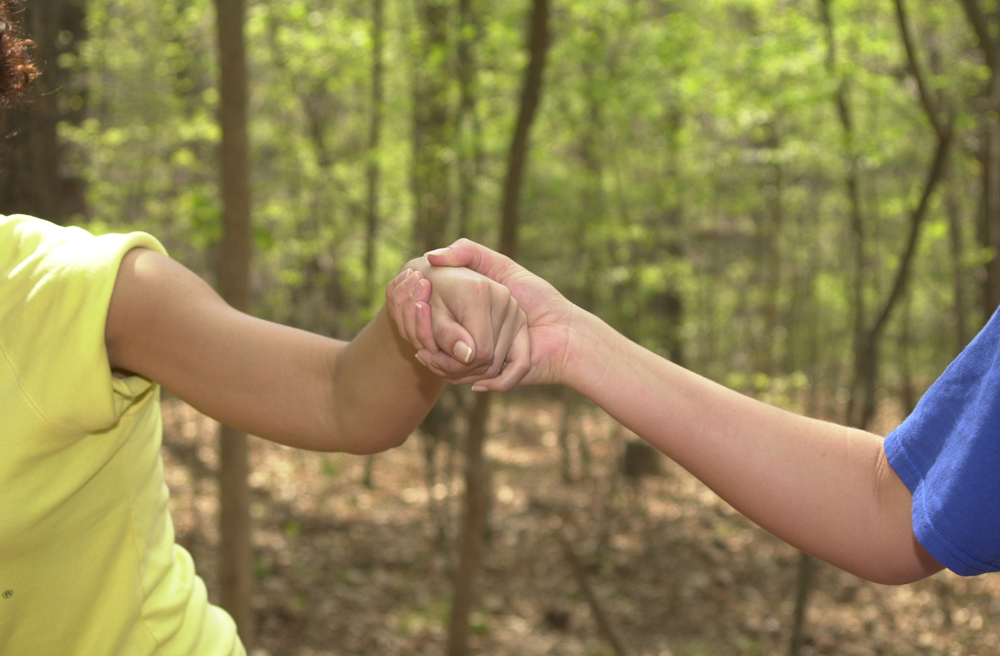
One of my most memorable experiences while I was a Peace Corps Volunteer in Guinea was definitely participating in Girls’ Conference, which brings together teenage girls from each region of Guinea for several days of topics, ranging from women’s rights and roles, to education, to family planning and STDs, to female genital mutilation, to study and organizational skills, to nutrition, etc. A more specific description of girls’ and boys’ conferences can be seen through the Friends of Guinea website, which is mainly run by Returned Peace Corps Volunteers and family members of current volunteers:

http://www.friendsofguinea.org/projects/gender_conferences.shtml

The video link below is from when I was a volunteer in 2009 and highlights some of the activities. Although this was not the regional conference that I participated in, it’s a wonderful view of the types of conversations and learning that went on at all of these conferences, and was put together by one of the volunteers at the conference:

The sensitizations at the end, although only in the video for a short time, were some of the most important trainings, as these girls go back to their communities and lead their own sessions and trainings with community members. The topics that were covered were things that Guinean girls often don’t ever get the chance to talk about, period, let alone educate others on.

This worked best in an educational setting as gender specific (both the boys and girls were much more easy about opening up and being honest about how they felt concerning all the issues that we discussed) and for at least middle school aged girls, although I would say high school aged is better, as they really have the capacity to have an understanding and strong opinion of all that is discussed.

The knowledge, skills and attitudes that I got to watch the girls develop over the course of the conference was amazing. Many of them had very strong opinions on the subjects, but had never been given the opportunity to have their opinions heard. The girls bonded with each other and really worked together to develop the skills necessary to be able to teach what they learned to someone else.

I had a tough time really choosing two pillars of peace that were the most applicable, but reframing history and skill building are definitely very supported by this event. These girls are living in a culture that is extremely male dominated: throughout every year in high school and college, the percent of female students decreases; several of my 9th and 10th grade students dropped out of school to be married (often as someone’s third or fourth wife) while I was teaching. There are about ½ as many literate adult females as males. Most girls are circumcised when they are children by absolutely no choice of their own. These girls were incredibly inspiring to me, as they had grown up experiencing what we would call extreme injustices and sincerely wanted to be part of a positive shift in the role they played in their country.  These girls also left the conference in general with an increased sense of confidence in their own ability to lead and teach. I facilitated a girls’ club that the girls I took to the conference were a part of. When they returned from the conference, they organized a series of plays that they performed in our community building for our town. They took what they learned and transformed it into a performance that both children and adults came to watch and understand. Watching how confident they were in their ability to pass along what they had learned was incredible to see.
A Lesson for Reframing and Reflection through Melba Pattillo Beals’ “Warrior’s Don’t Cry”

POSTED ON BEHALF OF ANNSLEIGH CARTER

As an English teacher, I want to teach books that reframe or challenge our conceptions of history. In high school, I remember reading Melba Pattillo Beals’ memoir, Warriors Don’t Cry, which accounts her experience as one of the Little Rock Nine. This is a powerful book because it gives an eyewitness account of the daily struggles she encountered as one of the first African American students to be integrated into a white school in the South. Much of the book focuses on violent conflict, but the book’s introspective narrative style puts the reader in the position to think about and evaluate this historical event in a different way. For this reason, I think this is a great book to teach. I found a teaching unit for the book on zinnedproject.org, which includes lesson plans that encourage several of the pillars of peace education. The unit plan can be found here: http://zinnedproject.org/posts/1447. For a more in depth reading of the lesson plans, register and download the PDF.

While this unit includes a lot of activities, I just want to highlight two: the Writing for Justice Narrative, and the Warrior’s Dialogue Journal: Allies, Perpetrators, Targets and Bystanders. These two activities work very well for this book, but could also be adapted for other texts. The Writing for Justice Narrative takes place before reading the book. The class comes up with a definition of an ally, a perpetrator, a target, and a bystander. Then, students write a personal narrative about a time in which they acted in one of these roles. The point of this activity is to have students personally identify with these roles so that they can have a better understanding of the characters in the book. The Warrior’s Journal then asks them to record personal thoughts about who are the allies, perpetrators, etc. in the book. The lesson notes that students should pay close attention to when a characters’ role changes. The students use their observations from their journals to generate discussions in small groups. Each group comes up with a question based on their discussion that generates a larger class discussion.

I think these activities should be done in a high school English or history class. The book’s content is probably too mature for younger students. However, the activities themselves can be adapted to other more age-appropriate books if you wanted to teach them in a middle school class. The lesson’s goal of personal reflection would be best suited in an older, more mature class.

I think the two pillars of peace education this book/lessons promotes are Nurturing Emotional Intelligence and Reframing History. Through the narrative, students have to reflect on and describe the emotions they experienced in the situation. The objective of that assignment is to prepare students to foster compassion and empathy for the characters in the books (who are actually based on historical figures). The journal also forces students to validate their reading through emotional reflection. Through the process of identifying character roles, and subsequently understanding how character roles change, students reframe their view of history through a more introspective lens. Instead of learning that this event caused a lot of violence, they learn that the event involved a clashing of a lot of different societal roles, and through personal reflection and character identification, the students can think about the situation in a way that is validated by both emotional and analytic thinking.

What’s Good in My Hood?

POSTED ON BEHALF OF MARIA SCHNEIDER

Saturday September 29th of this year, several AU students and a GW student volunteered to work with 70 DC kids on the Chesapeake Bay in Maryland for the day. The day was divided into different workshops: canoeing/kayaking, forestry, marine life, and art with nature. This day-long retreat was the kick-of event for the What’s Good in My Hood? Initiative that will take place at several community centers across the city, those being: Lafayette, Keilworth-Parkside, Harrison, Macomb, Trinidad, Benning Stoddert, Bald Eagle, Ferebee-Hope Recreation Centers, Palisades Community Center and Chevy Chase Playground. Click here for more information!

I was first introduced to the What’s Good in My Hood? program at the beginning of September when I was put in contact with Sean Miller, an American University adjunct faculty who teaches a course titles DC Healthy Schools in the School of Teaching and Health. Sean along with several staff at the Department of Parks and Recreation staff in DC have started this program in the District of Columbia through various recreation centers across the city to increase environmental awareness, love of the outdoors, and to empower elementary and middle school youth to be active within their own communities.

This DC program is similar to the New York Restoration Project’s What’s Good in My Hood? program that DC native Akiima Price talks about in this short introductory video.

The What’s Good… program is one that can be implemented with students of various ages ranging from young elementary school through high school. Though the current program is aimed at kids ages 9-13, it could be altered easily to accommodate older or younger youth with slightly different projects, and/or more complex themes and discussions. The New York Restoration Project’s What’s Good in My Hood? Workbook can be found here and downloaded for free to bring the innovative program to any urban community through a Peace Education initiative, school program, or community organized one as well!

Through the program students would gain valuable knowledge about the unique aspects of their own communities, natural and not-so-natural resources, living versus non-living parts of where they live, where they get their food and water, and most importantly how to stay involved, voice concerns, and take action for change within their own neighborhoods through community advocacy and writing to local, state, and national legislators.

The What’s Good in My Hood? program most fully supports the Community Building and the Exploring Approaches to Peace pillars of Peace Education. Community Building is key, because not only are program participants getting to know one another throughout the process, but they are exploring their own community spaces, and working together to create more accountable and responsible community members. Students explore approaches to peace in the way that they take action collectively through advocacy and various student-led initiatives towards the end of the program process in step five that Akiima Price describes in the video—Don’t Shout, Speak Out.

Reframing History through Incorporating the Disability Rights Movement

POSTED ON BEHALF OF KI’TAY DAVIDSON

Content and Context

This video entitled “The Power of 504” is a video of the 504 sit ins at the height of the disability rights movement. The video depicts hundreds of disabled individuals barricading themselves in federal office buildings in San Francisco to protest the lack of the implementation of the 1973 Federal Rehabilitation Act. The act was the first civil-rights statute for persons with disabilities in the United States. This video is widely available on youtube and similar web video sites.

This resource would be best utilized for 5th-12th grade students in a history, or english class. Specifically, this source could be incorporated in the common civil rights history unit that most students will discuss each year.

Not only is this resource applicable to the discussion of civil rights within history, but it is also expands the communities in which we discuss human rights and movements for equality. The disability community is a population that is still heavily marginalized and left out of a social justice conversation and context. As a result, focusing on the disability rights movement will both expand the understanding of marginalized communities, awareness of varying civil rights movements and will promote a social model of disability for future generations.

Objectives and Goals

The goal of this activity is two tiered: (1) to reframe history and (2) to discuss divergent approaches to peace. The framing of this activity would be to watch the video and then to discuss modern day civil rights movements by breaking into small groups and discussing the various ways in which our society has and does limit equity and how those communities are addressing those issues. In this discussion, students should discuss two major themes. First, the parallels of the disability rights movement to other recent movements (ie: LGBTQ, education, Native Americans, Latinos etc). Second, students should discuss how peaceful movements have been effective in bringing about reform. This question should begin to synthesize a students prior information on civil rights movements for Women, African Americans, Irish Americans etc and compare that information in a modern context. At the end of the discussion, students can report to the rest of the class on their group’s discussion and the teacher should write similar themes on the board. By the end each student will have gained a broader understanding of civil rights movements, as well as an awareness of peaceful protest as a means of promoting equality. In an academic sense, students will have engaged in critical thinking, and analyzing by comparing and contrasting the various movements.

No Impact Man

POSTED ON BEHALF OF KATIE KASSOF

No Impact Man: The Documentary, a film by Laura Gabbert and Justin Schein, follows the experiment of author Colin Beavan and his family as they attempt to live with no environmental impact in New York City for one year.  It is a fairly well known documentary (and book) made in 2009 and is available streaming on Netflix and in the AU Library.

This film would be best suited to a high school and younger adult audience because of the open mindedness that often disappears in older age groups.  Also, since some of the themes are more mature (no, not in sexual ways…) I feel that the film might be lost on younger audiences.  Because of the way I envision using this piece, to launch into a larger project that would span 2-4 weeks, it would fit best in a more formal environment or at least an environment which offers repetitive meetings for a minimum of one month.  Because of the diverse themes the film presents, it could fit into many different subjects, but environmental science and psychology are the two that initially come to mind.

The idea for an activity around this film is pretty obvious but has many opportunities for discussion and introspection.  First the class will watch the film.  It is about 90 minutes so it may be split up over two class periods.  This will lead nicely into a discussion of the students’ impressions of Colin and his wife, as well what they thought were the most reasonable things to give up and the things they would not be willing to give up (I’m sure electricity will be top on the list of things no one would be willing to live without).  After this discussion the students will each be charged with a week-long project: choose something in their life to live without for one week straight.  Document this journey either with a written journal or video journal (depending on resources and/or student learning preference).  After their week of abstinence, the students must explore how this impacted their life, the environment and the world and present their findings in a creative class presentation.  The larger issues of personal peace and sustainability can be discussed after the students have a chance to ruminate on their experiences.

At first glance No Impact Man seems strictly like an environmental impact documentary, which does fit in with the peace concept of sustainability.  It could also qualify for a Pacifist theme.  While watching the film, though, another theme emerges: personal peace.  Sure you can take away all of the environmental positives from the film: waste less, use less energy, be less materialistic, eat locally, etc., and these are absolutely important.  But I think the more poignant take away was the improvement of the family and the personal peace they each achieved.  Better yet, this was a surprise to Colin and his wife as well.  They too went in with the environment in mind and came out with a much bigger picture experience.  Their health improved from eating locally and cutting out take away.  They state that they become better parents to their 3-year-old daughter by playing more family games and cutting out television.  They spend more time out of doors exploring the city and being social, especially when they give up electricity.  They are less invested in material possessions and more focused on the well being of their family.  Add to this the obvious environmental discoveries and you have a recipe for a great peace teaching film.

Check out the website http://www.noimpactdoc.com/index_m.php and watch the trailer .  Enjoy!

Guide to Composting for Schools

POSTED ON BEHALF OF AUDREY VAN GILDER

I found this pretty wonderful “guide to composting” for schools, created by a Connecticut middle school after its successful efforts to reduce waste, and written in a way to make the process replicable.

http://www.ct.gov/dep/lib/dep/compost/compost_pdf/schmanual.pdf

Young kids would likely be most excited by the idea of participating in composting, but ideally this resource can be applied to any formal or informal educational setting, especially those with science or conservation objectives. Rural schools might have an initial advantage in starting composting projects because the know-how, infrastructure, and space are plentiful, but composting in an urban setting can be just as useful (especially with the popularization of urban gardens and farms).

Composting fits into a school’s culture and curriculum in many different ways, and students can be active participants in a process that not only results in a less harmful end product (thereby benefiting the community and surrounding environment), but that also engages them in a scientific, hands-on, never-ending project. After an administration makes the logistical arrangements, the rest is up to teachers to involve their students in an activity with tangible results and with the potential to foster increased awareness of, concern for and engagement with the environment. Beginning on page 43, the Connecticut manual lays out specific lesson plans that educators can use as guides for incorporating the school’s composting efforts into classrooms. Each asks students to not only participate in the compost process, but also to reflect on the experience and how it changed their conception of waste.

Teaching and participating in a compost program most fully supports the community and skill building pillars of peace education. The knowledge and skills students can gain even through a short composting stint are substantial and can influence the choices they make outside school. But the potential for community building that this resource has extends far beyond the individual students, contributing to a community of engaged, environmentally thoughtful, and conscientious learners.

Pen/Faulkner Writers in Schools project

POSTED ON BEHALF OF SARAH JACKSON

The resource I’d like to recommend is the Pen/Faulkner Writers in Schools project. This is an organization that provides books written by local authors to classrooms, as well as places local authors in schools for a book talk with the students. It is an organization that has been used by the English Department at Ballou Senior High School for years:

This year, I am taking advantage of this opportunity for the first time.

I think the best educational setting for this program is one that houses potential burgeoning authors. This can mean people of any age or background. The program requires the participants to read and dissect a work of literature in advance, in order to be prepared for the author’s visit that culminates the experience. Therefore, there would need to be some sort of framework for formal teaching and collaborating.

This year, I am using this resource to have my students study the genre of Memoir. I have selected two texts, one for my 9th graders and one for the 10th grade, that I hope will reach my students by resonating with their own experiences; as well as expose them to the world beyond what they know here in D.C. My hope is that students will learn that literature is liberation. I want them to realize that literature is everywhere and that it can be for anyone. I think too many of them maintain the bias that reading and writing are irrelevant for their lives. I want them to see that personal and social issues can be unearthed and exposed through powerful literature. I want them to meet the person behind the page and see there is no mystery there, there is no magical gift. There is an individual with an idea and determination to pen it. It could indeed be them one day.

I believe this resource supports several Peace Education pillars, particularly Reframing History, and Skill Building. Through the Pen/Faulkner Writers in Schools project, my students will be reading the personal stories of people who have lived through traumatic experiences and periods of history. Yet, there will be more to these stories than destruction and despair. There is a protagonist who survived and grew, someone who chooses to give back by visiting young people in schools. This is a different ending to the story of violence and chaos so often told by history. Furthermore, by working closely with a text and then the author of that text, students witness first-hand that the skills they learn in the classroom will not stay there if they know how to apply them. The fact that the authors are local powerfully illustrates to the students that there is a life other than the one they know, and this life of success is certainly within reach.

826 Valencia Street

POSTED ON BEHALF OF EMILY FLEITZ

826 Valencia street is an organization started by Dave Eggers that provides free after school tutoring to students in Berkely, CA. I first heard about it at his talk at the 2011 National Book Festival, and learned more about it via his TEDtalk.

The students range in age and ability. The only necessary constant is that one student is matched with one volunteer tutor. The tutor devotes all of his or her time to this one student to help with whatever he or she needs. All this occurs in a combination publishing house and pirate shop.

As the organization grew, they began going into schools to tutor during the school day, and one school offered a classroom that could be continually staffed by volunteers. They were then asked to produce a book of students’ writing about nonviolence, encouraging students to give their all in the creation of a product that will be sold worldwide. Students grow in their love for learning and are encouraged to follow their passions. Similar organizations have started in New York, Cincinnati, Ireland and elsewhere so it is possible to start this in your own community, or take advantage of a similar organization that might already be present.

Best of all, 826 Valencia Street connects members of the community who have the time and skills with students who need their help. The pirate store brings in people off the street and they can see the tutoring that is happening while they shop. This is not a true classroom but rather brings education outside into the community, creating community building on a macro level. The individual attention allows for the tutor to engage in a student’s preferred learning style and be sensitive of the emotions students bring with them.

Visualizing Strategies for Peace


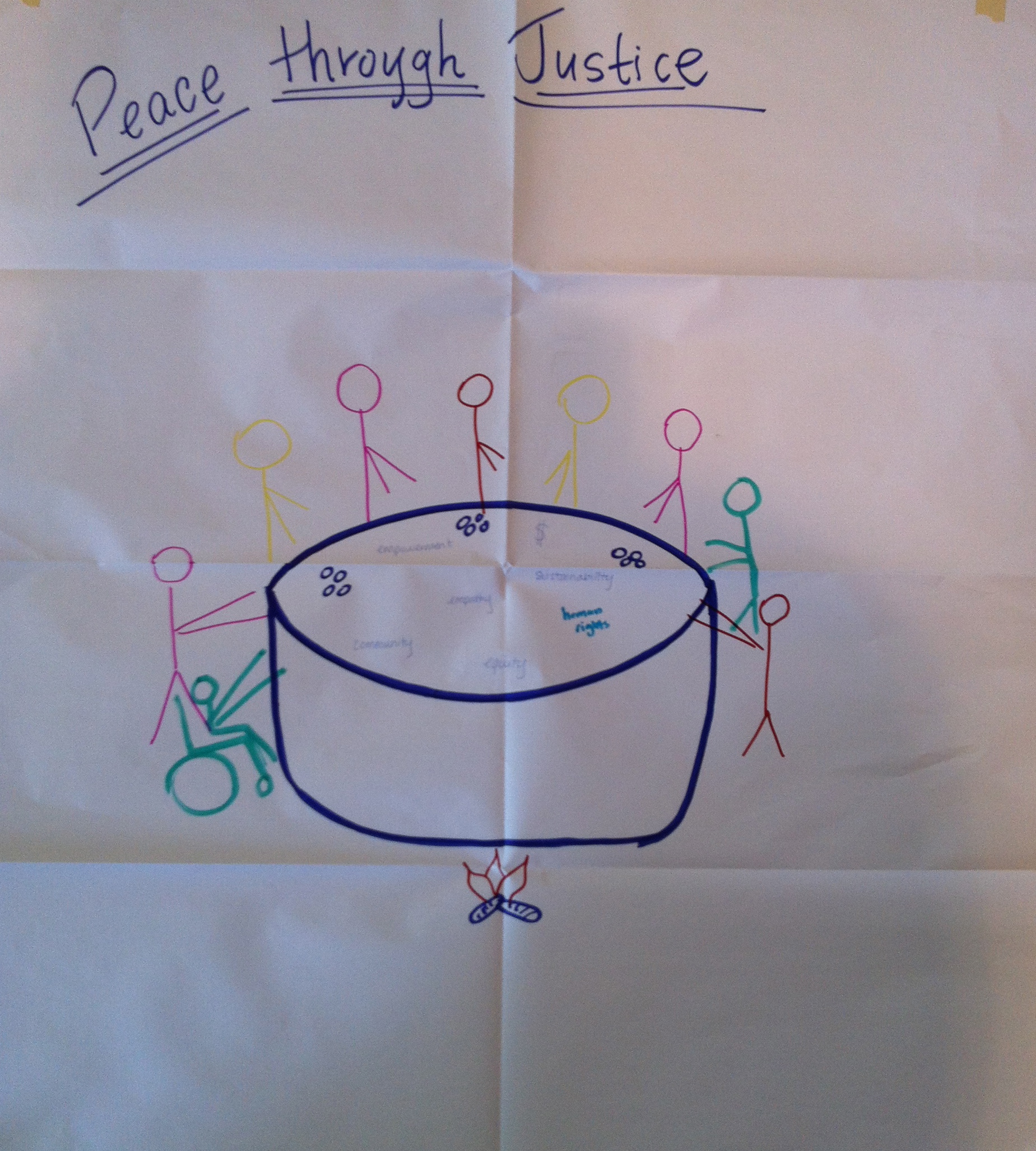
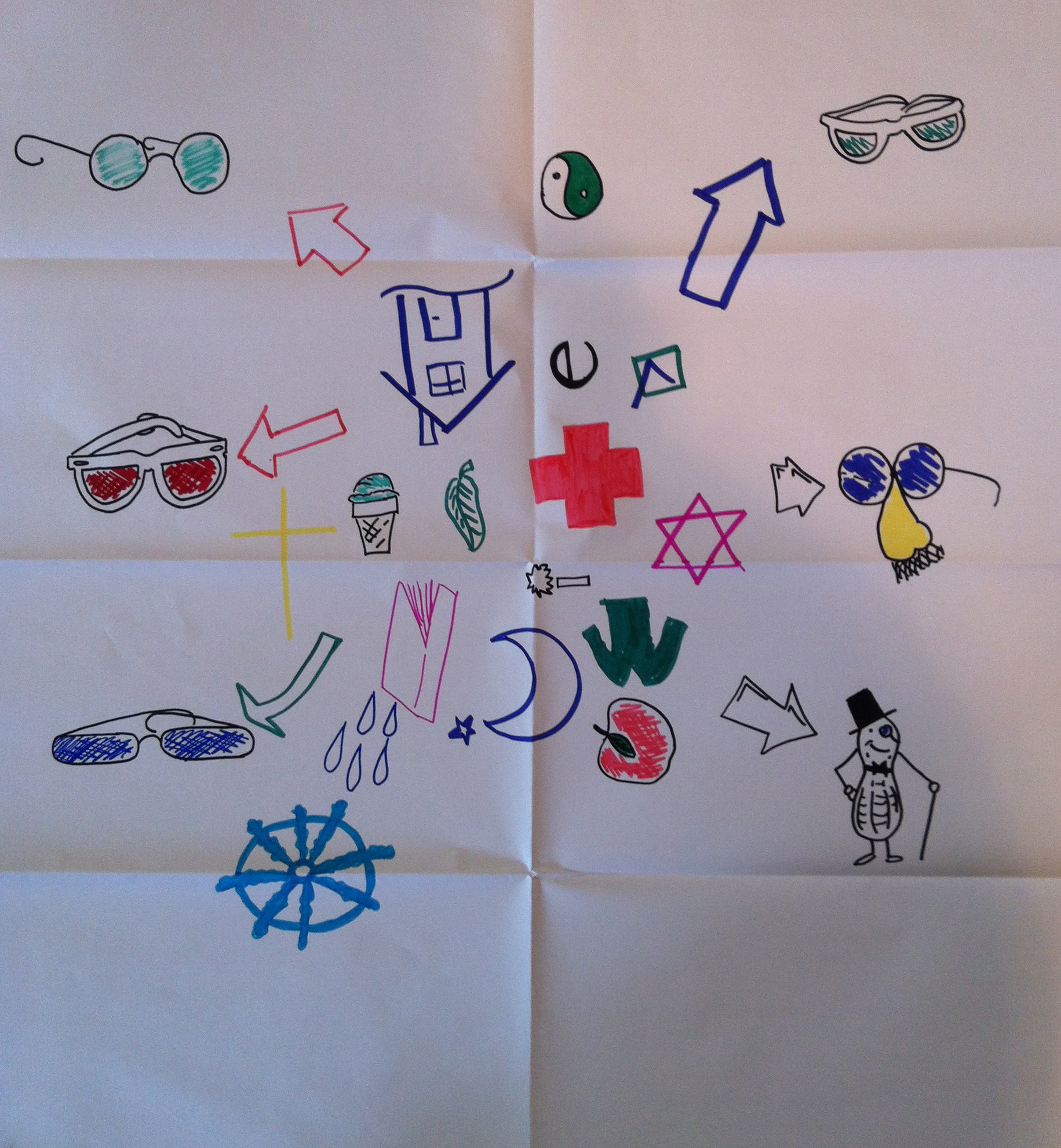
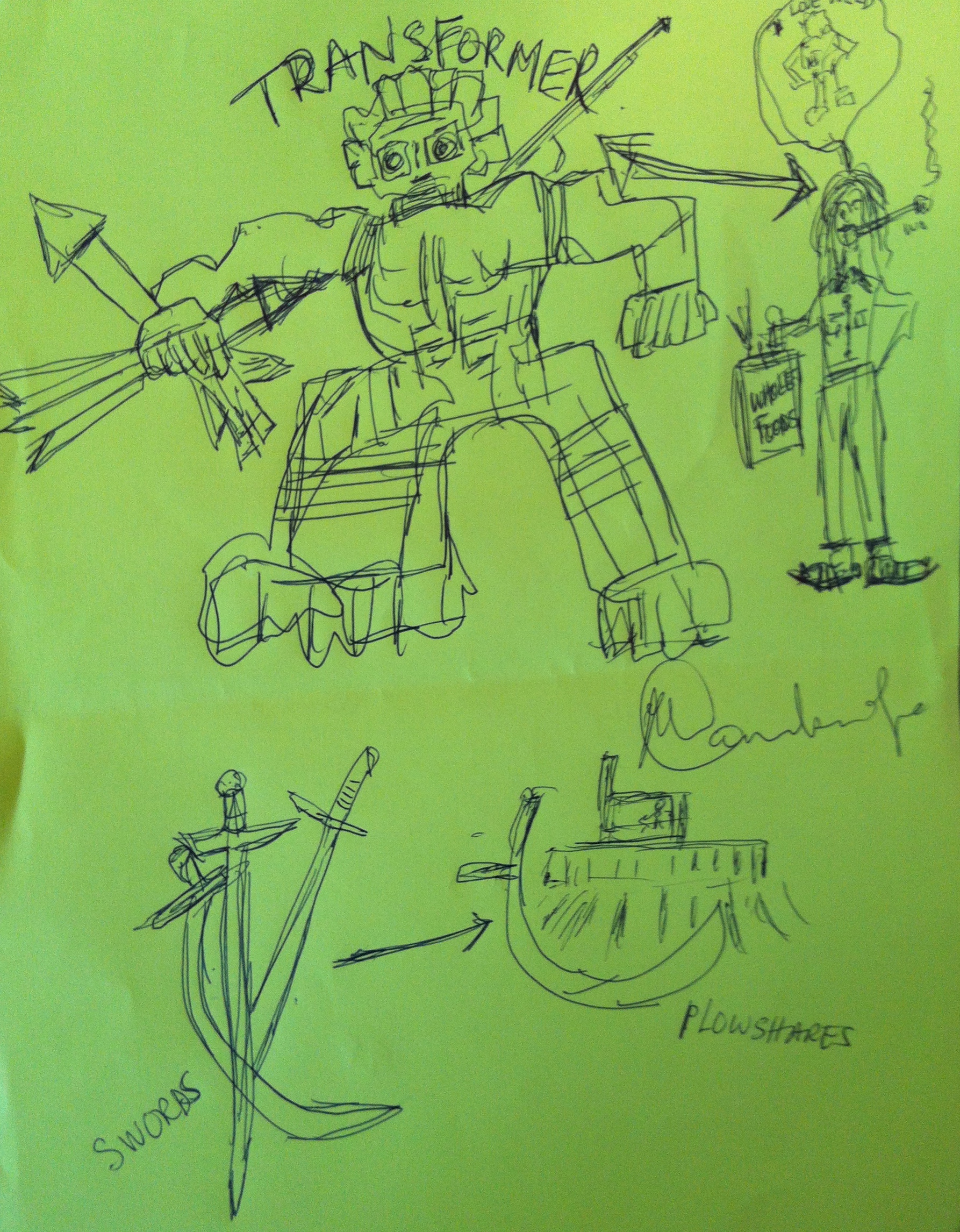
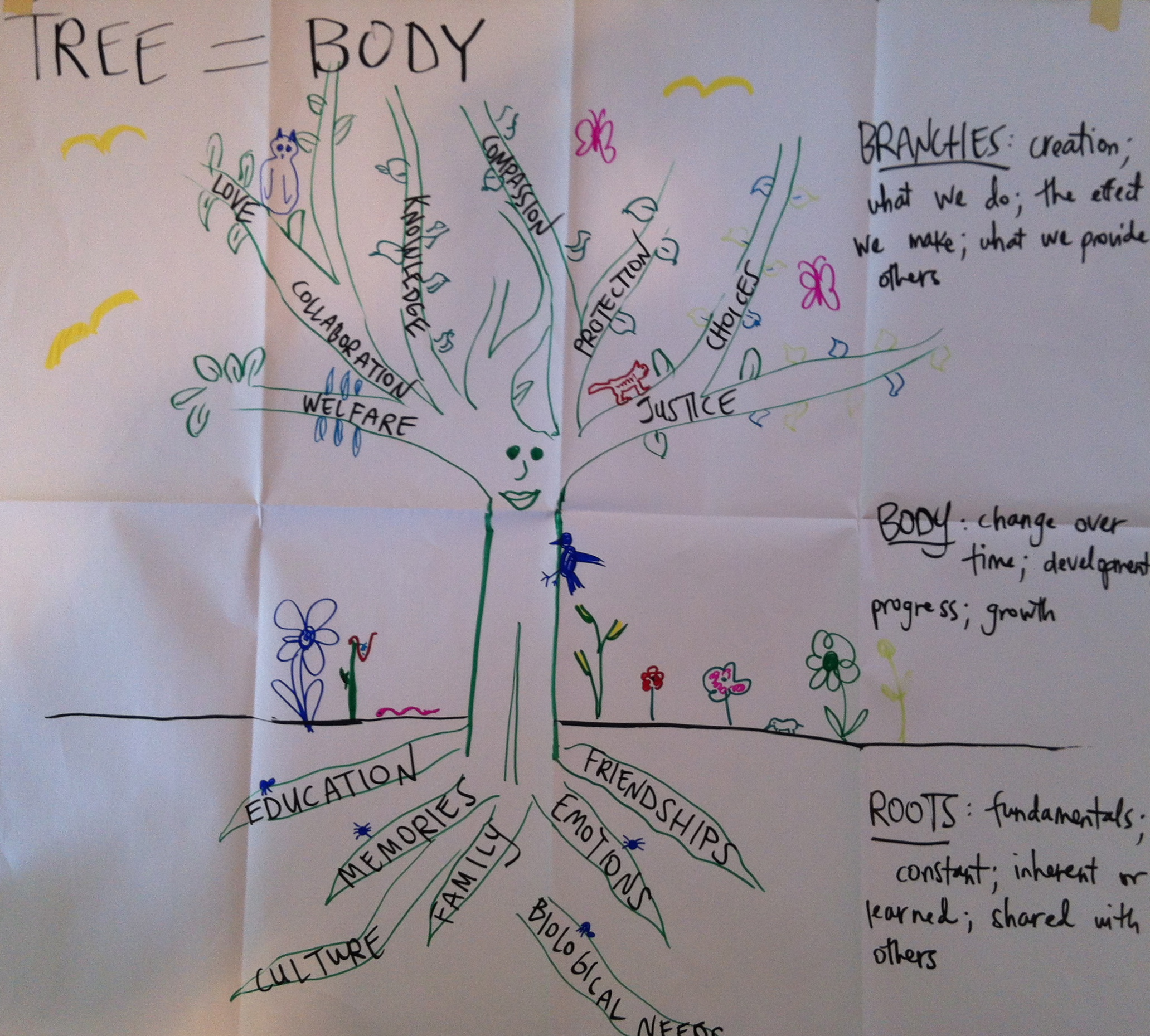
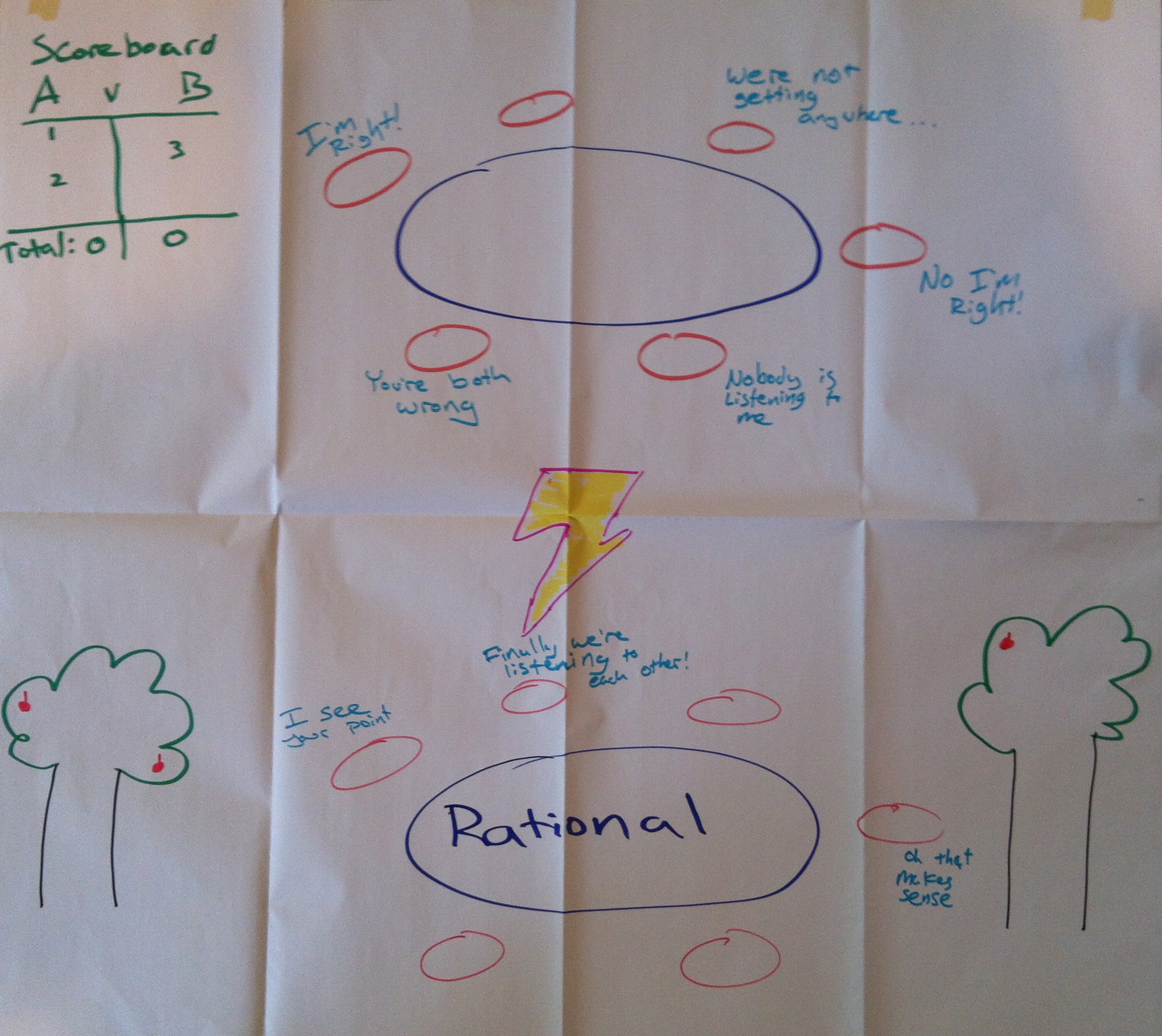
During our class on 09-19-12 we explored Ian Harris’ strategies for peace.  The class broke up into groups based on which strategy for peace they felt most aligned with their worldview.  Each groups was then tasked with creating a visual representation of that strategy.  Here is what we created.  The discussions of the artistic creations were quite enlightening.

Peace Through Sustainability

Peace through Politics (Institutions)


Peace through Justice

Peace through Transformation

The EDGE

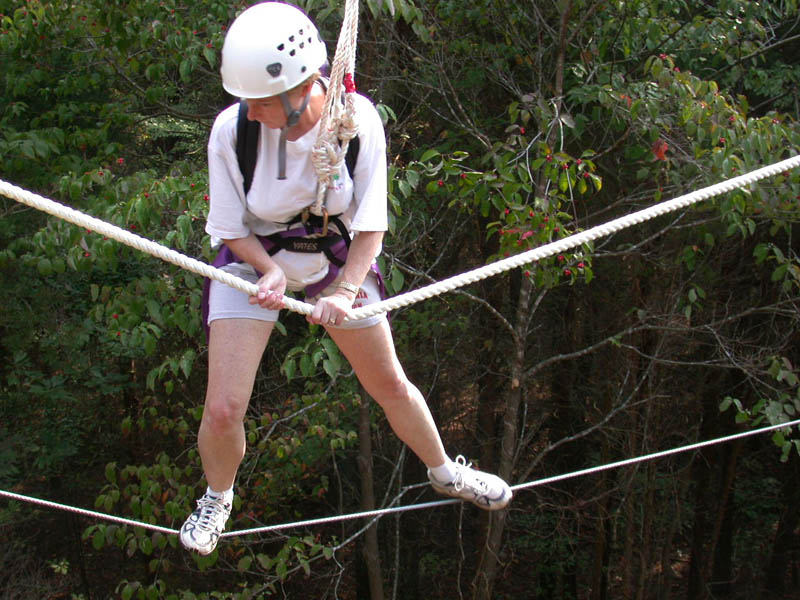
As we have learned in class, peace education is possible in many different venues, areas, as well as ways. But, one area that we may not even consider are places close to home. By this I mean our own campus at Mason! On the Prince William Campus there is a great tool that can be used for peace education called The EDGE. It is defined as an hands-on experiential learning, team building, and organizational training in the Northern Virginia/DC area.

The EDGE is a tool that could be used for any subject, age level or community, and it can also be used in a formal or informal setting. The staff at The EDGE is able to customize the experience based on the audience, and due to this dynamic feature it is able to be applied to a wide variety of educational settings. There are four main categories that groups are described as for their training: Professional, University, School, and Community.

  • For the Professional groups, the focus is on developing as individual professionals, growing as high functioning teams, and excelling as innovative organizations through the use of team building programs, professional development workshops, and consulting relationships.
  • For the University groups, the focus is on applying what is learned to everyday activities. This is done through experiences that will evolve into clear and effective communication, trust and relationship building, self-awareness, and a powerful shared experience.
  • For the School groups, the focus is on experiential learning done in small groups with facilitators who help students with the learning process through challenge course activities and the development of their thought processes as well.
  • For the Community groups, the focus is to “challenge members of the global community to better understand themselves, those around them, and their world by using innovative approaches that educate, inspire and empower.” This is done through various activities based on the Community Education program.

The overall goal of The EDGE is within their Mission Statement:

The EDGE challenges the members of the global community to better understand themselves, those around them, and their world by using innovative approaches that educate, inspire and empower.

The EDGE provides programs that will:

  • Energize your team with active and engaging programs
  • Develop skills for effective communication, collaboration and problem solving
  • Grow individual and group leadership functions through practical experience
  • Excel at identifying and capitalizing on your strengths for profound transformation

From personal experience, I have seen the effectiveness of The EDGE when I went there one Sunday afternoon with the National Pan-Hellenic Council members from Mason. We worked on building trust and an overall sense of community through out the afternoon in small groups. Even though all of our internal issues of the NPHC were not fixed in that one afternoon, it was definitely a foundation for what we have become today.

For more information, please be sure to visit the website: http://www.edgeatmason.com/

Image

Image

Image