From Hostility to Hospitality

William Ury’s TED talk from October 2010 is an excellent tool for introducing new learners to the field of conflict transformation. The simplicity of Ury’s language, his use of stories and visuals, and the brevity of the lecture make this video appropriate for a broad audience, and it would be best suited for students in high school or older, in both formal and informal settings. The lecture is a wonderful way to introduce the field of conflict/peace studies to students because it incorporates key concepts such as creativity, interrelatedness, perspective, narrative, and humanization through specific examples that make these ideas easy to understand for novices.

Ury’s lecture would be a good way to begin a course or training session (such as training students and/or adults in mediation or facilitation), and should be followed with small-group discussion in order to draw out and reinforce themes. As the screening and discussion could be conducted in as little as 35 minutes, this program could serve as an “icebreaker,” allowing participants to get to know one another informally (through discussion) but also setting the scene by introducing key concepts, and inspiring the group with both emotional and rational appeals.

This program incorporates aspects of multiculturalism, conflict resolution, international relations, and even human rights. Its implementation would ideally develop a basic understanding of important themes in conflict transformation, as well as a positive attitude and optimism toward the creation of peace. Ury’s talk also inspires creativity, analysis, and reflection.

(By Emily Ludwin Miller, emillerk@gmu.edu)

Jane Goodall’s Roots and Shoots

POSTED ON BEHALF OF MAGGIE MEENEHAN

One of my hero’s growing up was Dr. Jane Goodall.  Here  was a woman,  in the 1960’s, going alone into the jungles of Tanzania with a notebook and binoculars to study and save chimpanzees.    Though she met with extraordinary difficulties and  fierce adversaries,  she has managed to become a world renown authority on chimpanzees, conservation and the plight of endangered species world wide.  She is a  leading, passionate force for change  through her Jane Goodall Institute and now has “branched out” to schools and youth with her Roots and Shoots Foundation.

Dr. Jane Goodall, a UN Messenger of Peace, is the founder of the Roots and Shoots Program,  which aims to connect students to real life service learning projects of THEIR OWN choosing.   Dr. Jane began this project in 1991, when she felt that she was meeting so many children who lacked hope for the future.  She wanted to provide them with an opportunity to “think about the world’s problems and to roll up their sleeves and tackle them”.

The projects are curriculum based and encourage youth (elementary through college) to make positive changes in their own communities.  The projects have three components, which intertwine and depend upon one another.  These components are: the animal community, the human community and the environment.  The students are encouraged to identify problems and to take concrete actions.  In working together students gain a sense of empowerment that comes from helping others.

The service projects are looked upon as campaigns.   Students act as participants but also as leaders.  The web site gives examples of past campaigns but encourages students to create meaningful projects for their own communities.   The site has lesson plans to access,  Professional Development Opportunities, Career Explorations, Projects of the Month, Extension Activities,  and Family Activities.

The web site helps students and teachers plan, organize, coordinate and report/register their campaigns.  An important aspect of the projects is engaging the communities.  Dr. Jane believes that community centered conservation programs are critical to the survival of endangered species and conservation projects.

This is a fantastic, well designed and well supported,  global environmental humanitarian youth program that relies on the participants to “work for peace”.  Currently operating in  120 countries with 150,000 members, www.rootsandshoots.org  is an amazing example of a peaceable skill building and community building organization.  As we “Peacelearners” say…..check it out!

Let’s hear it for Luke Moore High Environmental Scientists!!

Luke Moore Academy, the premier alternative high school in the District of Columbia (and also where I work)  is joining DCPS in its efforts to go GREEN by starting a recycling program at the school. Students recently gave a presentation at a school wide assembly and community event stating that:

“We have started a recycling program at Luke C. Moore that will minimize the waste generation and will facilitate recycling of materials. This initiative is student-led, and will allow our students to be the leaders of this program. Our desire to become more environmentally friendly and help lead DCPS in the Healthy Schools Act, as well as develop our peers into lifelong recyclers.”

Each classroom has a recycling box (that’s a pic of my box) that the Environmental Team picks up to dump in the container in the parking lot.

Here at Luke C. Moore, we are also concerned about our use of energy, so we  use Compact Florescent Bulbs, or CFL Bulbs, which are significantly more environmentally friendly than regular light bulbs. Our CFL bulbs last TEN times as long as regular bulbs, up to 8000 hours each – compared to 750 hours of those regular bulbs. The team has determined that our school had 350 CFL bulbs that are used on a daily basis. They  then compared those numbers to schools with a similar amount of bulbs, who use regular light bulbs. Our numbers confirm that Luke Moore is saving the District $5,000 a month by using CFL bulbs. On the emissions side, Luke Moore is outputting 4000 pounds less of Carbon Dioxide per year than schools our size.

In the classroom and in the field, the team has done a lot to make sure that our school is helping out our community! Please join us in helping to make DC an environmentally friendly city by, recycling and changing your light bulbs to new CFL Bulbs! And we hope this inspires you to start a program at your school too. Peace

DCPS Goes Green: Peace through Sustainability

District of Columbia Public Schools is participating in the Be Water Wise DC project as part of its initiative to go GREEN.

“Be Water Wise DC was established by the nonprofit National Environmental Education Foundation (NEEF) and includes lesson plans and activities such as measuring water flow rates and determining total water use in school buildings and grounds. The program is made possible through the support of companies such as lead sponsor HSBC Bank, as well as local agencies and nonprofit organizations committed to protecting the region’s natural resources.

Managing stormwater is a challenge for D.C. and the region. When it rains, water flows across streets, sidewalks and parking lots. Along the way, the rainwater picks up oil, trash and other contaminants, carrying them to streams and rivers including the Anacostia and Potomac and, ultimately, the Chesapeake Bay.”

Check out this link for a detailed explanation of the project by Kaya Henderson, Chancellor of DC Public Schools: http://www.youtube.com/watch?feature=player_embedded&v=_vVDhQfajvI

The video gives a very good summary and it’s impressive that they have so many schools participating and that it involves students of different ages.  I really like that students get  very hands-on with this project with the types of activities that they do in their schools and the local communities to help with water conservation in DC, and the concluding activity where they get to present their solutions to DC officials is definitely something students would look forward to.  This projects supports community building as it involves students and officials collaborating to create solutions for a problem that affects the DC area and also is a skill building activity because students are using critical thinking for problem solving, interpersonal skills by working together, and it’s an extension of the classroom space into the community.

For more information about Be Water Wise, please visit the National Environmental Education Foundation.

Dance4Peace

POSTED ON BEHALF OF EDEN MESGHENNA

All teachers can appreciate that learning takes place through multiple intelligence and movement is fundamental source of expression for, most if not all, young students. Unfortunately, most curriculums do not incorporate physical motion as a means to the learning process. So when I came upon this site, I was excited to witness the interconnected themes of community building, cultural exploration, and self-discipline through focused energetic movement.

From the Dance4Peace website:

“Dance 4 Peace is a conflict resolution, civic education program that promotes empathy, understanding, mediation skills, anger management, emotional and civic engagement through dance in youth around the world. Through exercises and activities utilizing our bodies, music, emotions, experiences, and thoughts, we build emotional and social competencies for peace. “

Dance 4 Peace facilitators create curriculums that are specific to the grade and community by utilizing four key principles of social, emotional and civic competences in youth.

Dance 4 Emotional awareness

Dance 4 Active communication and dialogue

Dance 4 Diversity, cooperation and empathy

Dance 4 Anger management and mediation

“Dance 4 Peace began as Danza para la Convivencia en Bogotá, Colombia as part of Sara Potler’s Fulbright Scholarship project in 2007. In conjunction with Aulas en Paz (Peaceable Classrooms), a multi-component pedagogical project designed to promote social and civic competencies and conflict resolution among primary-school students, Dance 4 Peace was designed, implemented, and evaluated in public schools in the outskirts of Bogotá.”

Here is a sample of a project in Columbia:

“Today, the program is being implemented in Washington, D.C.; New York City; Baltimore; Colombia; the Philippines; and Nepal. We work through grassroots, local community and international-scale academic, public, and private partnerships to bring Dance 4 Peace programming to varying cultural contexts.”

Check out there work at Malcolm X public school in Washington DC:

For more info go to www.dance4peace.org

Teaching for Change: Tellin Stories

POSTED ON BEHALF OF EDEN MESGHENNA

Teaching for Change is a non-profit organization that supplies parents, teachers, and students with tools and resources that mobilize school reform by building literacy skills. Located in the Washington DC area Teaching for Change works with local schools by offering professional development, parent support connections and publication recourses for all ages that focus on building critical thought and reflection of the world inside and outside of the classroom.

Check them out at: www.teachingforchange.org

Tellin Stories is a project that aims at building parent involvement in the schools. The focus of the project is to create opportunities for parents to connect with schools by encouraging parents to come into the classroom and share their stories.  Allowing parents to share their experiences within the classroom begins a process that bridges a cultural and socioeconomic gap between schools and community. In the Telling Stories project parents have opportunities to read to students or tell personal stories about who they are in the classroom. Parents then join together with other parents to build a story quilt that binds pieces of who they are together.

I found the idea of story telling to be a very natural way of beginning the process of strengthening parent involvement in the school and was encouraged by the high level of response parents from different cultural backgrounds had towards investing in there new community.  Included is a link to a short video on the Tellin Stories project:

Nonviolent Campaigns: Who, What, Where, When, How and Why

POSTED ON BEHALF OF MONICA SHAH

So you’ve heard a lot about the powers and successes of nonviolent action but are ready to move beyond teaching about Gandhi and Dr. King. Thanks to a project lead by George Lakey at Swarthmore College, there is now a Global Nonviolent Action Database that provides free access to the hundreds of cases of nonviolent campaigns around the world! The intention of this database is, “to assist researchers and activists to better understand the special features of nonviolent struggle that make it different from both violent and institutional politics.”

Lakey, the Director of Training for Change and 2010 Peace Educator of the Year, explains that “nonviolent action” is also commonly known as:

  • People Power
  • Civil Resistance
  • Satyagraha
  • Nonviolent Resistance
  • Direct Action
  • Pacifica Militancia
  • Positive Action

The database includes cases that are identified as “campaigns”, not “movements” because they consider movements to typically consist of a number of campaigns aimed at achieving large goals. Also, the campaigns researched are ones that have reached their point of completion. Each “case” is presented as a database file and narrative that describes the issues behind the campaign.

The database can be searched by country, issue, or method used. The campaigns are grouped by the following categories: democracy, economic justice, environment, human rights (religious and women’s rights), national/ethnic identity (and anti-colonial struggles), and peace. You can learn about nonviolent action that took place everywhere from Afghanistan to Norway to Zimbabwe. You can even find campaigns that occurred as early as Before A.D. in Italy to present-day in Egypt. If you are interested in learning about the larger movements, you can search under “Waves of Campaigns” to find information about:

  • African Democracy Campaigns
  • Arab Awakening
  • Asian Democracy Campaigns
  • Colour Revolutions
  • Soviet Bloc Independence Campaigns
  • U.S. Civil Rights Movement

Here is an example:  “Egyptians campaign to oust President Mubarak, 2011”

On this page you will find the time period, the description of the location, the goals, methods and classification of the case. You can also find information about the campaign’s influences, leaders, partners, allies and opponents, order of social groups and the success outcome. Lastly, everyone also has access to the sources used to compile the information to learn even more about the study!

This resource supports three Pillars of Peace Education: 1) Exploring Approaches to Peace; 2) Reframing History; and 3) Transforming Conflict Nonviolently. Students can learn how people around the world aim to achieve peace. Furthermore, they can look at history through the lens of nonviolent actions – narratives that are often left out in schools’ historical texts. Lastly, the database acknowledges that conflicts do exist, and it provides examples of a variety of methods that people use to approach conflict alternatively—nonviolently.

With regard to the uses of the database, the team included this wonderful message: “Strategists, activist organizers, scholars, and teachers will find many uses for the database, as well as citizens wanting to expand their horizons. Even before release to the public, for example, a teacher who knew the database team was using our cases to assist middle school pupils to develop plays. Any school that teaches about the environment, civil rights, or other issues may find the curriculum enlivened by sending students to the database. History students might enjoy doing the detective work of finding the hidden stories in their local area that could be developed into cases. The database also offers an invitation to geographical learning.”

I would recommend this database to be used by students starting in middle school. Though I believe that educators can incorporate this across the curriculum, it may be most welcome in a Social Studies department. The information provided can truly open students’ eyes and deepen their understanding of nonviolence, people power, and the struggle for justice, peace, democracy or human rights around the world. It may also help students to better grasp the tactics and motivations of the ongoing “Occupy” movements across the nation. The database can be utilized in formal or community education settings. It can also be beneficial for organizers of future movements to scan through this database to examine the advantages or limitations of strategies of previous campaigns.

The 2011/2012 Peace Exchange and Other Peaceful Art Projects

The Create Peace Project is a San Francisco-based non-profit that uses art and creative expression to help create more peaceful schools and give students a creative outlet and teach them peacebuilding skills.

For the third year in a row, The Create Peace Project is engaging in “The Peace Exchange”, a program that allows students from the US and Canada to exchange messages of peace with students in Ghana, Colombia, and Nepal. Students write notes and draw pictures on special post cards, and The Create Peace Project delivers the messages to partner students around the world and returns with messages from those students. Download a flyer!

From the Create Peace Project website:

“The Peace Exchange is about connection. Connecting students to themselves, their creativity, their wisdom, and their heart. Connecting students to each other, in their classrooms, in their schools, and across continents as we bridge cultural, religious, and racial boundaries to inspire and enrich the lives of all participants.

The Peace Exchange gives students a platform from which to raise their voice for peace, acknowledge and honor each other, express themselves through their art and with words with the intention that the power of being peaceful and sharing ones self with another can create a ripple of kindness, love, and possibility felt by young people around the world.”

This project is tailored toward students age 8-18, and can be integrated into a formal school setting on a class-by-class basis or through a school-wide assembly. Resources for both options are available from The Create Peace Project. The exchange allows students to participate in something national and international and creates the space for local and international dialogue about peace.

For smaller groups or informal settings The Create Peace Project has other art options available:

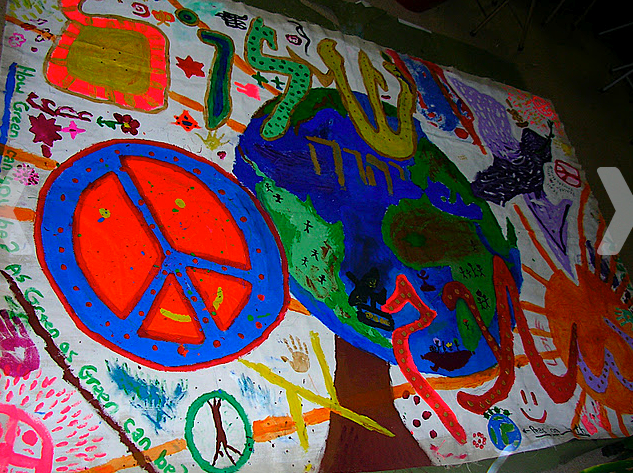
Banners for Peace is a collaborative painting workshop that promotes team building and collaboration through a 10-week workshop that works on the creation of a unique, giant piece of art that is later displayed in a communal area. Beyond building art skills and learning to work as a team, participants have a chance to design something that can inspire peace and create a space for peace dialogue. Download a Flyer!

For a shorter-term project or a more diverse group of participants, check out the Collaborate and Create workshop, a one-day activity that allows participants to bring together objects and art supplies to create a collection of art work through collaborative creative games and activities. One great thing about this project is that it can be tailored to include as more or less emphasis on emotional expression and community building depending on the venue or event.

These resources help to build community and nurture emotional intelligence, allowing participants to express their feelings and ideas in a safe and welcoming space and explore the meanings of peace in a community setting.

Get your school involved! Or for more information contact: info@createpeaceproject.org

Radical Math

POSTED ON BEHALF OF MONICA SHAH

It is a myth that peace and social justice issues can only be taught in a peace studies course. It is an even greater myth that there is no place for peace and social justice in mathematics, science, engineering or technology curricula. This post aims to bring attention to a resource for math and economics teachers of all levels who want their students to study issues of social and economic justice.  Radical Math is a site that contains more than 700 lesson plans, articles, books, charts, graphs, data sets, maps, and websites that will help lead students to not only understand issues of social, political and economic injustices through a mathematical framework, but also to learn how to develop just, realistic and mathematically-sound solutions.

Far too often students have complained about their required math courses and asked, “When will I ever use this?” Fusing social justice and math education allows students to be able to do more than memorize formulas and solve equations; they can use math as a tool to understand and change their society. Social Justice Math has two main purposes: 1) to use mathematics to teach and learn about social and economic justice and 2) to develop mathematical literacy and learn math through the study of social justice issues.  Radical Math resources can be utilized in upper elementary, middle, high school, and college classes. Such curriculum can also be integrated in community programs and classes geared to teach math, financial or computer literacy to citizens, immigrants or ESOL students.

Check out this guide created by Jonathan Osler:

A Guide for Integrating Issues of Social and Economic Justice in Mathematics Curriculum

http://www.radicalmath.org/docs/SJMathGuide.pdf

One relevant (and very current) topic that can be introduced and discussed in a math or economics classroom is the Occupy Wall Street and other “occupy” demonstrations around the nation protesting economic and social inequalities, corporate greed and injustices, and corruption. For example, students can learn about the Gini coefficient and how that is calculated, evaluate the disparities in income and wealth distribution, and calculate corporate taxes and profits.

On the site, students and teachers can search by math topic, social justice issue or resource type. Below are all of the searchable topics and themes:

By Math Topic: Algebra,  Annual Percent Rate (APR), Area, Averages, Bar Graph, Basic Math Concepts, Budgeting Money, Budgets, Cartesian, Chance, Charts, Compound Interest, Correlation, Currency Conversion, Data, Data Analysis, Equivalent Fractions, Extrapolation, Geometry, Graphs, Graphing, Fractals, Fractions, Histograms, Interest, Least Common Denominators, Line Graphs, Mapping, Maps, Mean-Median-Mode, Measurement, Net Worth, Patterns, Percent Growth, Percents, Polar, Polls, Probability, Proportions, Rates, Ratios, Real Dollars, Numbers, Sampling, Scatter plots, Statistics, Survey, Symmetry, Tessellations.

By Social Justice Issue: Achievement Gaps, African Americans, Banking, Criminal Justice System, Death Penalty, Defense Budgets,  Economic Development, Ethnomathematics, Environment (pollution, hunger, food and water resources), Financial Literacy/Education (saving, managing debt, paying for college, credit cards, loans, taxes), Gentrification, Globalization, GLTBQ, Health Care, Higher Education, Homeownership, Housing, Hurricane Katrina, Immigration, Juvenile Justice, Latino/Hispanic, Minimum/Living Wage, Lottery, Military Recruitment, New York, Poverty, Poverty Line, Predatory Lending, Prisons, Public Education, Public Health, Racial Profiling, Racism, Single Mothers, Standardized Testing, Sweatshops, Taxes, Teaching, Unemployment, Voting, Wars, Wealth, Welfare, Women

By Resource Type: Article, Book, Chart, Curriculum, Film, Graph, Map, Syllabus, Table, Website

If you have any ideas or have created a lesson plan or projects on a math topic related to a social justice issue that you would like to share with others, you can e-mail info@radicalmath.org.

Let’s talk about peace and possibly get rewarded for it: National Peace Essay Contest for High School Students

The National Peace Essay Contest for high school students sponsored by the The Academy for International Conflict Management and Peacebuilding, the education and training sector of the United States Institute of Peace, is a way to incentivize high school educators and students to include peace talks as part of curriculum especially for history, government and social studies content areas. According to the institute the goal of the contest is to “promote serious discussion among high school students, teachers, and national leaders about international peace and conflict resolution today and in the future.”

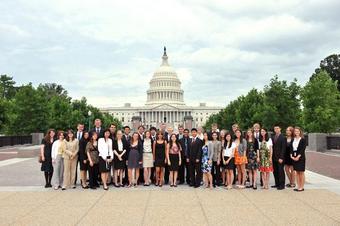
The incentives for educators include the fact that the activity complements existing curricula and other scholastic activities and meets National Contents Standards, which is the direction that most school districts, including the District of Columbia is heading in. Students’ incentives include skill building in the areas of research, writing, and reasoning skills. Additionally, first place state winners receive scholarships and are invited to Washington for a five-day awards program. The Institute pays for expenses related to the program, including travel, lodging, meals and entertainment. This unique five-day program promotes an understanding of the nature and process of international peacemaking by focusing on a region and/or theme related to the current essay contest.

Educators can incorporate this contest as part of a reframing history activity by having students analyze past national or world conflicts and reevaluate outcomes applying the concepts of peace studies such as exploring approaches to peace and how those past violent conflicts could have been transformed non-violently. Students will be exposed to a different way to view conflict in the world and begin to generate ideas about how to resolve those conflicts while maintaining peace, justice, human rights and security in the world, as well as begin to examine what their personal roles are as global citizens in the effort for peace.

Check out contest information at: http://www.usip.org/npec