No Impact Man

POSTED ON BEHALF OF KATIE KASSOF

No Impact Man: The Documentary, a film by Laura Gabbert and Justin Schein, follows the experiment of author Colin Beavan and his family as they attempt to live with no environmental impact in New York City for one year.  It is a fairly well known documentary (and book) made in 2009 and is available streaming on Netflix and in the AU Library.

This film would be best suited to a high school and younger adult audience because of the open mindedness that often disappears in older age groups.  Also, since some of the themes are more mature (no, not in sexual ways…) I feel that the film might be lost on younger audiences.  Because of the way I envision using this piece, to launch into a larger project that would span 2-4 weeks, it would fit best in a more formal environment or at least an environment which offers repetitive meetings for a minimum of one month.  Because of the diverse themes the film presents, it could fit into many different subjects, but environmental science and psychology are the two that initially come to mind.

The idea for an activity around this film is pretty obvious but has many opportunities for discussion and introspection.  First the class will watch the film.  It is about 90 minutes so it may be split up over two class periods.  This will lead nicely into a discussion of the students’ impressions of Colin and his wife, as well what they thought were the most reasonable things to give up and the things they would not be willing to give up (I’m sure electricity will be top on the list of things no one would be willing to live without).  After this discussion the students will each be charged with a week-long project: choose something in their life to live without for one week straight.  Document this journey either with a written journal or video journal (depending on resources and/or student learning preference).  After their week of abstinence, the students must explore how this impacted their life, the environment and the world and present their findings in a creative class presentation.  The larger issues of personal peace and sustainability can be discussed after the students have a chance to ruminate on their experiences.

At first glance No Impact Man seems strictly like an environmental impact documentary, which does fit in with the peace concept of sustainability.  It could also qualify for a Pacifist theme.  While watching the film, though, another theme emerges: personal peace.  Sure you can take away all of the environmental positives from the film: waste less, use less energy, be less materialistic, eat locally, etc., and these are absolutely important.  But I think the more poignant take away was the improvement of the family and the personal peace they each achieved.  Better yet, this was a surprise to Colin and his wife as well.  They too went in with the environment in mind and came out with a much bigger picture experience.  Their health improved from eating locally and cutting out take away.  They state that they become better parents to their 3-year-old daughter by playing more family games and cutting out television.  They spend more time out of doors exploring the city and being social, especially when they give up electricity.  They are less invested in material possessions and more focused on the well being of their family.  Add to this the obvious environmental discoveries and you have a recipe for a great peace teaching film.

Check out the website http://www.noimpactdoc.com/index_m.php and watch the trailer .  Enjoy!

Guide to Composting for Schools

POSTED ON BEHALF OF AUDREY VAN GILDER

I found this pretty wonderful “guide to composting” for schools, created by a Connecticut middle school after its successful efforts to reduce waste, and written in a way to make the process replicable.

http://www.ct.gov/dep/lib/dep/compost/compost_pdf/schmanual.pdf

Young kids would likely be most excited by the idea of participating in composting, but ideally this resource can be applied to any formal or informal educational setting, especially those with science or conservation objectives. Rural schools might have an initial advantage in starting composting projects because the know-how, infrastructure, and space are plentiful, but composting in an urban setting can be just as useful (especially with the popularization of urban gardens and farms).

Composting fits into a school’s culture and curriculum in many different ways, and students can be active participants in a process that not only results in a less harmful end product (thereby benefiting the community and surrounding environment), but that also engages them in a scientific, hands-on, never-ending project. After an administration makes the logistical arrangements, the rest is up to teachers to involve their students in an activity with tangible results and with the potential to foster increased awareness of, concern for and engagement with the environment. Beginning on page 43, the Connecticut manual lays out specific lesson plans that educators can use as guides for incorporating the school’s composting efforts into classrooms. Each asks students to not only participate in the compost process, but also to reflect on the experience and how it changed their conception of waste.

Teaching and participating in a compost program most fully supports the community and skill building pillars of peace education. The knowledge and skills students can gain even through a short composting stint are substantial and can influence the choices they make outside school. But the potential for community building that this resource has extends far beyond the individual students, contributing to a community of engaged, environmentally thoughtful, and conscientious learners.

Pen/Faulkner Writers in Schools project

POSTED ON BEHALF OF SARAH JACKSON

The resource I’d like to recommend is the Pen/Faulkner Writers in Schools project. This is an organization that provides books written by local authors to classrooms, as well as places local authors in schools for a book talk with the students. It is an organization that has been used by the English Department at Ballou Senior High School for years:

This year, I am taking advantage of this opportunity for the first time.

I think the best educational setting for this program is one that houses potential burgeoning authors. This can mean people of any age or background. The program requires the participants to read and dissect a work of literature in advance, in order to be prepared for the author’s visit that culminates the experience. Therefore, there would need to be some sort of framework for formal teaching and collaborating.

This year, I am using this resource to have my students study the genre of Memoir. I have selected two texts, one for my 9th graders and one for the 10th grade, that I hope will reach my students by resonating with their own experiences; as well as expose them to the world beyond what they know here in D.C. My hope is that students will learn that literature is liberation. I want them to realize that literature is everywhere and that it can be for anyone. I think too many of them maintain the bias that reading and writing are irrelevant for their lives. I want them to see that personal and social issues can be unearthed and exposed through powerful literature. I want them to meet the person behind the page and see there is no mystery there, there is no magical gift. There is an individual with an idea and determination to pen it. It could indeed be them one day.

I believe this resource supports several Peace Education pillars, particularly Reframing History, and Skill Building. Through the Pen/Faulkner Writers in Schools project, my students will be reading the personal stories of people who have lived through traumatic experiences and periods of history. Yet, there will be more to these stories than destruction and despair. There is a protagonist who survived and grew, someone who chooses to give back by visiting young people in schools. This is a different ending to the story of violence and chaos so often told by history. Furthermore, by working closely with a text and then the author of that text, students witness first-hand that the skills they learn in the classroom will not stay there if they know how to apply them. The fact that the authors are local powerfully illustrates to the students that there is a life other than the one they know, and this life of success is certainly within reach.

826 Valencia Street

POSTED ON BEHALF OF EMILY FLEITZ

826 Valencia street is an organization started by Dave Eggers that provides free after school tutoring to students in Berkely, CA. I first heard about it at his talk at the 2011 National Book Festival, and learned more about it via his TEDtalk.

The students range in age and ability. The only necessary constant is that one student is matched with one volunteer tutor. The tutor devotes all of his or her time to this one student to help with whatever he or she needs. All this occurs in a combination publishing house and pirate shop.

As the organization grew, they began going into schools to tutor during the school day, and one school offered a classroom that could be continually staffed by volunteers. They were then asked to produce a book of students’ writing about nonviolence, encouraging students to give their all in the creation of a product that will be sold worldwide. Students grow in their love for learning and are encouraged to follow their passions. Similar organizations have started in New York, Cincinnati, Ireland and elsewhere so it is possible to start this in your own community, or take advantage of a similar organization that might already be present.

Best of all, 826 Valencia Street connects members of the community who have the time and skills with students who need their help. The pirate store brings in people off the street and they can see the tutoring that is happening while they shop. This is not a true classroom but rather brings education outside into the community, creating community building on a macro level. The individual attention allows for the tutor to engage in a student’s preferred learning style and be sensitive of the emotions students bring with them.

Visualizing Strategies for Peace


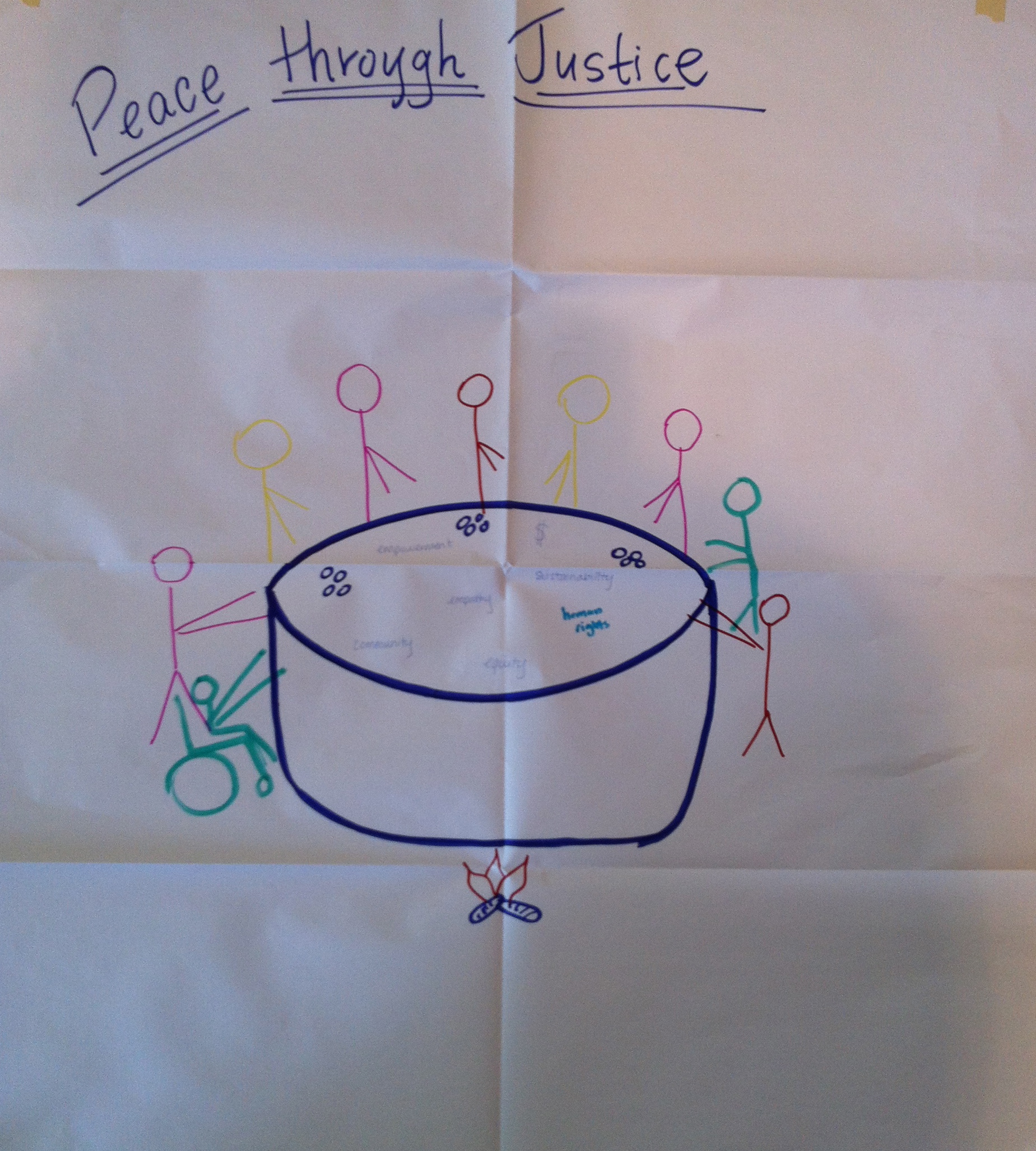
During our class on 09-19-12 we explored Ian Harris’ strategies for peace.  The class broke up into groups based on which strategy for peace they felt most aligned with their worldview.  Each groups was then tasked with creating a visual representation of that strategy.  Here is what we created.  The discussions of the artistic creations were quite enlightening.

Peace Through Sustainability

Peace through Politics (Institutions)


Peace through Justice

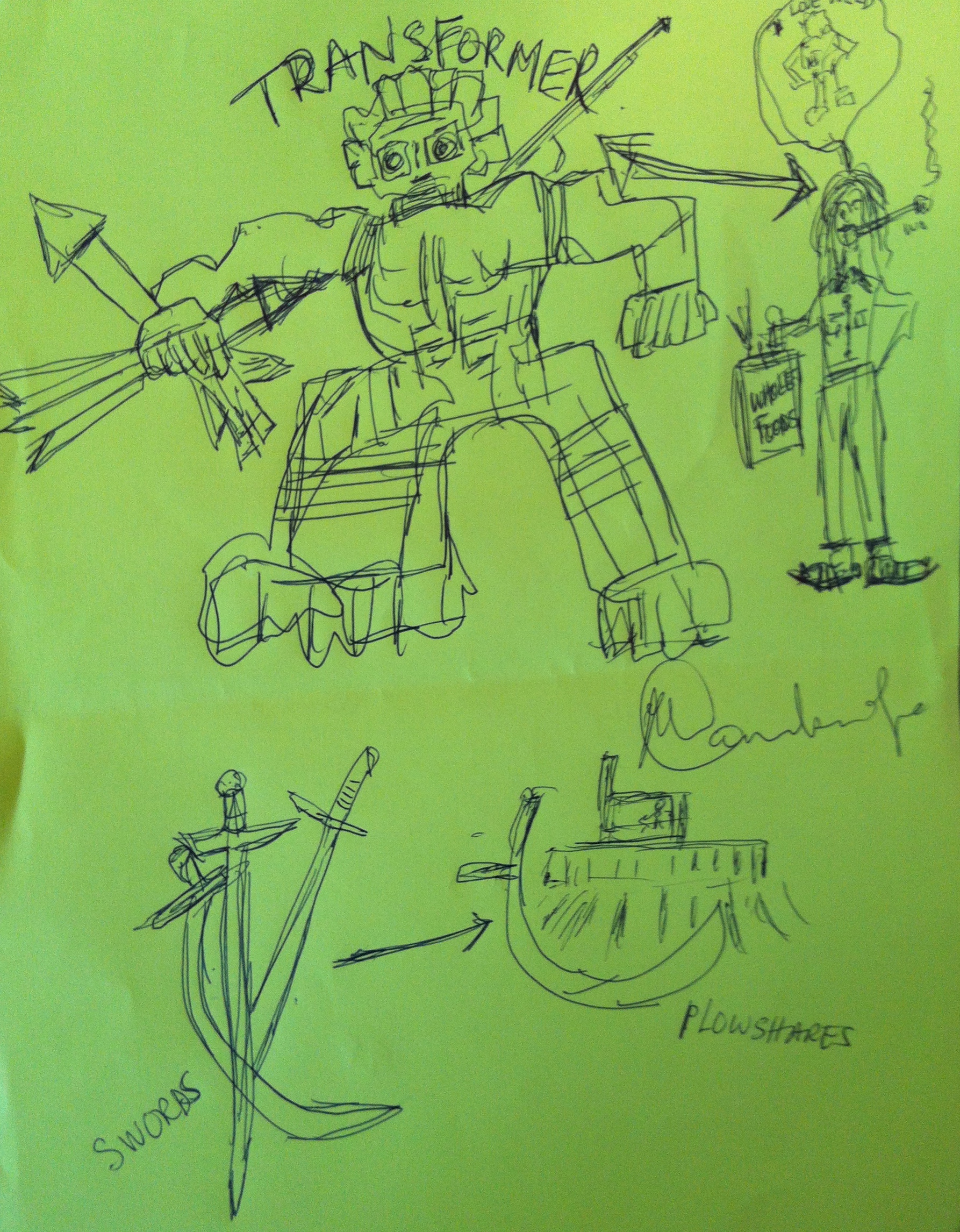
Peace through Transformation

The EDGE

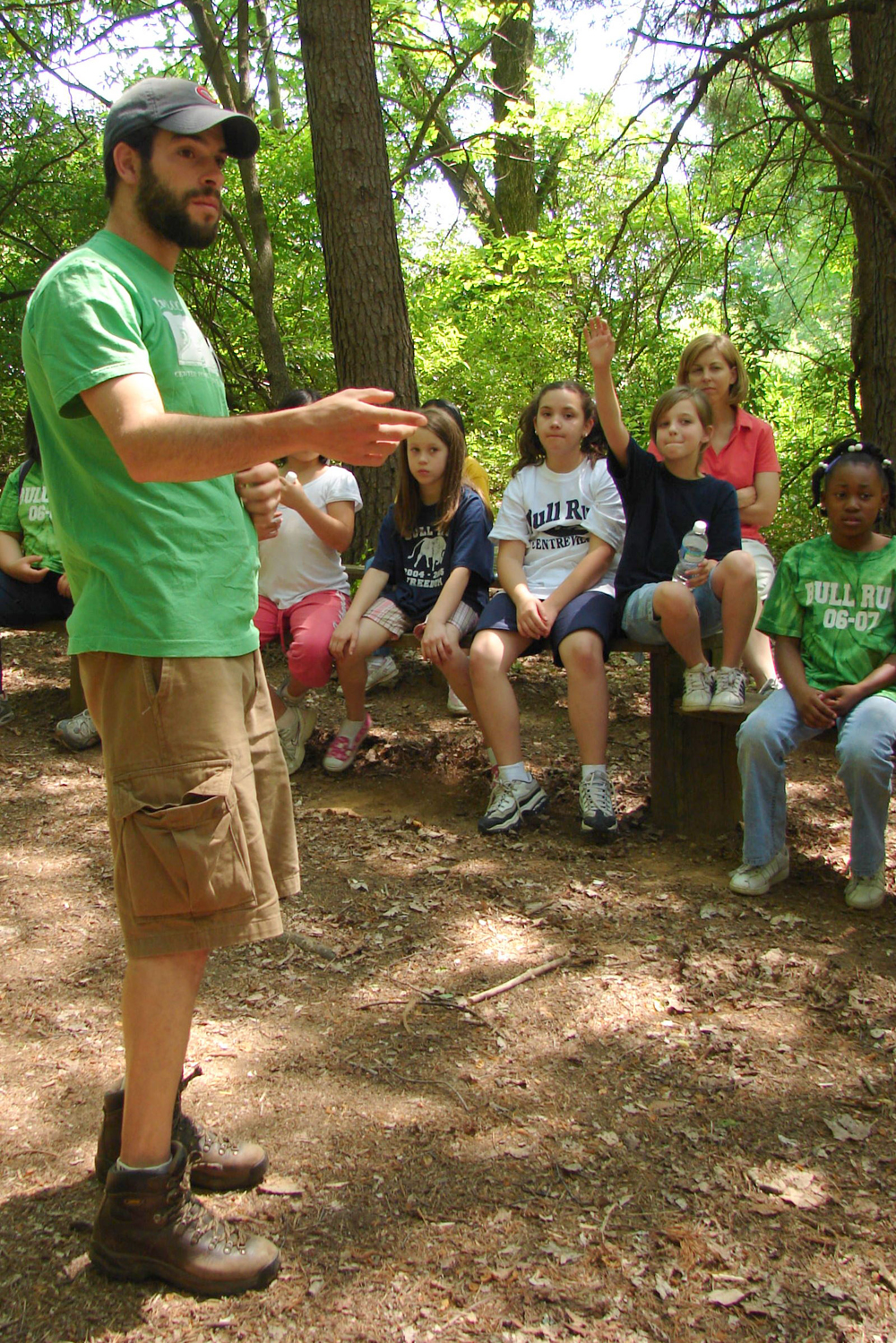
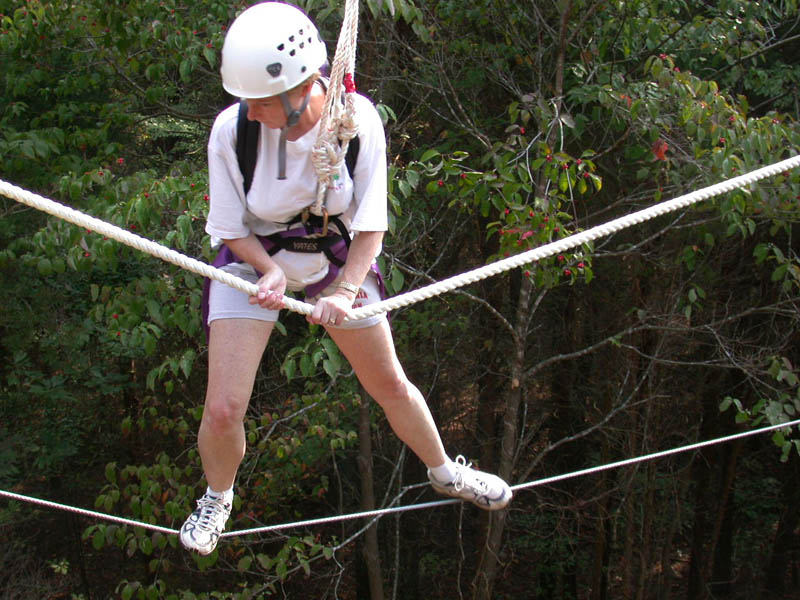
As we have learned in class, peace education is possible in many different venues, areas, as well as ways. But, one area that we may not even consider are places close to home. By this I mean our own campus at Mason! On the Prince William Campus there is a great tool that can be used for peace education called The EDGE. It is defined as an hands-on experiential learning, team building, and organizational training in the Northern Virginia/DC area.

The EDGE is a tool that could be used for any subject, age level or community, and it can also be used in a formal or informal setting. The staff at The EDGE is able to customize the experience based on the audience, and due to this dynamic feature it is able to be applied to a wide variety of educational settings. There are four main categories that groups are described as for their training: Professional, University, School, and Community.

  • For the Professional groups, the focus is on developing as individual professionals, growing as high functioning teams, and excelling as innovative organizations through the use of team building programs, professional development workshops, and consulting relationships.
  • For the University groups, the focus is on applying what is learned to everyday activities. This is done through experiences that will evolve into clear and effective communication, trust and relationship building, self-awareness, and a powerful shared experience.
  • For the School groups, the focus is on experiential learning done in small groups with facilitators who help students with the learning process through challenge course activities and the development of their thought processes as well.
  • For the Community groups, the focus is to “challenge members of the global community to better understand themselves, those around them, and their world by using innovative approaches that educate, inspire and empower.” This is done through various activities based on the Community Education program.

The overall goal of The EDGE is within their Mission Statement:

The EDGE challenges the members of the global community to better understand themselves, those around them, and their world by using innovative approaches that educate, inspire and empower.

The EDGE provides programs that will:

  • Energize your team with active and engaging programs
  • Develop skills for effective communication, collaboration and problem solving
  • Grow individual and group leadership functions through practical experience
  • Excel at identifying and capitalizing on your strengths for profound transformation

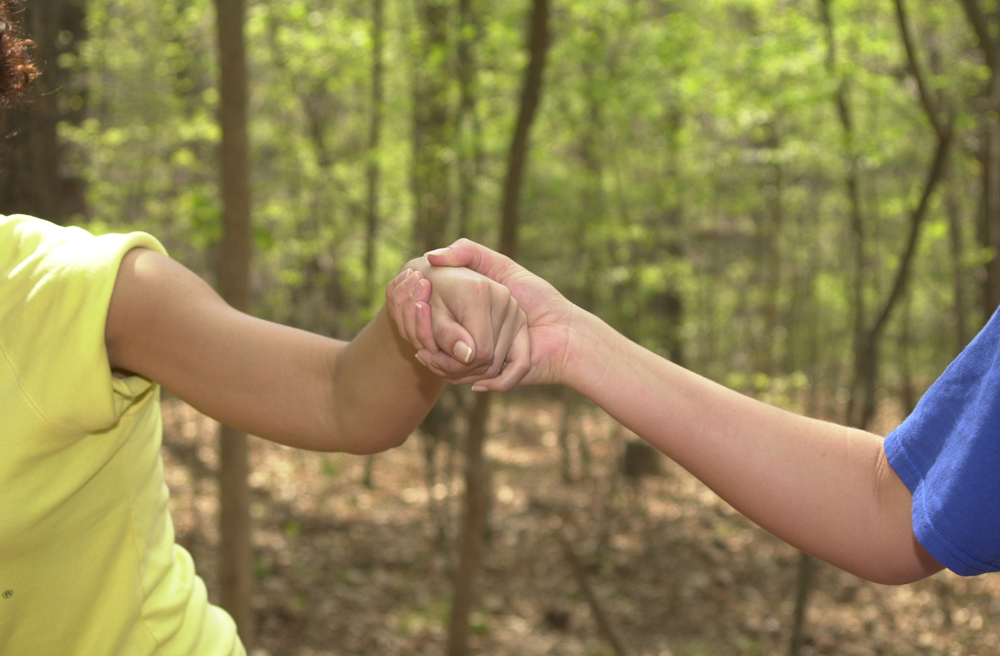
From personal experience, I have seen the effectiveness of The EDGE when I went there one Sunday afternoon with the National Pan-Hellenic Council members from Mason. We worked on building trust and an overall sense of community through out the afternoon in small groups. Even though all of our internal issues of the NPHC were not fixed in that one afternoon, it was definitely a foundation for what we have become today.

For more information, please be sure to visit the website: http://www.edgeatmason.com/

Image

Image

Image

The Embassy Adoption Program

I used this resource as an example of peace education for our most recent paper we had assigned and became extremely interested in the program ever since.

The Embassy Adoption Program works with public schools in the Washington DC to bring global education to DC public schools through DC’s international community. Since 1974, the Embassy Adoption Program works with 5th and 6th graders to engage with the concept of global education in various classrooms. The concept of the program is that a certain class is “adopted” by an embassy, establishing a connection within the local and international community. Students will then spend an entire year engaged in programs that enhance in cultural competency, increase cultural communication skills, and help children understand local and global communication. 

“Program highlights include classroom sessions, hosted by embassy representatives, field trips to gain hands-on experience with their adopted culture, a final presentation demonstrating acquired knowledge for the ambassador and embassy representatives, and mini United Nations event held between all DC public schools Embassy Adoption classrooms.” 

This program is delivered towards the educational community within DC’s public schools. The Embassy Adoption Program demonstrates innovative practices in the field of global education and offers students a variety of challenging activities. Students are partnered up with community members that strive for a better and more globalized education. The classes that are chosen within the DC area expand in pedagogical boundaries by moving students outside of the classroom. The students are able to travel to cultural centers, museums, and also restaurants to gain experience with their “adopted” culture. This is a wonderful way to be globally inclined by allowing the youth to be engaged with others around the world and within the community. 

ImageImage

I would think an educator would be extremely interested in this program, since it offers several different attributes toward global education. An educator would incorporate the concept of community building and the remaining pillars of peace education. Since the program already sets the attitude of being culturally inclined and allows students to engage with others in various environments aside from the classroom, the students should then gain a better understanding in peace education itself. In order to strengthen this resource, I strongly believe that the program be expanded outside the DC area. Several cities, aside from DC should be involved with the The Embassy Adoption Program because it offers students the wonderful opportunity to grasp various cultures and innovative surroundings. 

Goals

  • Enhance students’ cultural competency
  • Increase cross-cultural communication skills
  • Aid students’ understanding of their local and global communities
  • Offer students a variety of challenging themes and programs
  • Partner with community members who demand better schools

The Embassy Adoption Program moves away from the mainstream or tradition approaches by allowing the students within the DC area to engage in cultural experiences with people abroad. The program places students in different communities and allows them to gain a life changing experience. It’s as if the students are having the great opportunity of studying abroad and understand cultural and global topics at such a young age. This displays the understanding that our time and generations have changed; we must transition to a more globally enhanced society.  


The Embassy Adoption Program is a compelling opportunity that could only exist in the District of Columbia, and at DC Public Schools. It is an opportunity to expand students’ global understanding, increase interactive programming options, and continue on that road to becoming the highest performing urban district in the nation.

Two stakeholders that may be able to benefit from this post would be the DC school systems and specific students with the strive and motivation to be involved in the Embassy Adoption Program. This way, students in different regions throughout the US can partake in this this extraordinary program. My post will be able to reach out to the DC public system to attempt in changing the policy and allowing more regions to be involved in the program. 

Resource: 

http://dc.gov/DCPS/Beyond+the+Classroom/Embassy+Adoption+Program 

The Interrupters

I had seen clips of the documentary the Interrupters on PBS a few times, but never got a chance to watch the full length of the movie. When I finally wanted to watch it, they weren’t airing it on T.V anymore. Luckily the PBS website had the full documentary online and for this blog I will give a summary of the movie and what I thought about it.

The Interrupters

http://www.pbs.org/wgbh/pages/frontline/interrupters/

The documentary “The Interrupters” looks at the life of three Violence Interrupters and their work within a span of one year. These Violence Interrupters work with an organization called Ceasefire in the most conflict-reddened areas of Chicago, who try to protect these communities from violence that they were once a part of. The film was directed by Steve James, an acclaimed director known for his powerful portrayal and insight of communities and cultures in his movies and documentaries. Interrupters was filmed during a period of constant youth violence in parts of Chicago, in African American and Latino neighborhoods, and during a time when the United States had its eye on Chicago as a national symbol for the violence in our communities.

Founder of Ceasefire, Gary Slutkin, believes that the spread of violence in communities is similar to the spread of diseases and epidemics, “violence is like the great diseases of history…. violence as behavior, not as bad people.” For the young people in these neighborhoods, they see violence as their disease and they expect that they are going to die from this. Tio Hardiman, who created Ceasefires main program, “Violence Interrupters” explains that violence is a two-step process. The first thought is grievances; people come up with reasons to start a conflict for example, “He looked at my girl…he owes me money…he’s a Sunni…he’s a Palestinian, and so forth. The second thought is that these grievances justify the violence.” Tio, just like members of the Violence Interrupters has street credibility (because of his own personal history), which gives him full insight into the violence and minds of Chicago’s youth.

Violence Interrupters
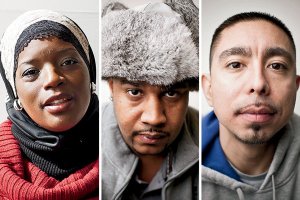
The three Violence Interrupters that are followed throughout this documentary are Amina Matthews, Cobe Williams, and Eddie Bocanegra. Amina was the daughter of Jeff Ford, one of the biggest gang leaders in the history of Chicago. In the documentary Amina is what Tio calls the “golden girl,” she knows how to get them (the community youth) to open up. Being an ex-gang enforcer and one that has lived a life in shoot outs, she knows what its like to be a youth in these communities that are plagued by violence. Cobe Williams, scarred by his father’s murder, began a downwind spiral at the age of twelve. After being in and out of jail numerous times, Cobe decided to turn his life around with the help of his family. In the documentary we see that Cobe, with his humor and general good nature, “knows how to get in, he knows the language – what to say, when to say it.” Cobe too has big time credibility with the gang members because of his past, which allows him to easily insert himself within the conflict in order to resolve it. Last, but not least is Eddie Bocanegra, who is still daunted by the murder he committed at the age of seventeen. For him, his work with Ceasefire as a Violence Interrupter is a repentance for his past actions. Playing on his strength in art, Eddie is able to and concerned with spending majority of his time with young children affected by the aftermaths of violence.  He teaches the children art, warns them of the trauma experienced by those who have come face to face with violence, and makes an effort to keep children off the streets and get them the support they need.

Throughout the documentary, the viewer is able to look into Ceasefire meetings and the conflicts that take place within the communities. Each Violence Interrupter has a past of their own, and each uses their history and knowledge of the streets to get closer to their goal, which is to “ stop the killing, and save a life.”

Youth

One of the first scenes we see is of a conflict-taking place right in front of the Ceasefire building. Amina Matthew quickly interrupts the conflict and has both groups separate.  What is profound is that even a five-year-old girl was shouting profanities and getting involved in a conflict that had nothing to do with her. Later, Amina talks to some of the youth and is able to get them to open up through different forms of communication, one form being laughter. Amina explains, “If you get them to laugh at themselves- find that soft side, not their weak side, then you ride on that.”

In these streets the youth have been brought up with the notion that “you have to stand up no matter what happens… death before dishonor.” They have been taught violence, as violence is a learned behavior. One youth justifies, “If you don’t do it, they’re going to do it to you, you go hard or it’s your life.” They say all odds are against them, they have been brought up this way, they want to fight, and that history is up against them.

One scene in the documentary that was very overwhelming for me was a still shot of a wall of names, names of all who had been killed, murdered, and shot, and in one spot someone had written, “ I am next…” This shows how deep the youths mentality about violence is, and that they think they are stuck in it, when in reality in order to break out of it they have to find change within themselves and their peers. However, in a sense they find an honor in getting killed. They want to be known that they didn’t step down, that they fought and died, and that they know that when they die, they’ll get all the hype, both from the community and the media, that they have made normal around such drastic deaths.

Tio explains in the documentary that “Once media goes back to wherever they came from, we have to step up to the plate and make something happen up over there.” He is aware that a lot of the violence isn’t gang violence, its interpersonal conflict that deals with respect and disrespect, not being accepted in an overall society where a lot of people are ostracized, and so they try to dominate their societies. Their actions go from “zero to rage in thirty seconds” and they act out because of something that upset them earlier in their day.  With this kind of anger and violence, Tio explains that they cannot mediate the conflict without full confrontation. As the documentary comes to a close, Tio explains that African American and Latino communities have been beaten for so long with poor schools, lack of jobs, hopelessness, and despair that it is “hard for people to stick with peace if they don’t have a stick that they can hold on to.”

Analysis

Although this documentary looked at the violence in Chicago communities as a whole, it also focused on specific youth whom Aminah, Cobe, and Eddie personally intervened with; Capyrsha Anderson, Lil Mikey, Flamo, Vanessa Villalba, and Kenneth. Along with these young adults, Ceasefire was able to prevent numerous outburst of violence to occur in their communities.   Its impact was beyond substantial. These Violence Interrupters were right there with each act of violence from the beginning to the end, and used their knowledge and insightfulness to the best of their ability to reduce the tension of the conflicts. Each young adult the Violence Interrupters assisted have taken a full 360 in changing their lives, sometimes all one angry person needs is someone right there beside them to show them the right path. 

Watching this documentary made me realize that these communities have been “brain –washed” into believing that violence is the only way to solve a conflict.  However, when they have member of Violence Interrupters come in and show them alternative options, it opens up a number of other possibilities for them, with a less drastic cost that wont end up affecting them for the rest of their lives.

I could definitely see myself incorporating this type of intervention and peace education into my practice. It is always useful to have those who are knowledgeable of a conflict come in and help resolve a conflict. What I liked the most was that each Violence Interrupter had a violent past of their own which they rid themselves of, and they knew exactly what was going on in the minds of the youth. Because of their insightfulness, they were able to assist the community and individual youths to a level of nonviolence.

Stakeholders:

Stakeholders that I believe will be able to benefit from my post are anyone who lives in a community that violence plays a big role in. For older community members, this type of intervention and peace education would assist their communities to a level of nonviolence for the youth. 


UNOY Peacebuilders

As a Global Affairs major, I was really interested in finding a blog topic that had a global approach and perspective to peace education. Through searching on the web, I found this amazing organization called UNOY (The United Network of Young Peacebuilders). UNOY (prounounced  ‘you know why’) is a global network of young people and youth organisations committed to establishing peaceful societies.  They have been around since 1989 and are based in the Netherlands. they consist of 49 member organizations in Africa, Asia, Europe, Latin America and North America.

UNOY’s mission is ” to link up young people’s initiatives for peace in a global network of young peacebuilders, to help empower their capacities and to help increase the effectiveness of their actions” They achieve this goal by implementing a wide range of activities in each of their main areas: advocacy and campaigning, capacity building and gender. UNOY believes that young people are an essential part of peacebuilding because:

  • Young people are more open to change
  • Young people are future-oriented
  • Young people are idealistic and innovative
  • Young people are courageous
  • Young people are knowledgeable about their peers’ realities (http://www.unoy.org/unoy/who-we-are/our-vision/)

Some projects that UNOY has implemented in 2012 include, the Educating for Peace seminar that brings together members from all over the world, the Peace of Mind educational program for students, and training courses on peace building. Members even traveled to Colombia, Argentina, and Nepal where they were able to teach workshops on issues such as human rights, democracy and gender to youth there!

This organization caters to a wide range of peace educators and students alike. UNOY has created excellent resources that can be incorporated into a classroom or community setting for youth. The beauty of UNOY is that the wide array of projects it creates can be applied in a global AND local context. Most importantly, UNOY gives  young people the opportunity to get involved!!! I would especially recommend checking out their volunteer programs if you’re interested in working on an international level 😉 Through its broad scope of activities and projects, UNOY teaches youth the necessary skills and tools needed to become peacemakers in their own communities.

A clip describing one of UNOY’s projects in collaboration with other international youth organizations:

Resources:

UNOY home page http://www.unoy.org/unoy/


Peace in Prisons

I was surfing the web to try to find a new and interesting peace project to share with everyone. I came across an article on Words of Peace Global website. This website tells its audience about things that are going on the world, as well as events, webcasts, and television schedules on several continents.

The article that I found talked about a specific peace education program that came into the Dominguez State Prison in San Antonio, Texas. The major finding in the article was that for the inmates that attended the workshop, there was only a 1% that returned to the prison.

This program is based off of Prem Rawat’s message of peace.  Rawat has is own foundation called The Prem Rawat Foundation or TPRF. His message is simple. “Peace needs to be in everyone’s life. The peace we are looking for is within. It is in the heart, waiting to be felt. It is not the world that needs peace; it is people. When people in the world are at peace within, the world will be at peace.” 

For four years volunteers for the TPRF program have taught workshops at the Dominquez Prison. The Captain of the Prison, Captain Carter is the head of the Correctional Officers and Volunteer Services. He was quoted in an interview by saying, “The offenders who attend the program, their disciplinary record has gone down. They stay out of trouble. It has a positive impact on everyone who attends the class. It is one of my best classes because of the attendance rate and the turnout. Of the seven that I have, this is by far the best.”

I think it is important for inmates to learn the meaning of peace. The reason prisons are full of prisoners is because they have committed acts that are not viewed as peaceful. Giving the prisoners something to believe in and something to strive for is something that is so important in their rehabilitation. Most people do not realize the amount of rehabilitation that goes into the prisoner’s stay in prison. A lot of the inmates in prison will be released after they serve their time. Allowing them an opportunity to learn about peace, and how they can bring it into their life is important.

On the Words of Peace website there is an interview from the Captain, which I think is something worthwhile to watch.


Resources:


http://tprf.org/prem-rawat/about-prem-rawat.htm


http://www.wopg.org/en/news/around-the-world/1269-prison-official-speaks-about-tprfs-peace-education