The Dhanak Film Club

Image

I first came across this film club through a friend in my Globalization and Culture (CULT 320) class last year who was specializing in South Asian relations.  The Dhanak Film Club is sponsored by the Institute for Peace and Secular Studies in Pakistan.  The Institute is a community supported voluntary effort for the attainment of a peaceful society through non-violent means.  The Dhanak Film Club is one manifestation of this effort.  According to it’s promotional poster, it’s a “film club which goes beyond the black and white categorization of our usual cinematic experience.  Dhanak represents a rainbow of ideas, theme and issues thus providing a unique experience every week” (http://peaceandsecularstudies.org/?p=333).  One university student, Umer Latif, said “the basic idea behind Dhanak is to raise social and political awareness among the masses as well as underline the importance of common human heritage transcending the bounds of caste, creed and nation” (http://myclassiccollection.wordpress.com/2011/01/18/cinema-for-peace-building/).  The club, hoping to promote empathy and peace through the movies, briefly introduces each movie and follows it with a 15 minute discussion (http://peaceandsecularstudies.org/?p=333).

This concept of promoting alternative discourse through popular movies is definitely transposable to all cultures.  I believe film clubs would not only be applicable to U.S. educational settings, but would also be very popular among students.  Who wouldn’t want to watch a movie?  There is also a natural desire to discuss the movie with friends afterwards.  I think the key is the way in which that discussion takes place.  This peace-building activity would be very useful in the high school setting where teachers often eliminate most forms of creative learning from the curriculum in an effort to increase the efficiency of lecture-style teaching.  Using popular films in the classroom to engage students in thinking about the nature of societal issues would encourage many students-at-risk in conflicted urban neighborhoods to continue coming to school instead of dropping out.

Logistically-speaking, the teacher could spend one-third of class lecturing on the historic context and educational knowledge needed to understand the film; one-third on watching the film; and the final third of class on discussing the implications of the themes in the film.  Considering it is impossible to watch the whole movie in class, the scenes selected could be used to promote a full-length screening of the film after-school in a film club meeting.  With the use of a TV, a DVD player and access to a public library’s DVD collection, the teacher could easily incorporate this concept into the classroom.

The key is using the film for educational purposes rather than simply making it a free day with no work.  It’s important to use this resource as a pedagogical means to encourage critical thinking on the values promoted through film.  The teacher should make equal time in passively watching the film and actively discussing how the film could be viewed through a peace-building lens rather than a violent one (as is often the case).  The teacher may also choose a film that specifically highlights problems also present in the students’ environment to not only give students alternative endings, but to make students question why these problems are present in their community.  The application of film can be used to promote first empathy and then, community building.  The goal of using this film concept is promoting human rights education in the classroom by teaching students the skills (critical thinking and public speaking) to fight for democratic justice in their own community.  I think both high school teachers and film students/human activists could benefit from starting film clubs in their schools/communities.

Resources:

http://peaceandsecularstudies.org/?p=333 – The Dhanak Film Club website

http://myclassiccollection.wordpress.com/2011/01/18/cinema-for-peace-building/ – An article from the January 2011 edition of “Trail Blazer” (An Indian youth magazine) describing the power of film screening as a peace pedagogy
Video Games for Peace

Three of the top ten best-selling video games of 2011 are characterized by explicit violence and main objectives which celebrate using various means by the user character to destroy other characters (1). While there has been very little clear evidence linking violence portrayed in video games to violence by users, the game market is notably void of games made explicitly for peace.  Video games can be used by educators to promote peaceful ways to conflict resolution without distracting from the education system’s core curriculum.

Video games as explicit means of peace education do not form an established genre in the gaming world. But, some games have been developed that reward peaceful means of conflict resolution and penalize violent behavior. For example, the video game Civilization tasks the user with building a thriving civilization from the ground up, but the user is penalized if major violence and riots occur in the user’s civilization. The 2007 video game PeaceMaker, tasks the user with taking one side of the Israeli-Palestinian conflict and implementing a peaceful two-state solution, all the while being challenged by realistic events occuring during the user’s play.

http://www.youtube.com/watch?v=7iPvWefuPwo

A short video on PeaceMaker

In what context can video games for peace be used in learning? What type of lesson plan can be used with the goal of peace learning in mind? One possible context is for these video games to be integrated into the computer classes present in primary and secondary education. Simple point-and-click mini-games, which reward win-win situations between the user and computer intelligence and penalize aggressive behavior, can demonstrate peaceful ways to deal with conflict and are appropriate for users with relatively basic computer skills. These games can be used by educators to reward excellence and progress in computer classes, and since they are cheap and easy to produce, can be integrated into existing computer literacy programs. Certain classes in the social sciences could play a short video game that explains peaceful methods of conflict resolution and challenges students with finding the most peaceful solution in relations between people and groups of people. Students with advanced computer skills could play role-playing games, such as Civilization and PeaceMaker, in classes, clubs, and camps. In all these examples, it is essential for the educator to review the rewards-and-penalties systems existing in the game and prompt the students to reflect on how these games simulate decision making in conflicts.

Implementation of a lesson plan using video games is hampered by two problems: a lack of resources and a lack of pedagogy. Many education systems do not have computers available for student use aside from special computer literacy courses or lack adequate computer labs for students to use in this lesson plan. The use of video games geared for peace in a school curriculum could face problems in implementation because video games are often associated with laziness and distractions from education, rather than a form of education itself. Peace education through video games would receive less criticism in being implemented if educators demonstrated the success of other interactive games in teaching educational topics and assisting core curricula.

Video games can be used as an educational resource for peace. Video games designed specifically for demonstrating and rewarding peaceful solutions to conflicts can be integrated into existing educational settings and can fit into larger lesson plans on conflict and peace. Peace educators can use video games as a way for students to explore peace in an accessible environment and apply peace education topics to simulated conflicts.

(1): These three games, (Call of Duty: Black Ops, Mortal Kombat and L.A. Noire), are noted by the Entertainment Software Rating Board for blood, gore, and intensive violence.  The best-seller rating comes from a CNBC article.

Useful Links:

Antony Adolf article on peace-based video games

PeaceMaker video game official website (can be purchased for download)

World Peace… and other 4th grade achievements

As an adult, I’ve been involved with an inter-agency simulation, here in the Washington, DC area sponsored by the United States Institute for Peace called Strategic Economic Needs and Security Exercise (SENSE). SENSE has been used in peace talks across the world and is a great resource and training tool for governmental leaders and public servants who wish to understand the complexities of war and building sustainable peace in a conflict, or post-conflict country.

This all sounds very boring (yawn), right? To be honest, it’s the most fun I’ve ever had in my (adult) life. Over a three day period, these often well-known and extremely intelligent adults are brought back to their basics: scheming, negotiating, collaborating and finding creative solutions to current world issues. We’ve done simulations for inter-agency adults who are ruthless, to Conflict Analysis and Peace Operation students who are actually too collaborative and sometimes unrealistic; but I’ve always wondered, how would children react?

Little did I know, an educator named John Hunter has been playing this simulation with his 4th grade classes for more than 25 years and loving every surprising and challenging moment along the way. Here he is speaking about his experiences on Ted Talks in 2011:

What I find most amazing about the idea of holding ‘World Peace Games’ for classrooms of children is that they have the opportunity to face struggles, frustrations, and conflict with peers head on while finding creative solutions through negotiation, collaboration, effective communication, and most importantly- without violence. These are traits I wish I had learned at any level before college, which is sadly when and where I’ve learned most of them. Additionally, it gives children the idea that they are intelligent, realistic, and smart individuals who can find the solution to relevant and world-wide issues; and hopefully, the confidence to solve any other problems that evolve in their day-to-day life. Plus, it’s fun!

This is probably why John Hunter was named in Time Magazine as one of the 12 Education Activists of 2012, and was also featured in a documentary based around his experiences with 4th graders and the World Peace Games; which you can see the trailer.

Personally, I think this model is highly applicable at any level of school. John Hunter’s website World Peace Game features details on what the game is and how to play it although unfortunately, it appears as though they don’t give exact instructions; only the ability to contact John Hunter and have him teach your class the game. However, this doesn’t mean you can’t implement your own similar simulation with the same basic formula: 5 countries, specific resources, a driving issue, and a board in which they can actively witness the consequences or benefits of their actions…

For teachers, administrators, and school systems who are unsure, can watch the movie and judge for themselves; or better yet, show it to their students and gauge their interest in playing the game themselves…

Art + Sports = Peace Education!

In order to meet children where they are developmentally and intellectually, the Arts Olympiad program combines art, sports, and technology in a multi-level program to teach children aged eight to 12 years about peace. The program, implemented by the International Child Art Foundation (ICAF), is a worldwide initiative that engages children in peace-building on local (classroom), national, regional, and global levels, teaching them cooperation, positive identity formation, empathy, creativity, leadership, and multiculturalism (see more information here).

This specific program is intended be utilized by elementary school teachers (and possibly after-school childcare providers and other informal educators), and adaptations of it could be effective for children from early elementary school through middle school. By employing media that are universally accessible – visual art and sports – this program is both highly inclusive and successful at connecting children from vastly different regions and cultures. At the same time, the elements of collaboration and cooperation built into the program (for example, classes work together to select which artworks will be submitted to the next level of the competition) teach children tolerance and community.

Participation in the Arts Olympiad could be easily implemented in classrooms as well as in informal settings. Because the only materials required are art supplies (crayons, markers, paper, pencils), this project needs virtually no preparation. Ninety minutes should be plenty of time for children to draw their favorite sport, share their artworks, and decide together which pieces will be entered to the next level of the competition. Teachers should supplement the project with a discussion of sports in an international context, such as exploring the Olympic Games or the World Cup. They could even go one step further and use sports as a metaphor to talk to young students about conflict, collaboration, and healthy behaviors.

The Arts Olympiad supports learning about cooperation, tolerance, identity, empathy, creativity, and leadership throughout the four levels of the competition, as children are increasingly exposed to their larger local, national, regional, and global communities. It teaches multiculturalism and international relations in a way young children can understand, and exposes them to the understanding that, though people may have many differences, they also have much in common.

(By Emily Ludwin Miller, emillerk@gmu.edu)

High Hopes on High Ropes

Running around a track has its place, but what if your P.E. class got a facelift? High 5 Adventure Learning Center has challenged the way traditional physical education classes operate by introducing team building challenge courses that are appropriate for students k – 12. The courses can range from “low ropes” elements that engage a whole group of kids to “high ropes” elements that lift students high up into the air with a harness.  The elements that students face together are designed to bring them closer to each other as well as learn about themselves individually.

So often students are in competition to receive high grades in order to gain admission into selective universities. Rather than defaulting onto typical sports that often still allow for individuals to take the spotlight, the different elements require individuals to come together. These courses help to develop and stretch students by pushing them to rely on one another and working as a united team. An added benefit to these elements is that there often is not a single correct way to accomplish a task. Because of this, teams have to engage their creative problem solving skills. In a setting that so often has a single correct answer, this setting puts the student in the educational drivers seat.

Perhaps high adventure courses have previously been limited to those that are gutsy enough to spend a week at a summer camp, but High 5 has challenged this notion. On their website, High 5 boasts several testimonials including the NHL’s Boston Bruins team, AmeriCorps, and the Alaska National Guard. Most privy though, are the Bridgeport Public Schools. High school P.E. classes have been radically changed in Bridgeport Ct. Over 12,500 students of all ages have gone through the challenge course to date, and the schools have noticed as significant change in their students.

Ways to Use this Resource

The elements available for purchase are individually, though they suggest that groups of schools invest in a challenge course. Course building is a 2 or 3-year process and can be an expensive investment. Though there are certain benefits from investing in a specific challenge course, there are also ways to develop a teambuilding program without breaking the bank. The site offers a vast amount of reading materials and game/program bags that help teachers to hone their teambuilding skills. These books and bags are a bit more feasible for teachers that have a budget to keep in mind.

high5adventure.org

Sing for Success

“When you do what you love, things can happen for you.” When you visit the blog for the PS22 Chorus, this quote is displayed on the headline and it could not ring more true than with this amazing group of students. The PS22 Chorus was started by Greg Breinberg in Graniteville, Staten Island, New York. “Mr. B,” as his students refer to him, arrived at Pubic School 22 in 1999 after being laid off from his previous job as a music teacher. When he arrived at PS22, he was the second grade teacher however, he persuaded the principle of PS22 to let him to teach music again as well as start a chorus for the students in 2000.

Starting any type of school arts program in the year 2000 was a very risky move. In the 21st century, our schools are experiencing budget cuts from every angle and, more likely than not, arts programs are the first ones to get the axe. Too many of our politicians and policy makers fail to see the amazing difference art can make in a student’s life. Before Mr. B was given the opportunity to teach music again, he would play music in all of his classes in order to keep the students engaged in the class and to encourage their participation.

The PS22 Chorus has provided all of its members, past and present, with an amazing opportunity that they may not have had anywhere else. Many of the students that are a part of this chorus come from broken homes where their parents neglect them and they do not have a bright future to look towards. PS22 Chorus gives these students an opportunity to not only escape from the troubles they are having at home, but a chance to actually reflect on their experiences and emotions so they can grow from them. Music provides these children with an emotional outlet that they would not have been able to get anywhere else.

Something very unique about the PS22 Chorus versus other elementary school music programs is that each student is given the chance to perform a solo. The group performs a variety of songs every year highlighting each student’s strength as a singer while the rest of the group performs background vocals and provides harmonies. By allowing different students the chance to shine, the students are able to see each other as equals instead of one being better than the other. Once all the students realize that they all have an amazing gift to give, difference based on race, ethnicity, gender, height, weight and many other things can finally be overlooked and the students can unite to embrace their love of music and build strong relationships with one another that can last into the future.

Too many times the arts are forgotten. Statistics have proven that when students receive a more well rounded educational experience that includes the arts, physical activity and other alternative methods of learning, they excel in their studies. Incorporating arts into the classroom can be done very simply. Like Mr. B, you can play music as your students enter the classroom each day so the students are engaged with what you and the class from the beginning of the period. Also, providing them the time during the class to reflect on the song and what emotions it brought to light for them can help them process hardships or happiness they may be experiencing in their lives outside of the classroom.

Another way to successfully incorporate music into the classroom in order to promote critical thought and peace would be using music to enhance the teaching of subjects such as history, literature, science or math. You can enrich your history and literature lesson plans by connecting the topics you are discussing with the music of the culture from which it came. With math and science, you can help your students connect to the material more so, absorb it and fully understand it through the use of song. If you are able to stimulate your student’s mind through the use of song, they are more likely to engage with you and the rest of the class and therefore have a full educational experience.

In a time where the arts were being cast aside and looked down upon, Mr. B knew how important they were to his students’ happiness and success. Thinking about a world where are youth are denied the right to express their creativity in our school systems is absolutely heart breaking. If we want our youth to grow up to be full adults, ones who not only have the critical thinking and analysis abilities necessary to be successful members of the work force, but emotional beings who are able to express themselves and connect with peers on a deeper level in order to form strong community bonds, we must continue to promote an educational experience that incorporates the arts.

“One man’s garbage is another man’s art”

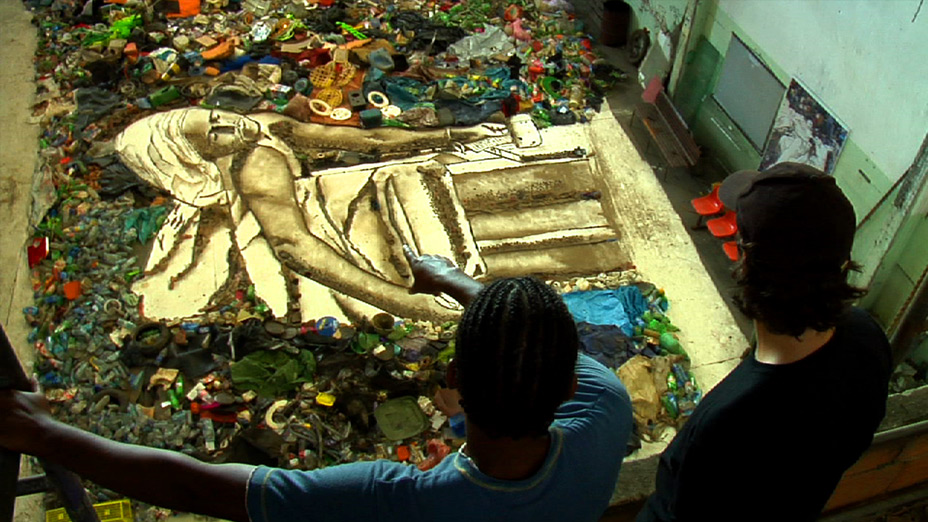
ImageWhat satisfaction would come out of re-thinking the way we look at garbage? Well, if you ask Vik Muniz, he’d say spirit, pride and timeless works of art.

Waste Land, a documentary created by artist Vik Muniz, depicts the lives of a handful of catadores (garbage pickers), who make a living by collecting recyclable material from the world’s largest dump in Rio de Janeiro, Brazil (known as “Jardim Gramacho”). In an area of Rio that is known for violence, drug trafficking, and inequality, Muniz offers a breath of fresh air by using art as a means to transform their trash into inspiring self-portraits.

Context:

This resource would be best served to a community ranging from the high school level onward. In particular, the film would best fit into the curriculum for a social science class (i.e. History). The movie acts as a modern day example of conditions that the marginalized population must endure (in some places of the world) today. It shows an example of how the unemployed resort to unique measures in order to create some source of an income. And, more importantly, it provides a peaceful means to resolve a problem; in this instance art has acted as such means (all the proceeds from Muniz’s work were given right back to the catadores, and used to build a library and create more educational opportunities). It also can help students who are more visual learners to depict what life has been like for the impoverished, especially immigrants in the early 20th century, and in what (peaceful) means they sought a better life. The movie can also be used in collaboration with the novel, The Jungle by Upton Sinclair. Using the novel, along with the movie, helps students to realize the conditions that people even in the United States had to endure through just to make a living. Although the book is fictitious, the original intentions of Sinclair were to portray the life of an immigrant in the 20th century. Thus, utilizing both resources helps to humanize a part of our nation’s history.

In this regard (using in collaboration with The Jungle), the movie could also be used for an English literature curriculum (at the high school level).

While the movie is very relevant to several aspects of high school curriculums in the public school system, the movie itself could also prove to be a valuable resource for art clubs as well. Muniz’s use of unconventional materials to create masterpieces (for a philanthropic cause) may inspire another young artist to make a difference through art.

Ways to use this resource:

For this resource, one would need to acquire the movie (find out how at the bottom of the entry), and potentially the novel The Jungle. It’s suggested that the curriculum allow the students to engage in a dialogue about the movie, after watching it. Allow them to guide the conversation, which will permit you, as the instructor, to find out the central ideas that most students drew from the film.

Using this suggested model encourages a participatory model of learning. Make the students the “spectactors” (Freire, 1968), instead of the spectators. If they have more control over the discussion, the outcome will be more beneficial to the student and the teacher.

Due to the unconventional nature of the film (a man using garbage from a dump to create art that benefits society), Muniz’s art can help to ignite the creativity within the students, and challenges them to think outside the box. His film also helps to humanize the reality of the impoverished populace, and help students understand how fortunate they are (while also understanding the inequality around them). It displays a very comprehensive, international, yet human rights theme to peace education; while also exploring development education by understanding how to explore economic opportunities in the developing world.

Continue reading

your hips don’t lie, but they do spread peace.

It’s true. I wouldn’t lie to you! “How?” You might ask. Through organizations like Dance 4 Peace. That’s right, Dance for peace. When this nonprofit popped up on my google search, I knew I had to share this absolute gem. Two of my passions combined into one?! Who doesn’t love a good twofer? And once I found out it all got started in my hometown of Bogotá, Colombia it suddenly became a threefer and just too good to pass up.

Dance 4 Peace was started by life-long dancer Sara Potler. It’s a community education program that promotes mediation skills, anger management, conflict resolution, emotional and civic engagement through dance. They  give youth social and emotional competencies for peace using music, movement, and experiences. With programs in Baltimore, DC, New York, Colombia, Nepal, and Philippines it’s a fast growing movement.

Their lessons are easy to incorporate them into any school day through physical education, music, dance, social studies, art, theater, or global studies. It could even be used as an after school activity. With so many curriculum themes (all found on their website) students are not only motivated to work out, but also develop communication, social and emotional skills that can be applied to their lives in order to promote peace. Empathy, understanding, respect, cooperation, and acceptance are all skills emphasized and developed through Dance 4 Peace. The best part? Dance doesn’t discriminate, so youth of all ages and backgrounds can partake in all the knee-bending and hip-shaking.

A lesson from Dance 4 Peace can be as short as 30 minutes or as long as 2 hours depending on what the educator wants. So, whether it’s a simple ice breaker, a bonding activity, or an entire lesson plan this program is the perfect one-size-fits-all for educators everywhere. Just have everyone grab their most comfortable kicks, open up their minds and hearts, turn up the music, and bend those knees.

In my opinion though, I think the most important thing to take away from all this is that just like Sara Potler, you can use your passions and talents to make a statement and create social change. Yes, you! You can make a difference doing what you love. So get creative, take a risk, and make your ideal twofer a reality. My motto for any such twofer: you had me at two.

From Hostility to Hospitality

William Ury’s TED talk from October 2010 is an excellent tool for introducing new learners to the field of conflict transformation. The simplicity of Ury’s language, his use of stories and visuals, and the brevity of the lecture make this video appropriate for a broad audience, and it would be best suited for students in high school or older, in both formal and informal settings. The lecture is a wonderful way to introduce the field of conflict/peace studies to students because it incorporates key concepts such as creativity, interrelatedness, perspective, narrative, and humanization through specific examples that make these ideas easy to understand for novices.

Ury’s lecture would be a good way to begin a course or training session (such as training students and/or adults in mediation or facilitation), and should be followed with small-group discussion in order to draw out and reinforce themes. As the screening and discussion could be conducted in as little as 35 minutes, this program could serve as an “icebreaker,” allowing participants to get to know one another informally (through discussion) but also setting the scene by introducing key concepts, and inspiring the group with both emotional and rational appeals.

This program incorporates aspects of multiculturalism, conflict resolution, international relations, and even human rights. Its implementation would ideally develop a basic understanding of important themes in conflict transformation, as well as a positive attitude and optimism toward the creation of peace. Ury’s talk also inspires creativity, analysis, and reflection.

(By Emily Ludwin Miller, emillerk@gmu.edu)

Jane Goodall’s Roots and Shoots

POSTED ON BEHALF OF MAGGIE MEENEHAN

One of my hero’s growing up was Dr. Jane Goodall.  Here  was a woman,  in the 1960’s, going alone into the jungles of Tanzania with a notebook and binoculars to study and save chimpanzees.    Though she met with extraordinary difficulties and  fierce adversaries,  she has managed to become a world renown authority on chimpanzees, conservation and the plight of endangered species world wide.  She is a  leading, passionate force for change  through her Jane Goodall Institute and now has “branched out” to schools and youth with her Roots and Shoots Foundation.

Dr. Jane Goodall, a UN Messenger of Peace, is the founder of the Roots and Shoots Program,  which aims to connect students to real life service learning projects of THEIR OWN choosing.   Dr. Jane began this project in 1991, when she felt that she was meeting so many children who lacked hope for the future.  She wanted to provide them with an opportunity to “think about the world’s problems and to roll up their sleeves and tackle them”.

The projects are curriculum based and encourage youth (elementary through college) to make positive changes in their own communities.  The projects have three components, which intertwine and depend upon one another.  These components are: the animal community, the human community and the environment.  The students are encouraged to identify problems and to take concrete actions.  In working together students gain a sense of empowerment that comes from helping others.

The service projects are looked upon as campaigns.   Students act as participants but also as leaders.  The web site gives examples of past campaigns but encourages students to create meaningful projects for their own communities.   The site has lesson plans to access,  Professional Development Opportunities, Career Explorations, Projects of the Month, Extension Activities,  and Family Activities.

The web site helps students and teachers plan, organize, coordinate and report/register their campaigns.  An important aspect of the projects is engaging the communities.  Dr. Jane believes that community centered conservation programs are critical to the survival of endangered species and conservation projects.

This is a fantastic, well designed and well supported,  global environmental humanitarian youth program that relies on the participants to “work for peace”.  Currently operating in  120 countries with 150,000 members, www.rootsandshoots.org  is an amazing example of a peaceable skill building and community building organization.  As we “Peacelearners” say…..check it out!