Differences and Similarities Icebreaker

This activity was inspired by this resource: https://www.icebreakers.ws/medium-group/categories-or-similarities-game.html

Summary: Participants are divided into small groups and asked to find similarities and differences between group members.

Time: 20 minutes

Materials: None 

Context: This icebreaker activity works best with new groups where participants do not already know each other well. This activity can be adapted for any age group from elementary school to professional adult groups. 

Learning Objectives:

  • Participants get to know each other and feel more comfortable with each other.
  • Increase feelings of connection and understanding between participants.
  • Participants gain insight into similarities within the group.
  • Participants gain insight into diversity and difference within the group.

Activity Instructions:

  • Step 1: Divide participants into groups with between 4 and 6 members in each group.
  • Step 2: Tell the groups to find as many things as they can that every single group member has in common. Ask the groups to keep track of the number of things they have in common and what those things are. Tell the groups they have 5 minutes and set a timer for 5 minutes.
  • Step 3: Ask each group to share how many things they found in common and what those things are. Plan approximately 5 minutes for this step although time will vary based on the number of groups. 
  • Step 4: Tell the groups to find as many things as they can that no one has in common with anyone else in the group. If there are four group members, then there must be four unique facts or experiences for the chosen difference. Ask the groups to keep track of the number of differences and what the differences are. Tell the groups they have 5 minutes and set a timer for 5 minutes.
  • Step 5: Ask each group to share how many things they found that are different for each group member and what those things are. Plan approximately 5 minutes for this step although time will vary based on the number of groups. 

Variations on the Activity:

  • One variation on this activity is to ask groups to find a specific number of similarities in the first round and a specific number of differences in the second round. 5 similarities for the first 5 minute round and 5 differences for the second 5 minute round may be a reasonable request depending on the context of the group.
  • Another variation on this activity is to make it a game where the group that finds the most similarities wins the first round and the group that finds the most differences wins the second round. Prizes and team names can be added to further competitiveness if appropriate for group context. 

Debrief: This activity can be used as a quick icebreaker before other activities, but it can also invoke deeper questions. The facilitator can add an additional 10 to 15  minutes to the activity to have a discussion about the activity. Debrief may be especially significant for teenagers and adults in activist groups, highly diverse groups, and educational settings.

Potential Debrief Questions: Pick a couple questions relevant to group context or prepare different questions.  

  • Was this activity easier or harder than you expected?
  • How did you feel during the similarities round? 
  • How did you feel during the differences round?
  • How, if at all, has this activity changed how you view other group members?
  • How, if at all, did this activity challenge assumptions you had about other group members?
  • Were you surprised by anything you found out? If you were surpirsed, what surprised you?

Village Game – A Practice in Nonviolence

Background

This simulation is originally adapted by Karen Ridd, Training for Change, in Thailand, 1995, from a game led by Pom, Thai student and grassroots environmental activist, 1994. The exercise was sourced from 350.org, a international grassroots movement advocating for dismantling the fossil fuel industry and building a world of community-centered renewable energy for all. 350.org provides trainings and resources for facilitators already involved in the climate change movement or those just starting out.

Context

This activity is best suited for high school students, college-age students, and adults. This activity can be conducted in 45 minutes, but more time is recommended to have a more robust discussion and debrief following the activity. This simulation can be delivered as a stand-alone activity, but it is best suited as an activity in supplement to discussion of nonviolent tactics, movements, or specific group goals.

This activity is best done with at least 2 facilitators, but if the activity is delivered in a shorter timeframe (>45 minutes) there should be one facilitator per group. Groups can be anywhere 3-10 but smaller groups are recommended.

Goals

The goal of this training are to provide an opportunity for participants to experience nonviolent action. This can be utilized in a variety of ways included:

  • Experiential learning for students studying nonviolent movements
  • Opportunity for budding activists to experience a situation where their community is threatened and action needs to be taken
  • Team building for existing or new activists groups to practice collective action
  • Scenario planning for real life situations participants may face

This activity also provides groups an opportunity to build their ideal community and share their experience and values. Please note that this might not be well suited for participant groups who have experience significant community destruction that has not address as it may be triggering.

Implementation

The below implementation is the adapted 45 minute delivery of the the village game. Village game run times are typically between 1-2 hours.

Set Up: Activity should be set up in advance. Set up tables with newspaper and numerous markers. This activity can also be done on the floor if desired. If you attackers will be using markers instead of tearing newspapers exclude red marker for your participants. Attackers will use red markers during their attack. Newspapers can be prepped with landmarks such as rivers, mountains, roads as needed to get the participants started.

Introduction (3 minutes): Prime the group by establishing that there are no rules besides physical violence/destruction of property in this activity. Expanded ground rules may need to be set given the location and context, but it is imperative to emphasis creativity for this exercise especially with unexperienced groups. Divide participants into groups consisting of at least three individuals and and assign a facilitator to each group (this will be referred to as village facilitator). If participants are known before the delivery time can be saved by making assignments in advance.

Building Villages (10 minutes): Prompt villagers to begin making their dream village. This can be done in the plenary or by the village facilitator. Encourage creativity and connection to the village by prompting questions as needed. Peaceful music can be turned on to create a more immersive simulation. It is critical during this portion of that participants get ideas onto their newspaper. Inform participants that they will be presenting their village to the other village groups.

Touring Villages (5 minutes): Have groups hold their newspaper village up and talk about the important features of their village for one minute. Groups can also walk around and “tour” the other villages.

Revising Villages (2 minutes): Invite participants to return to their village and add any remaining items as desired. Ask participants to remove chairs if tables are being used. Facilitators who who are playing the role of attackers should change their outfit in some way such as adding a tie or clipboard to denote their changed role. If there enough facilitators, attackers should be in addition to village facilitators.

Village Attack/Defense (10 minutes): Music should be changed to construction, destruction, or other appropriate sound track depending on the antagonist role. Attackers should introduce themselves to the whole group and explain who/what they are. Some antagonist examples are: Oil/Fracking company, Corporation, Government group, or another group with asymmetrical power.

Attackers will then begin destroying villages by scribbling out or ripping off different sections of the newspaper village. Keep the attacks minimal to avoiding overly-distressing villagers or causing them to give up. Attackers should move away from the village to give them time to plan/recover between attacks. Village facilitators can begin prompting participants that they can be creative in their reactions or asking them questions about the attack.

Attackers should return to the village as many times as needed to destroy more sections of the village. As time continues and if participants do not take action, village facilitators can prompt the participants with ideas to prevent further attacks. Potential ideas are: negotiating, sitting on the village (if on the floor), covering the village up, blocking the attackers from the village, picking the village up and hiding it from the attackers. Attacks should continue until villagers successful stop attackers or time finishes. If there is more time is available the activity should continue until attack is successful stopped.

Debrief (10 minutes): Depending on the purpose of the simulation debrief discussion should be adjusted. Below are some example debrief ideas depending on the goal of the simulation. Since debrief time is so short facilitators should provide participants with a resources or additional ideas to explore on their own. If time allows or additional activities are planned alongside this simulation the debrief can be more expansive.

  • Experiential learning for students studying nonviolent movements
    • Ask participants about barriers to action in saving their village. Connect barriers to nonviolence movement participants have studied.
    • Explore conversation about ideas that surfaced versus reading about nonviolence versus participating and nonviolence simulation.
  • Opportunity for budding activists to experience a situation where their community is threatened and action needs to be taken
    • Ask participants about their inital reactions or feelings that surfaced in this activity?
    • Explore how participants felt during the village destruction and what prompted them to act.
    • Provide resources to nonviolent tactics or action steps if participants wish to become involved in activist settings.
  • Team building for existing or new activists groups to practice collective action
    • Ask participant how it felt to collective build their ideal village and what they learned about their fellow participants.
    • Ask participants about the group dynamics while under stress in this activity. Have them explore how group actions effect nonviolent movements.
  • Scenario planning for real life situations participants may face
    • Discuss what worked and what didn’t work and apply to participants’ context. Provide resources or ideas about nonviolent tactics.
    • Explore the differences that might occur in the simulation versus real situation. Additional role playing may be utilized or participants can share learnings from their experiences.

Resources

These resources are not expansive, but rather a starting place for facilitators that will depend on context and participants.

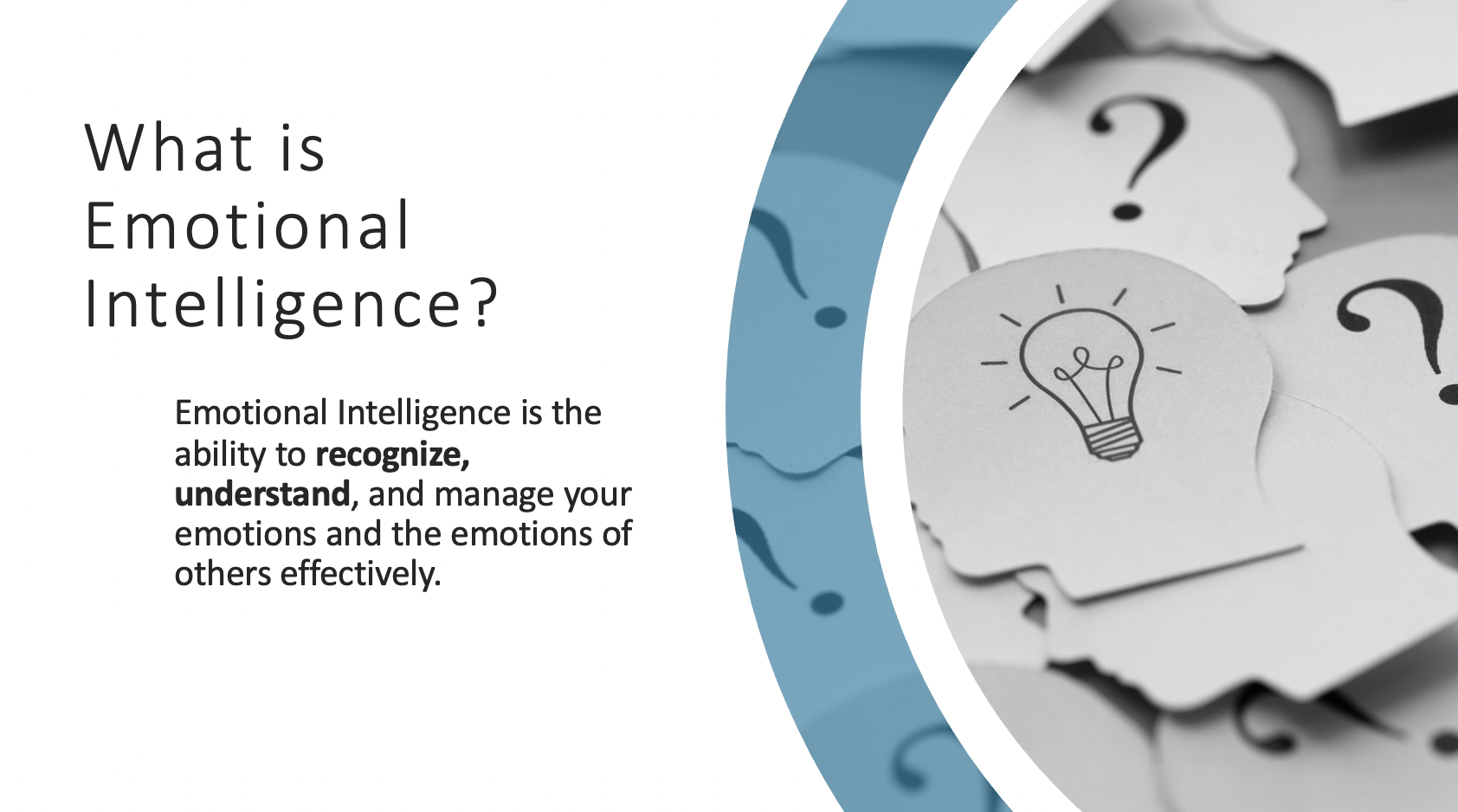
Emotional Intelligence and Social Change: A Conflict skills and Peacemaking Activity

Designed by Haley Nelson

Background Information/Content

Social-emotional intelligence is central to group dynamics and conflict. Yet, the exploration of emotional intelligence has historically been neglected in conflict resolution and peacebuilding conversations. The absence of emotional intelligence in conflicts can hinder the ability of group members to navigate conflict, empathize with others, and manage relationships (Schwarz, 2002). When emotional intelligence is considered at the educational, community, or organizational level, group members can learn to harness emotion as a community and relationship-building tool. 

This activity explores emotional intelligence in the context of peace education. This resource draws inspiration from psychology surrounding basic emotions, emotional wheels, and the origin of emotion, as well as conflict resolution and peacebuilding research on emotions and conflict. This activity will support groups in building emotional intelligence on the individual and social levels. This activity is best suited for groups with a common goal, such as classrooms, community organizations, and the workplace. 

Context

This activity is best suited for high school students, college-age students, and adults. The formality of this activity can be adapted to various education settings but is neutral in its current form. The activity consists of two phases and will take approximately 30 minutes per phase. The length of this activity may vary based on the depth of conversation and volume of participation.

The recommended group size for this activity is 4-10 people. Increased group size will increase duration, allowing for productive discussion among group members. This activity would be best supported by materials such as sticky notes, note cards, and a whiteboard. However, this exercise can be completed via discussion if these resources are unavailable.  

Implementation

Phase 1: (30-45 minutes)

  • Introduction (2-3 minutes):
    • Check-in on how everyone feels and provide context for the activity. The purpose of this introduction is to reveal that the activity will encourage participants to explore and feel daily emotions and tensions. The facilitator should consider establishing a controlled environment where participants can explore emotions safely. An introductory example is below:
      • “We are going to discuss emotional intelligence today. We will create a respective space where real emotions will be felt. We will go through a simulation designed to stimulate emotions in scenarios we feel and experience in our daily lives. If you feel the need to leave the space and take a moment for yourself at any time, please do so.”
    • Describe the importance of emotional intelligence when managing conflict.
  • Description of the simulation (2-3 minutes):
    • Provide a scenario, context, and discussion topic for the audience to navigate. For example, a dinner party discussing travel destinations will generate conversation and allow participants a neutral space to explore group dynamics.Assign behavioral traits to participants randomly: Each participant will be assigned a behavioral trait designed to generate tension, such as disruptive talking, withdrawn behavior, and overconfidence.
      • Remind the audience of the difference between behavior and emotions, acknowledging that the two might contrast during the activity.
    • Open conversation for any questions before beginning.
  • Simulation (5-10 minutes)
    • During the simulation, the participants will navigate conversation based on the context and behavioral traits provided. The group may find conversation challenging to navigate. The goal of the activity is to stimulate emotions based on the role assigned, the conversations at hand, or the simulation process itself.
  • Reflection: (5 minutes)
    • Take a moment to check in with participants. Ask the audience to write down the emotions 1. They experienced during the role play, and 2. Behaviors that might indicate others’ emotions during the role play.
    • After listing these observations on a notecard or sticky note, ask participants to hold on to their observations for later conversation (allowing for further engagement).
  • Individual level emotional intelligence? (10 minutes)
    • Define emotional intelligence and explore this definition with the group. This is an excellent opportunity to explore the meaning behind emotional intelligence and clarify any questions regarding emotional intelligence with the group.
    • After defining emotional intelligence, ask group members to share the emotions they experienced during the activity with the group. Ask the participants to refrain from group observations until later.
      • Explore the dynamic of emotions as they arise:
        • Did members experience multiple emotions? Were those emotions in harmony with one another? Did emotions contrast with each other?
  • Clarifying emotions (5-10 minutes):
    • Explore the six types of basic emotions with the group: happiness, sadness, fear, disgust, anger, and surprise. Then, explore emotions surrounding each category and how they can be clarified. For example: if a group member said they felt anxious during the activity, that emotion is rooted in fear. If a group member said they felt confused during the activity, that emotion is rooted in surprise. Provide examples for the group, then encourage them to clarify their shared emotions.
    • Many people, especially adults, will provide cognitive responses instead of emotions when asked how they feel. When asked what emotions they experienced during the activity, a cognitive response might sound like, “conversations about travel destinations made me want to explore the world more.” Encourage using the emotional wheel to assist participants in shifting from cognitive responses to emotional responses. Ask the participant which emotion is closest to their shared responses and explore the differences between emotion and cognition.

Phase 2: (20-30 minutes)

  • Social-emotional intelligence (5-10 minutes)
    • Ask the participants to return to their group observational notes from the simulation. Consider what cues clued participants in on how others might have been feeling.Provide an example of clarifying social emotions for the group:
      • “I noticed that you were quiet after being interrupted. Did you feel sad after that interaction?” Remind the group to use core emotion vocabulary (i.e., happiness, sadness, fear, disgust, anger, surprise). 
      Allow group members to share their observations. 
    • Open a conversation to ask how accurate their observations were.
      • Why were my observations accurate/inaccurate? How can I better observe the emotions in groups moving forward? 
  • Further discussion: (15-20 minutes)
    • Allow the group to discuss their experience with the activity in depth. Some guiding questions might include the following:
      • How aware were you in the moment of your emotions? Others? 
      • Did you feel that other people’s emotions influenced yours? How? 
      • What were your reactions to emotions in the space? How/did you respond?
      • How might you manage your reactions to emotions in the future?
      • How difficult was it to clarify your emotions? 

Ways to further curate this resource:

  • Pedagogies that may strengthen this resource involve increased participant freedom and involvement. The facilitator of this exercise might increase participant freedom by:
    • Encouraging group members to create their own activities to stimulate everyday emotions.
    • Allowing group members to redefine emotional intelligence for themselves based on shared interests.
    • Involving artistic approaches to exploring emotions such as paintings, photographs, and music. This might involve emotional responses to the creation of artwork or the observation of artwork.

Goal

This activity focuses on individual and social-emotional intelligence. As an introduction to emotional intelligence, this activity seeks to help group members identify their emotions and clarify the origin of their emotions. At the group level, this activity seeks to increase awareness of group dynamics through observations and clarification of emotion. This activity aims to foster empathy and connection within a group by discussing the relationship between individual and social emotions. 

After this activity, participants should be able to:

  • Understand the meaning and importance of emotional intelligence.
  • Clarify everyday emotions into the six core emotions.
  • Have increased awareness of the connection between individual and social emotions. 

Resources

Further reading on emotions and insight into social-emotional intelligence:

Cherry, K. (2022, December). The 6 types of basic emotions and their effect on human behavior. Verywell Mind. Retrieved 2022, from https://www.verywellmind.com/an-overview-of-the-types-of-emotions-4163976 

The Junto Emotion Wheel. The Junto Institute. (2022). Retrieved 2022, from https://www.thejuntoinstitute.com/emotion-wheels/ 

Schwarz, R. (2002). Ch 12: Dealing With Emotions. In The skilled facilitator: A comprehensive resource for consultants, facilitators, managers, trainers, and coaches. essay, Jossey-Bass. 

An Art Activity for Reflection and Generalization of Learning

Designed by Yuriko Noda

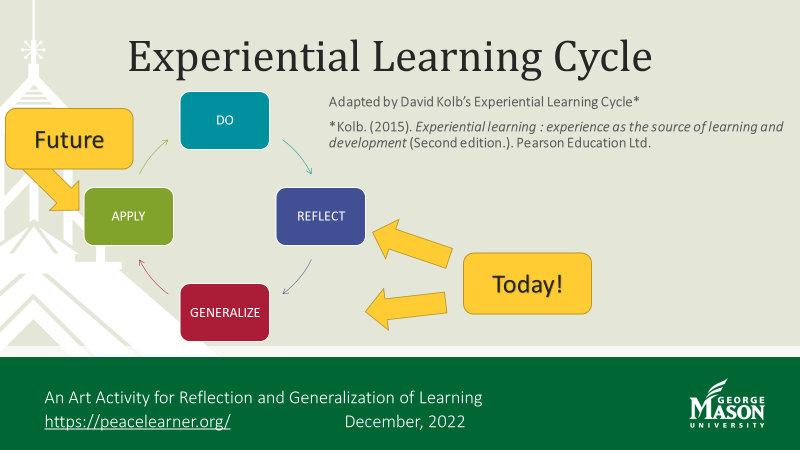
This is an activity designed and can be utilized effectively at the end of a series of training, seminar, course, etc. that is conducted based on the principles of experiential learning which facilitates participants learning through their experiences.

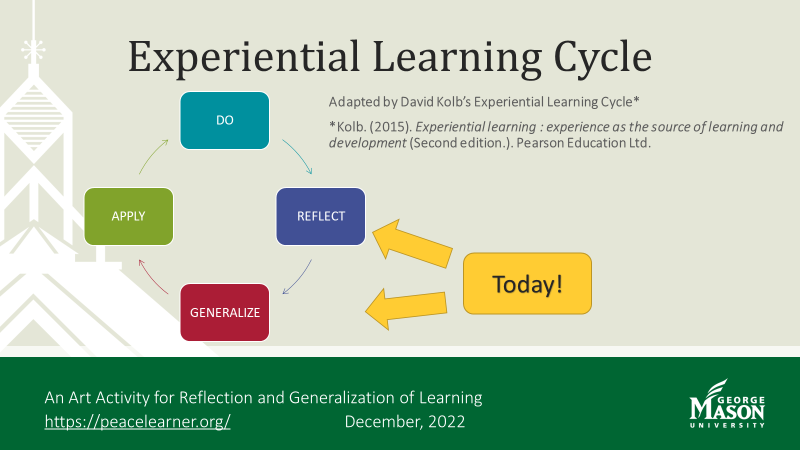
Based on the experiential learning cycle adapted from Kolb (2015), it is argued that people can learn from experiences, but just experiencing something is not enough to actually learn from it. For the effective experiential learning, the process of “Reflection” and “Generalization” are important in order to be able to “Apply” the learning in the future. Therefore, this activity is designed to be helpful for participants to reflect and generalize their learning from their experiences.


Outline of the activity:

  • Overview: The participants take time to work on their own to reflect their series of experiences, make a short story about it, and put it into an art piece. After that, the participants present it to the group, and the facilitator lead a short discussion about each presentation with the group, as well as a short reflection about this entire activity.
  • Time: 45-60 minutes
  • Number of participants: Any number more than 3
  • Age group: Any age, depending on the expected depth of the reflections, generalizations, and discussions
  • Settings: In-person or online.
    • For in-person settings, a variety of materials need to be prepared.
    • For online settings, it’s helpful to notify the participants in advance so that they can bring their own materials ready.
  • Goals: By the end of this activity, the participants would be able to
    • Become more aware of their biggest learning from the series of experiences
    • Express and present their biggest learning from the series of experiences
    • Have ideas how to apply their biggest learning from the series of experiences in their future
    • Remember their biggest learning from the series of experiences even after the completion
  • Pre-Work:
    • This 45–60-minutes activity is designed to be conducted after each participant taking time to reflect their series of experiences. So it is recommended to either give them heads-up to reflect the experiences on their own or set time for reflection together before this activity.
    • If it’s conducted online, it is also helpful to tell the participants briefly what we are going to do, and ask them to bring materials they may want to use (paper, pens, musical instruments, etc.).
  • Flow and instructions:
    • Introduction (1 min): Why we are doing this activity (purpose).
      • Presenting the learning cycle of DO – REFLECT – GENERALIZE – APPLY from the experiential learning, explain that this activity will help their reflection and generalization process of their learning and their preparation for application. DO part should have been done during the series of experiences.
      • Motivate them to try to grab the most important learning and express it in the form of art.
    • Instructions (4 min):
      • You will have 10 minutes to work on your piece of art by yourself. You are going to think and express the followings in a form of art, and present with the group after that (how to present, time to present depends on the number of the participants).
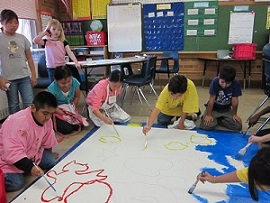
      • You can use any form of art. It could be a little one-man sketch or skit, making a song, rewriting lyrics of a famous song, drawing a picture, drawing a poster, making a sculpture using what you have at hand, write a poem, etc. But please try to avoid long sentences or wordy explanations. Using hands like handwriting is encouraged rather than typing or drawing on computer. Be creative!
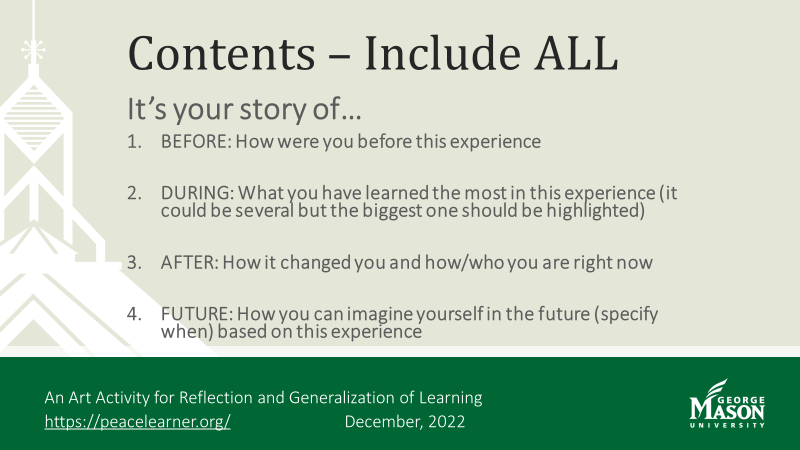
      • Contents of the art is like a story which should include ALL of the following:
        1. BEFORE: How were you before this experience
        2. DURING: What you have learned the most in this experience (it could be several but the biggest one should be highlighted)
        3. AFTER: How it changed you and how/who you are right now
        4. FUTURE: How you can imagine yourself in the future (specify when) based on this experience
      • Time to work by yourself is 10 minutes. Time for you to present is 2 minutes. The facilitator will give you reminders of time (5 minutes to go, 1 mininute to go).
      • Any questions?
    • Individual crafting time (10-15 min). Playing a nice music is a good option. Set a timer and facilitator will give reminders 5 minutes and 1 minute before the end.
    • Presentation and discussion (20 min):
      • We get together after the crafting time is over.
      • Some or all of the partiicpants present their art pieces.
      • After each person’s presentation, other participants are welcome to make short comments, if any.
      • Facilitator will also acknowledge and make a comment on the presentation.
    • Small reflection of this activity (5 min):
      • Open to the floor to share their reflections and learning (if any) of this activity.
    • Wrap up (5 min):
      • Show appreciation for their works and make a brief comment by the facilitator
      • Put up the learning cycle again to highlight that in the experiential learning, it starts with DO but through the process of REFLECT and GENERALIZE, the learners can bring their learning as transferable or applicable knowledge, skills or attitudes. That’s why we did this activity and hope it will be helpful for you to utilize or apply your learning (not only the biggest one but other small ones, too) in your life in the future in different contexts

Resource:
Kolb. (2015). Experiential learning : experience as the source of learning and development (Second edition.). Pearson Education Ltd.

*This activity was designed by Yuriko Noda, a PhD stuent at from Jimmy and Rosalynn Carter School for Peace and Conflict Resolution, George Mason University

Music and the Mobilization of Nonviolence: Conflict Skills/Peacemaking Facilitation Activity

Designed by Yong June Kim

Background/Contents

Art is a powerful medium to de-escalate the tension of conflict when it is utilized at an appropriate time. Especially, music could bring strong emotional connectivity among people worldwide; it has been constantly used as a simple but strong tool to overcome social oppression and to strengthen the voice of the public with a nonviolent approach. This activity, Music and the Mobilization of Nonviolence, aims to teach how music could greatly impact emotional connectivity and de-escalation of conflict and contribute to a significant nonviolent movement against conflicts we face in our society. The activity was fully conducted online; due to this condition, the online meeting software Zoom was the main tool to proceed with the activity. Since Zoom provided an interactive whiteboard and screen-sharing option which enable the participants to be simultaneously engaged throughout the activity, it was sufficient to facilitate the exchange of emotions and ideas that are stimulated from the session. The resources for this activity are gathered based on self-research; one song deeply connected to social conflicts is selected per genre: Blues, Gospel, Rock, Hip-hop, Classic, Grassroot music, etc.

This type of education could be effectively utilized in any group regardless of age or community level when it is conducted in an informal setting since it is based on experiential learning; however, it could be especially practical for students at the K-12 level. As music itself contains entertaining elements, it could help the students maintain their focus and be fully engaged by actively listening and watching music videos during the activity. The debriefing questions are also based on their emotions and feelings that are directly reflected by the musical contents; this simple discussion could make them feel comfortable and safe to learn the key points of this activity that music itself could connect people and contribute to peacebuilding processes in the long term perspective. Furthermore, they will have the opportunity to have a deeper understanding of the backgrounds of musical genres and pieces that they are used to listen but are not actually aware of the hidden stories they embody.

Implementation

  • Activity Time Duration: 45-60 minutes, depending on the number of songs an educator would like to use.
    • 3 min: Brief introduction and learning objectives
    • 10 min: introduction of a particular genre (it would be helpful to go through research or ask for support from those who have musical expertise during the preparation.)
    • 10 min: Music introduction, listening (4-5 min) and debriefing (5 min) activities #1
    • 10 min: Music introduction, listening (4-5 min) and debriefing (5 min) activities #2
    • 10 min: Music introduction, listening (4-5 min) and debriefing (5 min) activities #3
    • 10-15 min: Review of the activity, simple quiz activities about the music based on debriefing
  • Orientation of the Session: The educator may have multiple sessions, introducing one genre for each session. The first session, however, needs to introduce the overall learning point, which is the music’s impact on peacebuilding and the mobilization of the nonviolence movement in society. Guiding the main theme at the beginning session will help both educators and students to be consistent with understanding the music’s role in the strategic peacebuilding process while engaging in the activity throughout the sessions. For example, sessions could be categorized like the example below:
    • Session 1: Introduction_How Music Helps Strategic Peacebuilding?
    • Session 2: Understanding the Origin of Blues Through Learning the Black History
    • Session 3: Learning Gospel through Analyzing Amazing Grace
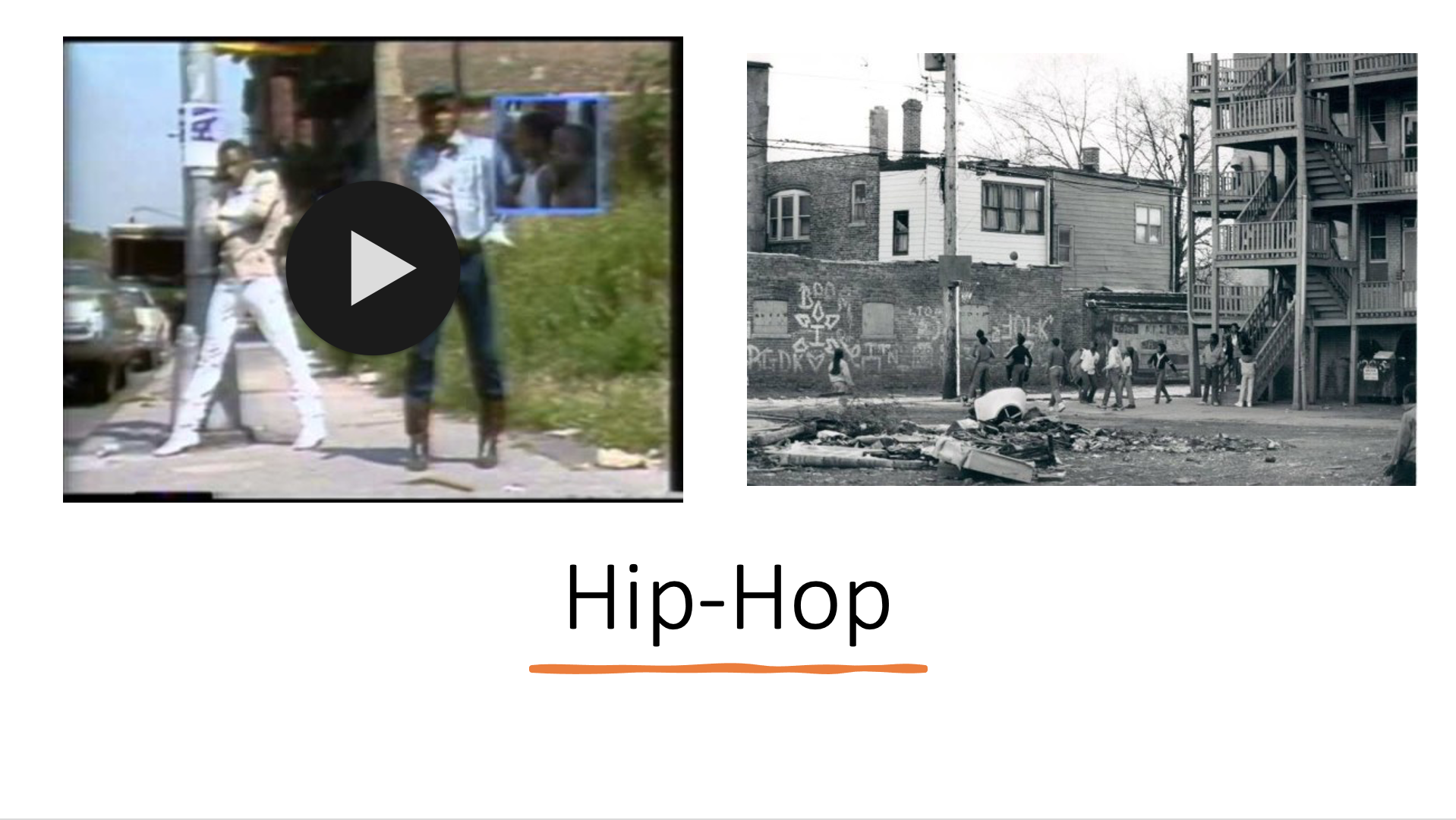
    • Session 4: How did Hip-hop Become a Powerful Medium for Raising Voices for Social Issues
    • Session 5: Rock for Peace
  • Each session will start by introducing two to three songs that are relevant to the genre. The educator may briefly introduce the background of the songs and share the lyrics with the participants to help them have a better understanding of the contexts. The facilitator could also have a simple quiz about the music so that the participants can guess the information about the music, providing much more interaction during the session.
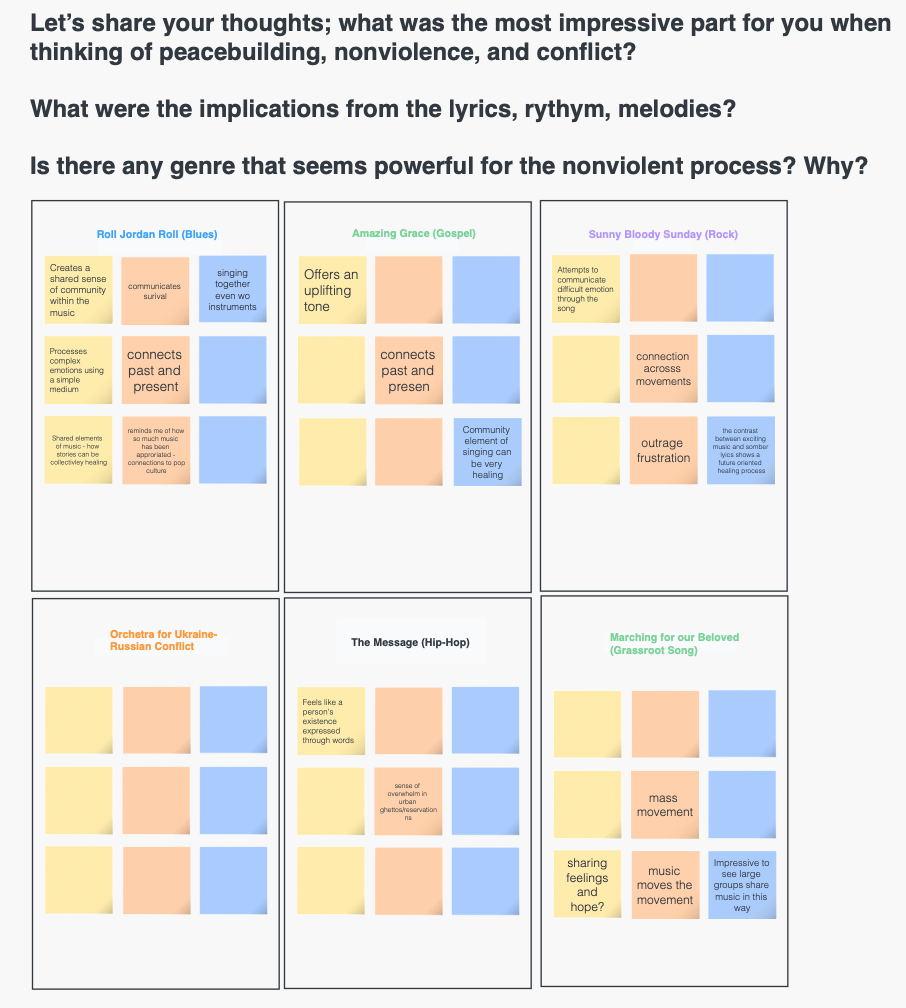
  • After appreciating those musical pieces, the educator can move into a debriefing session. When it is conducted online, shared whiteboard and brainstorming programs  through Zoom or Mural could be utilized to have students engaged in the activity. When it is conducted in person, however, the educator may use a large size of paper so that the participants could simultaneously add their thoughts of impression and engaged emotions to the paper. The Questions after listening to the musical pieces could be like below:
    • Let’s share your thoughts; what was the most impressive part for you when thinking of peacebuilding, nonviolence, and conflict?
    • What were the implications of the lyrics, rhythms, melodies?
    • Are there any other elements that seem powerful for the nonviolent process? Why?
    • If you want to introduce other songs you particularly find relevant, please share and explain why it is connected to the topic.

Goal

The objective is to connect music with peacebuilding and the nonviolence movement by emphasizing its contribution to emotional connectivity between groups, individuals, and communities. Through such experiential learning processes utilizing basic senses that are based on auditory, visionary, and somatic senses, it aims to help students to maintain their interest in learning in non-academic approaches. Also, this activity could help the students have better accessibility to understanding past and current major conflicts that are occurring worldwide by appreciating the musical pieces that directly reflect them. By doing so, it could facilitate the process of conscientization (Freire, 1970), which enables the participants to understand the social issues that could be directly related to themselves in a critical manner. The contents illustrated below could be the main learning objectives:

Resources Used for the Activity

Musical pieces that are used for the activity could various depending on the educator’s preferences or participants’ suggestions through discussion at the beginning of the session:

  1. Freire, P. (1970). Pedagogy of the Oppressed. Seabury Press.
  2. B.   Shank, M., & Schirch, L. (2008). Strategic Arts-Based Peacebuilding. Peace & Change, 33(2), 217–242. https://doi.org/10.1111/j.1468-0130.2008.00490.
  3. 12 years a slave – choir song – ”roll jordan roll” 2013
  4. President Obama Sings Amazing Grace (C-SPAN)
  5. Grandmaster Flash & The Furious Five – The Message (Official Video)
  6. U2 – Sunday Bloody Sunday
  7. ‘Stop the war in Ukraine’: Orchestra plays national anthem in central Kyiv as Russians advance
  8. [경향신문]19차 촛불집회 광화문에 울려퍼진 ‘임을 위한 행진곡’

*This activity was designed by Yong June Kim, an undergraduate student at George Mason University’s Carter School for Peace and Conflict Resolution, based on Dr. Arthur Romano’s Graduate Course (CONF 695) “Peace and Conflict Resolution Pedagogy” in Fall 2022. 

“Dancing in the Dissonance” – A Conflict Resolution Skills Activity

Designed by Audrey Williams

I. Introduction

The goal of the “Dancing in the Dissonance” activity is to introduce the concept of “dissonance” as a tool to build curiosity and respect for difference in shared meaning-making spaces. The activity draws on narrative and musical tools for conflict resolution to build a better understanding of how people make meaning both individually and as part of a group. By the end of the activity, participants should have a better appreciation for how curiosity, complexity, and difference relate to healthy experiences of conflict.

By working with a pre-selected song to make and share meaning around sonic representations of conflict, participants will have the chance to ponder how meaning making happens on multiple levels, including:

  • on the level of the individual;
  • on the level of the group; and
  • on the level of the message between artist and audience.

This activity can be carried out in settings where participants already know each other as well as in settings where participants are just meeting each other for the first time. This activity involves a pre-class work expectation, and so it should be used in contexts where the facilitator has enough advance connection with participants to send pre-class materials to them.

At each stage, the activity is designed to help participants build greater appreciation for the flexibility and adaptability of meaning while also exercising their curiosity about how people can have different experiences of the same phenomena. Participants will learn how to see dissonance as an invitation to curiosity, and will walk away with an understanding of how to use curiosity to navigate difference in a generative, rather than destructive, way.


Continue reading

Taking violence prevention seriously in middle schools

Christa Tinari, founder of Peace Praxis and co-author of Create a Culture of Kindness in Middle School, joins Nonviolence Radio to talk about the real meaning of kindness and some practical tools that can help us to show kindness with justice in more areas of our lives.

Check out the podcast here: https://www.stitcher.com/podcast/metta-center-for-nonviolence/peace-paradigm-radio/e/53362364

SChool Peace Sign Photo for Cover 2

Move This World: Peace Education Through Movement

While attending the Peace Education Exploratorium this weekend, I had the opportunity to learn about many different pedagogies of peace at work in the world today. The role of sports and peace education specifically piqued my interest as one of the guest facilitators, Amanda Munroe, spoke about her involvement with  Move This World, formerly Dance 4 Peace. 

Here is a short video about Move This World’s work. Move This World Video! 

Move This World is a non-profit organization dedicated to using creative movement to transform conflict, violence and bullying in communities around the globe.  Move This World created an innovative curriculum focusing on fostering empathy, mediation skills, diversity appreciation, anger management and conflict transformation. With a need for peace intervention at all levels, Move This World operates with grade level specific curriculum. The curriculum theme for each age group can be viewed by clicking here! 

Founder, Sara Potler, began the program with youth in Bogota, Colombia. Promoting peace through dance, Potler began the formation of the idea that movement can be used to create peace. Today Move This World works internationally in Colombia, Germany and the Philippines and stateside in Baltimore, Newark, New York City and Washington, D.C. Move This World employs several different peace pedagogies. By working and learning students with whom we are learning with, community building is a play. By moving and working together, relationships between peers can strengthen and encourage a community of peace. The second pillar of peace pedagogy, engaging in multiple intelligence’s is played upon. Through movement via sports, dance or whatever gets students flowing you can engage in the body, music, naturalist and interpersonal multiple intelligence’s. By accessing these intelligence’s, students are able to experience alternative forms of education. These tools enable students to benefit by stretching their skills into multiple forms of intelligence’s. 

Ways to use this resource – Elementary & Middle School 

Incorporating movement in the classroom is the first step in introducing peace pedagogy into the classroom. By looking at the curriculum themes for each grade level, teachers can gear their lesson plans to whichever activities best fit their classroom.

Ways to use this resource – High School

While kindergarden through eight grade focuses on key themes to teach students, the high school curriculum focuses on facilitating students own leadership and peace building skills. The first semester hones in on understanding emotions, conflict and cultural diversity. With an entire semester of immersion into conflict resolution information, the second semester is geared towards fostering students own leadership capacity as they grow to be peace-makers in their own community. 

During high school I was involved in the PALS, Peer Assistance and Leadership, which fostered parallel goals as Move This World focuses on during primary education. This program was brought to my high school by the administration in hopes of reducing the increasing amount of violence. While other non-violent programs were simultaneously put in place, as the development of the PALS program increased the violence occurring within the school decreased.  To learn more about training opportunities through PALS, click here. 

Ways to use this resource – Become a Partner! 

If your school or organization desires to facilitate peaceful change through movement, please sign up to receive more information from Move This World by clicking here. Move This World works in Colombia, Germany and the Philippines and stateside in Baltimore, Newark, New York City and Washington, D.C. If your school or organization is outside these regions, Move This World provides many beneficial tools to use in your classroom, as well as great curriculum models to follow. 

Qigong

POSTED ON BEHALF OF BETH JIMERSON

“Qigong is a practice of aligning breath, movement, and awareness for exercise, healing, and meditation. With roots in Chinese medicine, martial arts, and philosophy, qigong is traditionally viewed as a practice to cultivate and balance qi (chi) or what has been translated as “intrinsic life energy”. Typically a qigong practice involves rhythmic breathing coordinated with slow stylized repetition of fluid movement, a calm mindful state, and visualization of guiding qi through the body. Qigong is now practiced throughout China and worldwide, and is considered by some to be exercise, and by others to be a type of alternative medicine or meditative practice. From a philosophical perspective qigong is believed to help develop human potential, allow access to higher realms of awareness, and awaken one’s “true nature”.” (http://en.wikipedia.org/wiki/Qigong)

My mother has recently become very involved with Qigong classes and incorporated Qigong into her daily routine. I attended one class when I was home (in Bellingham, WA) and was intrigued by the gentle, flowing movements.  After our unit on yoga and meditation, I was reminded of these practices and decided to read more into this ancient Chinese practice. I truly believe in the importance of slowing down and relaxing for better health for both the body and the mind. Yoga, meditation and Qigong provide different approaches to similar goals in breathing, relaxation and exercise. It is important for everyone to find a route that speaks to them personally, so I thought I would introduce a new addition to this unit. Read more about this ancient Chinese practice from the National Qigong Association: http://nqa.org/resources/what-is-qigong/

The gentle and rhythmic movements of Qigong combine some of the concepts of yoga and meditation. They can be done in a variety of settings and practiced by people of any age. These methods could be used for personal relaxation and health or even incorporated into the classroom. Just as we’ve talked about benefits of meditation and yoga in the classroom, Qigong movements could be explored to stimulate different areas of the body or mind in our students.

A recent example that my mom sent to me from her instructor, Richard, focuses on self-healing Qigong for clearing the lungs, throat, sinuses and other “lung” issues. It is called the White Butterfly. This exercise can be performed seated, standing, or lying down so it could easily be used in a classroom setting. You can hold the position for just a few minutes or longer if you wish. Holding this position allows time to concentrate on breathing and meditation. Your students can breathe along with you. It would be a great exercise especially for the winter months of the year to clear sinuses, concentrate on breathing and meditation and take a few moments to relax and learn about ancient Chinese healing methods.

Exploration of Qigong could be tied into history and used as a base to explore other ancient healing methods. Ancient Chinese concepts such as ‘qi’ are also found in martial arts or feng shui which could open the conversation to a variety of discussions on history and culture. It would be interesting to explore ways in which other cultures have traditionally used practices such as these to promote peace. The conversation could open to uses of meditation by peace promoters such as Gandhi and comparing the methods used in his culture and by him to Qigong.

The Qigong methods incorporate many different movements and combinations of movements to target different parts of the body as well. It sometimes uses a combination of pressure points similar to acupressure. Just as with yoga or other forms of exercise, I would suggest taking a few classes or learning from someone else before attempting to teach these techniques to anyone yourself. There are a lot of subtleties involved in these methods and ways to combine breathing techniques with movements that are best learned and explored personally first in order to help others understand how to perform them correctly.

These exercises could work towards the peace pillar of skill-building by building skills to deal with our own stress and physical well-being or teaching our students which movements can help with different parts of our bodies and minds. Just as yoga or meditation are skills for peace of mind or exercise, Qigong practice could be incorporated to target different parts of the body. These skills could be easily practiced outside the classroom as well or built upon through further exploration.

The peace pillar on nurturing emotional intelligence could also be incorporated through getting in touch with our feelings and our bodies. Students could record the way they feel before and after these exercises or on a weekly basis after practicing three or four days a week. One adaptation that could be made throughout these exercises (which I have seen done) is to smile while performing these movements. This can help with emotional well-being just as being conscious of smiling and being positive can. These exercises could be used before lessons to create a relaxed and thoughtful environment for discussion- to get our students ready and receptive to opening up.

For more information, check out my mother’s Qigong instructor’s website: www.robertbateshealing.com

The Interrupters

I had seen clips of the documentary the Interrupters on PBS a few times, but never got a chance to watch the full length of the movie. When I finally wanted to watch it, they weren’t airing it on T.V anymore. Luckily the PBS website had the full documentary online and for this blog I will give a summary of the movie and what I thought about it.
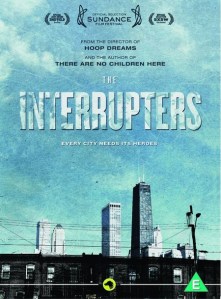
The Interrupters

http://www.pbs.org/wgbh/pages/frontline/interrupters/

The documentary “The Interrupters” looks at the life of three Violence Interrupters and their work within a span of one year. These Violence Interrupters work with an organization called Ceasefire in the most conflict-reddened areas of Chicago, who try to protect these communities from violence that they were once a part of. The film was directed by Steve James, an acclaimed director known for his powerful portrayal and insight of communities and cultures in his movies and documentaries. Interrupters was filmed during a period of constant youth violence in parts of Chicago, in African American and Latino neighborhoods, and during a time when the United States had its eye on Chicago as a national symbol for the violence in our communities.

Founder of Ceasefire, Gary Slutkin, believes that the spread of violence in communities is similar to the spread of diseases and epidemics, “violence is like the great diseases of history…. violence as behavior, not as bad people.” For the young people in these neighborhoods, they see violence as their disease and they expect that they are going to die from this. Tio Hardiman, who created Ceasefires main program, “Violence Interrupters” explains that violence is a two-step process. The first thought is grievances; people come up with reasons to start a conflict for example, “He looked at my girl…he owes me money…he’s a Sunni…he’s a Palestinian, and so forth. The second thought is that these grievances justify the violence.” Tio, just like members of the Violence Interrupters has street credibility (because of his own personal history), which gives him full insight into the violence and minds of Chicago’s youth.

Violence Interrupters

The three Violence Interrupters that are followed throughout this documentary are Amina Matthews, Cobe Williams, and Eddie Bocanegra. Amina was the daughter of Jeff Ford, one of the biggest gang leaders in the history of Chicago. In the documentary Amina is what Tio calls the “golden girl,” she knows how to get them (the community youth) to open up. Being an ex-gang enforcer and one that has lived a life in shoot outs, she knows what its like to be a youth in these communities that are plagued by violence. Cobe Williams, scarred by his father’s murder, began a downwind spiral at the age of twelve. After being in and out of jail numerous times, Cobe decided to turn his life around with the help of his family. In the documentary we see that Cobe, with his humor and general good nature, “knows how to get in, he knows the language – what to say, when to say it.” Cobe too has big time credibility with the gang members because of his past, which allows him to easily insert himself within the conflict in order to resolve it. Last, but not least is Eddie Bocanegra, who is still daunted by the murder he committed at the age of seventeen. For him, his work with Ceasefire as a Violence Interrupter is a repentance for his past actions. Playing on his strength in art, Eddie is able to and concerned with spending majority of his time with young children affected by the aftermaths of violence.  He teaches the children art, warns them of the trauma experienced by those who have come face to face with violence, and makes an effort to keep children off the streets and get them the support they need.

Throughout the documentary, the viewer is able to look into Ceasefire meetings and the conflicts that take place within the communities. Each Violence Interrupter has a past of their own, and each uses their history and knowledge of the streets to get closer to their goal, which is to “ stop the killing, and save a life.”

Youth

One of the first scenes we see is of a conflict-taking place right in front of the Ceasefire building. Amina Matthew quickly interrupts the conflict and has both groups separate.  What is profound is that even a five-year-old girl was shouting profanities and getting involved in a conflict that had nothing to do with her. Later, Amina talks to some of the youth and is able to get them to open up through different forms of communication, one form being laughter. Amina explains, “If you get them to laugh at themselves- find that soft side, not their weak side, then you ride on that.”

In these streets the youth have been brought up with the notion that “you have to stand up no matter what happens… death before dishonor.” They have been taught violence, as violence is a learned behavior. One youth justifies, “If you don’t do it, they’re going to do it to you, you go hard or it’s your life.” They say all odds are against them, they have been brought up this way, they want to fight, and that history is up against them.

One scene in the documentary that was very overwhelming for me was a still shot of a wall of names, names of all who had been killed, murdered, and shot, and in one spot someone had written, “ I am next…” This shows how deep the youths mentality about violence is, and that they think they are stuck in it, when in reality in order to break out of it they have to find change within themselves and their peers. However, in a sense they find an honor in getting killed. They want to be known that they didn’t step down, that they fought and died, and that they know that when they die, they’ll get all the hype, both from the community and the media, that they have made normal around such drastic deaths.

Tio explains in the documentary that “Once media goes back to wherever they came from, we have to step up to the plate and make something happen up over there.” He is aware that a lot of the violence isn’t gang violence, its interpersonal conflict that deals with respect and disrespect, not being accepted in an overall society where a lot of people are ostracized, and so they try to dominate their societies. Their actions go from “zero to rage in thirty seconds” and they act out because of something that upset them earlier in their day.  With this kind of anger and violence, Tio explains that they cannot mediate the conflict without full confrontation. As the documentary comes to a close, Tio explains that African American and Latino communities have been beaten for so long with poor schools, lack of jobs, hopelessness, and despair that it is “hard for people to stick with peace if they don’t have a stick that they can hold on to.”

Analysis

Although this documentary looked at the violence in Chicago communities as a whole, it also focused on specific youth whom Aminah, Cobe, and Eddie personally intervened with; Capyrsha Anderson, Lil Mikey, Flamo, Vanessa Villalba, and Kenneth. Along with these young adults, Ceasefire was able to prevent numerous outburst of violence to occur in their communities.   Its impact was beyond substantial. These Violence Interrupters were right there with each act of violence from the beginning to the end, and used their knowledge and insightfulness to the best of their ability to reduce the tension of the conflicts. Each young adult the Violence Interrupters assisted have taken a full 360 in changing their lives, sometimes all one angry person needs is someone right there beside them to show them the right path. 

Watching this documentary made me realize that these communities have been “brain –washed” into believing that violence is the only way to solve a conflict.  However, when they have member of Violence Interrupters come in and show them alternative options, it opens up a number of other possibilities for them, with a less drastic cost that wont end up affecting them for the rest of their lives.

I could definitely see myself incorporating this type of intervention and peace education into my practice. It is always useful to have those who are knowledgeable of a conflict come in and help resolve a conflict. What I liked the most was that each Violence Interrupter had a violent past of their own which they rid themselves of, and they knew exactly what was going on in the minds of the youth. Because of their insightfulness, they were able to assist the community and individual youths to a level of nonviolence.

Stakeholders:

Stakeholders that I believe will be able to benefit from my post are anyone who lives in a community that violence plays a big role in. For older community members, this type of intervention and peace education would assist their communities to a level of nonviolence for the youth.