
By: Kathia López
Hello, Peace Learners!
I would like to share this educational resource you can use when teaching youth about narratives and hate speech. It is called the “Case Study Iceberg”.
Relevance of this Resource
We are living in particular violent times and unfortunately, narratives against certain social, cultural and ethnic groups are being spread out, increasing the spiral of violence. The internet and social media are serving now as an amplifier of the repressive narratives behind hate speeches, and the freedom of expression is being used to justify them. We are witnessing an increase in gender backlash, a surge in antiimmigrant sentiment and more frequent attacks in the name of religion and national security. These trends are intensified by rising online polarization and disinformation, which make harmful narratives travel, unfiltered.
This affects youth in an exceptional way, since they are more avid users of these online platforms, where they can feel shielded and entitled to attack, threat, dehumanize others, and even call for violent acts to be committed. Conversely, the youth who aren’t involved in such acts are also highly exposed to such content and so is their sense of identity, belonging, safety, their self-esteem and their mental health.
Considering this current context, I have come up with the “Case Study Iceberg”, an educational resource based on the “Case Study Activity” and other tools and ideas included in the Youth4Peace Training Toolkit, created by the United Network of Young Peacebuilders (UNOY). In other words, “Case Study Iceberg” is my adaptation of the “Case Study Activity”.
The Youth4Peace Training Toolkit helps beginners and intermediate educators introduce peace and conflict concepts to young people in non-formal settings (I highly encourage you to take a look at it, by clicking on the hyperlink above, since it is a practical and comprehensive peace education resource).
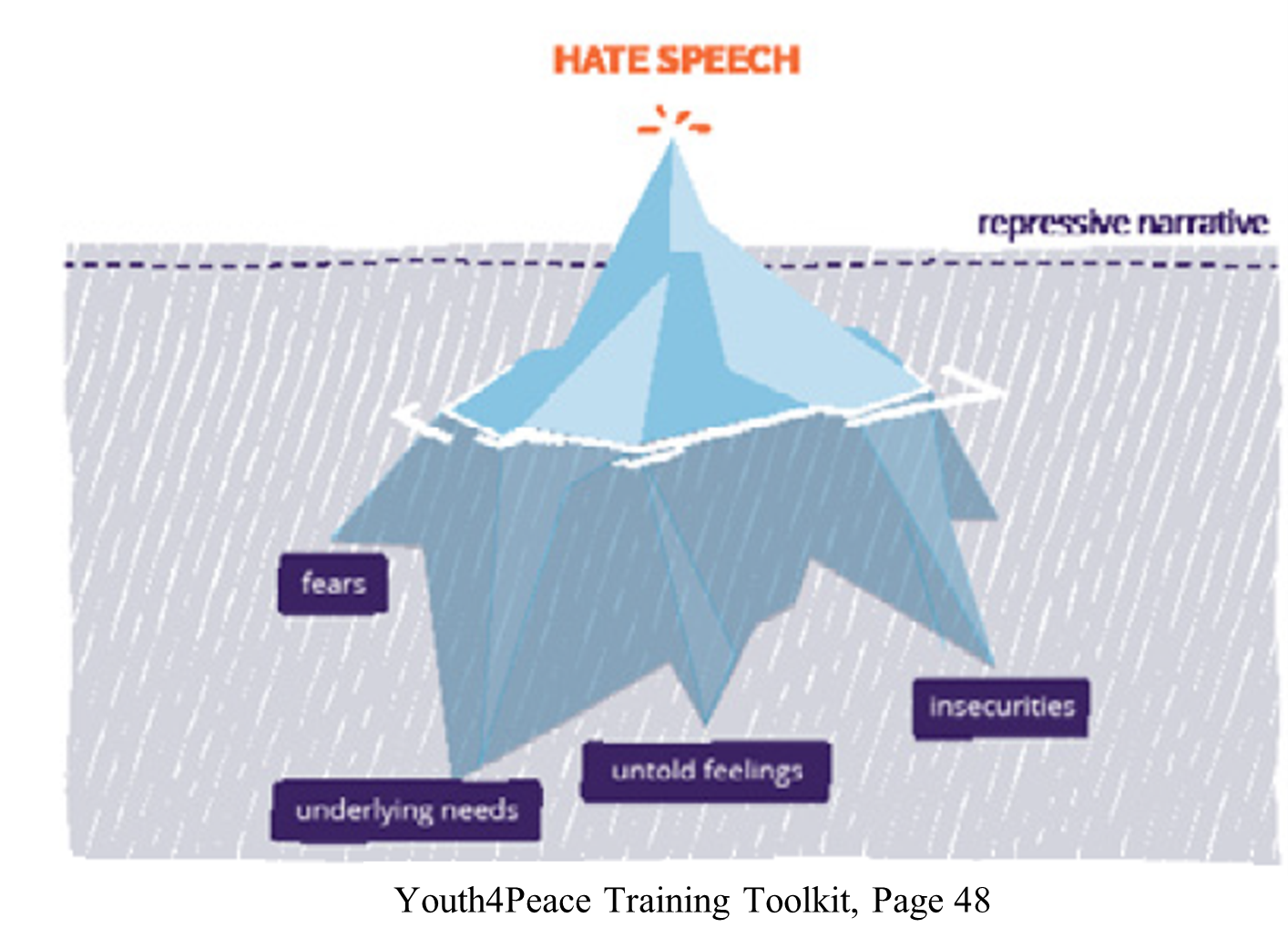
One of their lessons is about “Strategies to (re) act to hate speech narratives” and its purpose is to explain the definition of hate speech as a form of violence and learn the multiple ways youth can deal with it. To explain this, they use the symbolism of the iceberg. The list of strategies to deal with or manage hate speech are: Avoid, Draw a line, Report, Refute, Alternative (transformation) and, Dialogue Transformation (See page 39 of the Toolkit).
About my adaptation
I think the “Case Study Activity” can be very useful if educators just want to convey theory about narrative and tools to respond to forms of harm such as hate speeches. But it is possible to bring a more transformative approach to it by using the iceberg image to promote global agency, critical thinking, empathy and help avoid or reduce conflict. The analysis of such symbol can lead participants from cognitive to experiential learning by reflecting on what’s underneath the visible part of the iceberg. The humanization of the other and the use of strategies that stem from that humanization process are the ultimate learning goals of this resource.
If your educational work aims to transform violence and promote peace, I think my adaptation to the “Case Study Activity”, the “Case Study Iceberg” will fit perfectly with you and your students.
Scenarios
When creating the scenarios think of current realities and themes that affect the youth you work with, for instance: bullying, ethnic identity, sense of belonging, gender. Examples of the scenarios can be:
- In a Snapchat school group, someone posts: “Why are people like you in this group? Go back to your country!
- On a viral Tik-Tok video a famous influencer showed a group of high school students wearing their religious/cultural garments on a science fair and they claim that “we are in a western and modern society; they should be dressed as normal people”.
- On a YouTube video that shows female students in a debate panel about woman’s rights, somebody comments that “woman need to stop thinking they are better than men”.
How much time would it require to use this resource?
60-90 minutes, depending on the number of participants.
Materials
Printed images, markers, flipcharts, projectors, slides, different color sticky notes (whichever is accessible for you).
How to use it
- Introduce the hate speech definition by showing the iceberg image and the strategies as well.
- Place several iceberg images (they can be printed or drawn) in different spots of the room.
- Show them 3 hate speech scenarios and assign one to the different groups of participants, which will be divided into targets, community members and bystanders.
- Ask them to identify what is visible (words, images/memes, actions) and what might be underneath (feelings, needs, history, experiences, insecurities.) Prompt questions to help students analyze beyond what is obvious, such as: why do you think they are saying that? Are they trying to protect something? These questions will depend on the scenarios given.
- Ask them to write their answers on sticky notes they will place on the iceberg image.
- Invert the iceberg image (you can use a separate iceberg image) and display the list of strategies to re(act) to hate speech (printed or in a projection).
- Invite them to think about what would be visible if the needs were met in a positive, healthy way or if the perception of them being unmet changed positively?
- Ask them again to write their answers down on (different color) sticky notes and place them on the inverted icebergs.
- Now invite them to think, from their role or position, (targets, community members and bystanders). Ask them to answer on the strategies they would apply to deal with the hate speech.
- Invite them to share their ideas with the whole group.
- Debrief questions. You can use some of the questions included in the Toolkit such as: How did you feel during the activity? Which scenarios did you find most difficult to respond to and why? Has the activity made you look at hate speech in a different way?
Additions
I would even be more ambitious and add a lesson on Nonviolent Communication (See pages 41-42 from the Toolkit), along with the hate speech and strategies theoretical framework, to inspire students to think of more developed strategies to re(act) to hate speech.
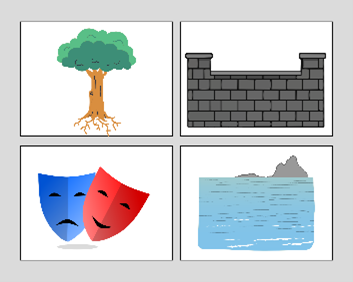
If the symbol of the iceberg doesn’t resonate or it is not too familiar to the participants, you can use other images (as long as they represent an object with visible and not visible sides). Examples: a tree, a wall, a mask or the ocean.
Trauma Sensitivity and Emotional Safety
Be trauma sensitive and consider emotional safety when you think of the scenarios and while running this activity. There is a risk of triggering emotions and hurtful lived experiences. Educators should be aware that many young people have experienced bullying, discrimination, xenophobia, misogyny, or online harassment, and even a fictional scenario can echo something deeply personal. To reduce this risk, you can:
- Allow the participants to step out of the room, pass, or engage in their own way.
- Avoid showing the scenarios with images and creating very specific scenarios.
- Remind them they do not need to share personal or familiar experiences; there is no need to share stories if they do not want to or are nor ready for it.
Who is this resource helpful for?
This resource can be very helpful for teachers in school settings, counselors, educators in non-formal educational settings. It can be adapted to any sociocultural context. I would even say it can work with young adults, but it is specially designed for young people from 15-25 years old.
Knowledge, skills, or attitudes developed with this resource
- Knowledge: about hate speech, repressive narrative, multiple ways (strategies) to deal with hate speech, nonviolent communication.
- Skills: conflict analysis, critical thinking, understanding of different perspectives, nonviolent communication, responding to harm in a healthy way, humanization.
- Attitudes: recognition of positive and constructive approaches to conflict, empathy, curiosity, sense of agency.
The resource’s effectiveness for building peace in an educational setting
I believe the “Case Study Iceberg” activity can be effective for building peace in an educational setting. The adaptation I have made deepens the humanization component and therefore goes beyond understanding to promote empathy and critical thinking. This resource also provides tools that can be used in real life situations to re(act) nonviolently to hate speech, which teaches them the ability to create counter narratives and address harm in a positive way, even when they are not the direct targets.
Pedagogies you can use to strength the use of this resource
- Transformative Pedagogy, which would encourage youth to “critically examine their contexts, beliefs, values, knowledge and attitudes with the goal of developing spaces for self-reflection, appreciation of diversity and critical thinking”[1]
- At the end of the activity, you’d be asking the participants how they felt while dong it, they just don’t think and discuss. This is Experiential Learning.
- Critical Feminist Pedagogy can also strength the use of this resource. Think about feminist curiosity, which allows us to position ourselves where the other stands and find what’s behind what we can see.
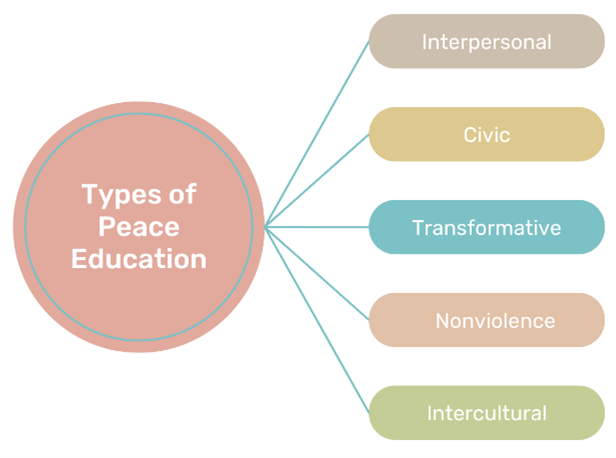
Types of Peace Education that are most supported by this resource
Comments
Please leave any comments about how useful you think this resource is for peace education. Would you use it? What adaptations or suggestions would you make? Do you have any other particular comments about it?
Audience
I think this resource can be useful for many stakeholders, but I would like to invite two people who can benefit a lot from it (and from the Peace Learners website), considering the type of work they do. These people are:
- Isabella Cuevas: She is a student at the Carter School for Peace and Conflict Resolution who is about to graduate. She works as a facilitator with young people living in vulnerable conditions, and she is a member of Legacy International Second Story.
- Daniel Ortiz: He is a Rover Scouter from a Scout group of Salvador. He works with young people from 18 to 25 years old, on the creation of projects oriented to impact the community and the Scout’s clan promoting dialogue, respect, empathy, tolerance, healthy interpersonal relationships, and global agency to foster conflict resolution and acts of service.
I hope this resource is useful for you!!!
[1] You can learn more about Transformative Pedagogy by reading the “Transformative Pedagogy for Peace-Building: A Guide for Teachers” created by the UNESCO and the International Institute of Capacity Building in Africa. Transformative pedagogy for peace-building: a guide for teachers – UNESCO Digital Library

