Brandywine Peace Community

The Brandywine Peace Community (BPC) is a peace activist group located in Swarthmore, Pennsylvania.   They were founded in 1977 as a response to the Vietnam War. BPC is committed to war resistance, disarmament and public education. They are known for holding several nonviolent, direct action campaigns against Lockheed Martin, the world’s #1 weapons corporation. Throughout the year they conduct several nonviolent protests, civil disobedience workshops and meetings to promote peace and encourage disarmament.  I learned about the BPC while attending one of their meetings over Spring Break in Philadelphia, PA.

The BPC is a community resource for all ages because everyone should be aware and involved in the peace movement. Majority of their meetings consist of older people who are well-known in their community however their organization is open to the public. In addition, they have several committees such as the educational committee who reach out to students in the community and try to educate them on peace education and war resistance.

As a community member you could join a peace organization in your own neighborhood or establish your own peace organization group. If you don’t live in Pennsylvania you can use the Brandywine Peace Community as a resource/network for peace activism.  They have a website where they post all their events and how to get involved in the peace movement. Whether you join a peace organization or start your own organization group it does require some time, research and commitment on your part. Obviously if you start your own peace organization it may take more time and research then just joining an existing peace organization.

Participatory and direct action are types of peace education supported by the Brandywine Peace Organization. This resource does require some time, commitment and physical action. By attending one of the Brandywine Peace Community meetings you will gain knowledge on civil disobedience, weapons disarmament, and how to become a peace activist. If you are interested check out their website or attend on of their meetings!


“B Some 1, Vote 4 Peace”: A Case Study

As United States citizens, who have had the opportunity to express their opinions through the (peaceful) democratic electoral process; we often fail to recognize that this opportunity is not available to a vast majority of the global populace.


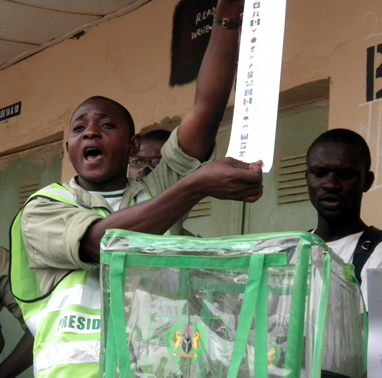
There are several non-governmental and international organizations who work in countries across the globe in order to guarantee that this opportunity be made available to their citizens. One group, the United States Institute for Peace (USIP), recently served to be an effective facilitator in helping the country of Nigeria to prepare for their April 2011 elections, and safeguard their citizens’ opportunity to exercise their voice in a democratic matter. The reflection of the processes utilized by USIP (found here) proves to be an effective case study in analyzing the means to which countries can utilize to in order to protect their electoral processes, in a country which has historically experienced much turmoil during election season (i.e. the elections of 2007). 


The complexity and comprehensive nature of this particular example would be best suited for a more experienced crowd (college level).  It can be used as a part of a conflict resolution and international relations curricula, as a tool to understand processes required to promote nonviolence in traditionally violent regions of the world. In this setting, it also serves as a tool of analysis, which can be manipulated by students, in order to understand what (if anything) made USIP’s plan successful. Furthermore, students should be encouraged to critically think about the word “successful” through open dialogue, in order to understand the broader picture of what exactly makes something a “success” in the realm of peace education.


An activity which can compliment this activity is a variation of the View from Windowactivity, also found on USIP’s site. Doing this activity prior to the introduction of the case study provides a smooth segue into understanding why violence often erupts in several countries due to elections; through the realization that everyone has a different perspective, especially in violent situations.


Goal:

A large issue with several educational materials is its applicability to real-life situations (or lack thereof). One can have several tools in their toolbox, but if they don’t know what tool to use with a pan head screw (for example), then their entire toolbox is useless. Utilizing this case study will aid in the development of both critical and analytical skills necessary for real life application, a necessary element to “liberating education” as Paulo Freire mentions in his book, Pedagogy of the Oppressed (1968). Thus, the goal with using a recent case-study in an educational environment will help to provide more concrete skills, for its applicable to situations that can often be very tense and violent in nature.

So, as the Nigerians preached leading up to the April 2011 elections, “B some 1”, and educate for  more peaceful (and fair) elections.

Calling all Educators! Challenge yourself to a Challenge Day!

I had only ever seen “Challenge Day” on MTV, but after participating in a Challenge Day activity I wanted to read more into the program and see what it has to offer young people in the public school education system.  I went online to the official Challenge Day website and read up on the program and how it is actually implemented.  http://www.challengeday.org/index.php

Does something like Challenge Day really work to bring peace awareness and education to youth?  I found the answer to this question to simply be, yes it does.  I had never thought something such as a Challenge Day or even one of the activities from it would have an effect on me or allow me to open up to my peers so they could genuinely understand who I was.  Then again, you never know what you are personally capable of until you allow yourself to move outside of your comfort zone and discover yourself.

Challenge Day is best suited for young adults starting at the middle school age and can be used from there on up, in my opinion.  One thing I do believe for Challenge Day to be effective is that the people participating have to be able to understand their emotions.  A reason I don’t think Challenge Day would have as much of an impact on young elementary aged children is because they may not be as developed  in comprehending and expressing their emotions.  Challenge Day goes through a series of activities that allows students who have never talked to one another to share stories, laughter, and a range of emotions throughout the day.  These activities can sometimes start out as weird or uncomfortable because you never know how deep someone will actually go, but the end results are so amazing!

I believe every middle school, high school, and even college level professor should implement at least one challenge day during the semester because of how much time it requires.  It does take 6.5 hours at least, so the professors would have to set aside an entire day to successfully complete Challenge Day.  Here is how it works:  http://www.challengeday.org/how-challenge-day-works.php. 

So here is what I’m going to do…I’m going to challenge teachers that come across this blog to plan and execute a Challenge Day with their schools, whether it’s this year or next year.  I never thought I’d be a believer of the phenomenon “Challenge Day” that was aired on MTV, but it does work.  It gives students the chance to dive into a form of Peace Education that doesn’t require reading books and articles, but gives them the first hand experience in seeing peace at work and them being the peacemakers.

I really wish that Challenge Day existed when I was in middle school and high school.  It is something I strongly believe should be implemented into the public school educational system.  I believe it can bring change and help develop peace education and conflict resolution techniques at an early age.

Here are research and evaluations about Challenge Day from the website: http://www.challengeday.org/challenge-day-evaluations-research.php

Here are some articles about schools and Challenge Day:

http://gilroy.patch.com/articles/gilroy-high-school-to-challenge-day-on-wednesday

http://perkiomenvalley.patch.com/articles/challenge-day-returns-to-perkiomen-valley-high-school

Improving your Interpersonal Skills: theripplesguy.com

Theripplesguy.com was created by Paul “The Ripples Guy” Wesselmann with the mission of inspiring others to achieve their full potential in life. He does this by traveling around the country giving presentations on interpersonal, leadership and motivational skills. Many companies and organizations contact him to give group presentations on: personal and professional growth, interpersonal skills and motivational skills. I learned about theripplesguy.com while attending one of his presentations at George Mason University but anyone can review his presentations on his website for free. In this blog I will discuss his presentation, Reaching Out: Achieving High Levels of Interpersonal Effectiveness and demonstrate how it is related to peace education.

Reaching Out: Achieving High Levels of Interpersonal Effectiveness is a presentation about how to get along with others, especially those you don’t like by using effective interpersonal skills. Interpersonal skills are essential to peace education because  how you communicate and interact with others matters! Therefore by using effective interpersonal skills you can prevent conflict, promote peace and make the world a better place.

I recommend that all resident directors or supervisors use this resource to ehance their staff’s interpersonal skills. Wesselmann’s presentations should be taught at a conference or at a weekend retreat. This  allows employees to step away from their work and really absorb the material. In my opinion, his presentations should be taught to high school students and above because effective interpersonal skills are needed when working with others on teams, projects, jobs and organizations.

In Reaching Out: Achieving High Levels of Interpersonal Effectiveness, Paul gives us three techniques to improve our interpersonal skills: Vegetables are Gross, Create Deposits and Get out of Your Chair. Veggies are Gross is a theory that explains that to stay healthy you have to eat vegetables. However you don’t have to like vegetables to eat them; you just have to eat them to stay healthy. When applying this concept to interpersonal skills in the workplace it means to work with people you don’t have to like them; you just have to work with them.  Creating deposits is the concept that explains what you put in something, is what you get out of it. When applying this concept to interpersonal relations we can say that we invest more in people we like then people we don’t like. With that said, if you don’t like someone try depositing more in them, try building a relationship with them and see if your attitude towards them changes. The third technique is Get out of Your Chair in other words make an effort to interact and get to know people you don’t like, instead of writing them off. In addition, by learning to work with other more effectively you are better equipped to prevent and resolve conflicts and inequalities in the workplace. With that said, there is no guarantee that these techniques will prevent conflict in the workplace because conflict is inevitable but in some cases these techniques will help.

Ways to use this resource is to contact  Paul “The Ripples Guy” Wesselmann  to come and do a presentation. However, if you have already attended one of his presentations, you can shared the information with others by visiting his website.  As a supervisor, I would incorporate this presentation after  your employees are well acquainted with each other. During this time, it will help strengthen their current relationships as well as challenge them to interact with other co-workers that they don’t necessarily get along with.  It will also encourage them to step outside of their comfort zones and enhance their interpersonal skills. This resource should be used along with team builders, ice breakers and group outings to check the temperature of the group and the group’s dynamics. Paul’s presentations are useful because they help employees grow on a personal and professional level.

Participatory and experiential peace education methods are most supported by this presentation. By utilizing this resource employees will enhance their communication, interpersonal and leadership skills as well as develop a change in attitude towards interacting with people they don’t like. For more information on how to build peace in the workplace you can check out the 7 Pillars of Peace Education by clicking on the hyperlink.

References

Cambridge, Daryn. (2012). 7 Pillars of Peace Education. Retrieved February 21, 2012, from https://peacelearner.org/about-2/7-pillars-of-peace-education/

Wesselmann, Paul. (2012).Contact. Retrieved February 21, 2012, from http://theripplesguy.com/

Wesselmann, Paul. (2012). Great Work, Great Life: Five GREAT Actions for Success in Work & Life. Retrieved February 21, 2012, from http://www.paulwesselmann.com/files/File/key/great.html

grab your nikon. create an ikon.

See what I did there?

Seriously though, grab your Nikon or whatever other photographic device you’ve got (I personally prefer my iPhone on the hispstamatic, ya dig?) and let your voice be…seen? You can do it all with a little help from IGVP, International Guild if Visual Peacemakers. They are a group of visual communicators who are dedicated to breaking down barriers and stereotypes in order to create peace. They strive to display the dignity and beauty of cultures all around the world. Once again, I have to accredit my find to Google.

So listen up photography teachers, cultural studies teachers, and just about any other teacher that can tie this into their curriculum. Regardless of your students’ ages, this one’s for you. Make it an in-class thing and just give your students a couple of cameras and a couple of minutes. Or make it a homework assignment and give em the weekend to do it on their own and show you what they came up with. What’s peace in their eyes?

It’s an easy way for students to think creatively, do something a little outside the box, and really involve the community. It’s an application of what they learn, how they feel, and what they think. It’s their perspective and dammit I like it! There’s no right or wrong answer.

Once you’ve got the pictures just create a gallery by creating an account on the IGVP website and post em for all to see! But that’s not all ladies and gents, you can spread the peace in other ways. After your students snap a few shots, they can talk about it by submitting entries for the guest blog! They can even start a discussion on the IGVP blog. Blogging’s all the hype.

This snazzy-so 21st century medium is a simple way to teach people to embrace and accept others. With so many colorful galleries to look through it’s easy to see beauty and common humanity through other’s eyes. Seeing pictures full of so many emotions and truths it’s hard not to empathize with other cultures. Not to mention it teaches students how to express themselves in ways other than in writing.

So, find a day to take that camera out when the sun rays are a blazing. Or not. Hey, it’s your artistic eye and your iconic representation of peace. I’m just the messenger. 

How about a day for peace?

Actor turned filmmaker Jeremy Gilley founded Peace One Day after realizing that there was no starting point for peace, no day of global unity, no day for intercultural cooperation, and no day for when humanity came together. Gilley felt that if we united as one then that might be the key to humanity’s survival. He started his advocacy for his Peace Day by writing letters to every state leader, their ambassadors, Nobel peace laureates, NGOs, faith based organizations, and other various organizations. Then in 1999 his dream of Peace One Day came true. In 1999 all the member states of the United Nations adopted the 21st of September as Peace Day. This day is recognized as an annual global ceasefire and non-violence day.

Jeremy Gilley’s Peace One Day is recognized every year, but unfortunately the day hasn’t gotten the full attention it deserves. Gilley was to make a statement with Kofi Annan on September 11, 2001 to advocate for his event, but because of the attack on the World Trade Center the statement never happened. However, the events on September 11, 2001 made Gilley work even harder. He was even more empowered and inspired to move forward with Peace One Day. This led to Gilley, along with actor Jude Law, to start work for peace in Afghanistan. Because of the pair advocating for Peace Day the Taliban sent him letter and said they would observe the day, and not engage in violence. The Taliban doing this led to 1.6 million people vaccinated for polio and violence on that day was down by 70%.

Due to this success Gilley has initiated a new plan for 2012, a Global Truce Day. This day will show younger generations that we can make a stop to violence with small acts of non-violence in our everyday lives. Gilley wants to utilize all kinds of resources from dance to social media and globally network with government, intergovernmental, and education leaders.

Gilley’s idea of utilizing education into his plan for 2012’s Global Truce Day helped persuade me to write this blog post about his event. Gilley wants to get young people to be the driving force to inspire individual action, so he has complied an educational resource for teachers to implement non-violence and other peace concepts into the classroom.

I can see this educational resource implemented in almost every formal grade level classroom. The students would need a little background on what conflict is, so because of this, starting at the fourth or fifth grade level would probably be best. However, this could fluctuate determined on how the students are influenced by conflict in their everyday lives. By implementing these resources in a classroom setting these children can practice non-violence in their schools, and also bring what they learn outside of the school setting and teach others.

Ways to use this resource:
Gilley includes many different types of lessons in his educational resource. This comprehensive resource includes 21 one-hour lesson plans for exploring issues of peace, nonviolence, and the protection of the environment, with extended projects for Peace Day on September 21st. I think this resource would be best integrated by first starting with showing Gilley’s documentary for one day of class, doing the lesson that corresponds to that, then moving on to the individual lessons maybe once a month until the actual Peace Day on the 21st. The students could help plan how they want their school to recognize and celebrate the event. In addition to using Gilley’s lesson plans I think it would be important for each teacher to incorporate their own discussion in their classrooms on non-violence, and other peace education areas. This would help each individual classroom relate to what types of conflict are going on in their societies.

The goal of each lesson, whether it be with Gilley’s lesson plans or the teacher’s, would be to spread knowledge about ways to bring about peace in small ways. These can be from their knowledge on non-violence to their knowledge of eco-resolution. Each lesson will more than likely encourage a student to go out and spread what they learned to another, and therefore spread the movement of peace.

“We should oppose violence in all situations and of course there’s no better way of bringing that about than through the power of education.”-Jeremy Gilley

Resources:
Peace One Day website: http://peaceoneday.org/
Peace One Day’s educational resources: http://peaceoneday.org/teachers/

Video Games for Peace

Three of the top ten best-selling video games of 2011 are characterized by explicit violence and main objectives which celebrate using various means by the user character to destroy other characters (1). While there has been very little clear evidence linking violence portrayed in video games to violence by users, the game market is notably void of games made explicitly for peace.  Video games can be used by educators to promote peaceful ways to conflict resolution without distracting from the education system’s core curriculum.

Video games as explicit means of peace education do not form an established genre in the gaming world. But, some games have been developed that reward peaceful means of conflict resolution and penalize violent behavior. For example, the video game Civilization tasks the user with building a thriving civilization from the ground up, but the user is penalized if major violence and riots occur in the user’s civilization. The 2007 video game PeaceMaker, tasks the user with taking one side of the Israeli-Palestinian conflict and implementing a peaceful two-state solution, all the while being challenged by realistic events occuring during the user’s play.

http://www.youtube.com/watch?v=7iPvWefuPwo

A short video on PeaceMaker

In what context can video games for peace be used in learning? What type of lesson plan can be used with the goal of peace learning in mind? One possible context is for these video games to be integrated into the computer classes present in primary and secondary education. Simple point-and-click mini-games, which reward win-win situations between the user and computer intelligence and penalize aggressive behavior, can demonstrate peaceful ways to deal with conflict and are appropriate for users with relatively basic computer skills. These games can be used by educators to reward excellence and progress in computer classes, and since they are cheap and easy to produce, can be integrated into existing computer literacy programs. Certain classes in the social sciences could play a short video game that explains peaceful methods of conflict resolution and challenges students with finding the most peaceful solution in relations between people and groups of people. Students with advanced computer skills could play role-playing games, such as Civilization and PeaceMaker, in classes, clubs, and camps. In all these examples, it is essential for the educator to review the rewards-and-penalties systems existing in the game and prompt the students to reflect on how these games simulate decision making in conflicts.

Implementation of a lesson plan using video games is hampered by two problems: a lack of resources and a lack of pedagogy. Many education systems do not have computers available for student use aside from special computer literacy courses or lack adequate computer labs for students to use in this lesson plan. The use of video games geared for peace in a school curriculum could face problems in implementation because video games are often associated with laziness and distractions from education, rather than a form of education itself. Peace education through video games would receive less criticism in being implemented if educators demonstrated the success of other interactive games in teaching educational topics and assisting core curricula.

Video games can be used as an educational resource for peace. Video games designed specifically for demonstrating and rewarding peaceful solutions to conflicts can be integrated into existing educational settings and can fit into larger lesson plans on conflict and peace. Peace educators can use video games as a way for students to explore peace in an accessible environment and apply peace education topics to simulated conflicts.

(1): These three games, (Call of Duty: Black Ops, Mortal Kombat and L.A. Noire), are noted by the Entertainment Software Rating Board for blood, gore, and intensive violence.  The best-seller rating comes from a CNBC article.

Useful Links:

Antony Adolf article on peace-based video games

PeaceMaker video game official website (can be purchased for download)

Sing for Success

“When you do what you love, things can happen for you.” When you visit the blog for the PS22 Chorus, this quote is displayed on the headline and it could not ring more true than with this amazing group of students. The PS22 Chorus was started by Greg Breinberg in Graniteville, Staten Island, New York. “Mr. B,” as his students refer to him, arrived at Pubic School 22 in 1999 after being laid off from his previous job as a music teacher. When he arrived at PS22, he was the second grade teacher however, he persuaded the principle of PS22 to let him to teach music again as well as start a chorus for the students in 2000.

Starting any type of school arts program in the year 2000 was a very risky move. In the 21st century, our schools are experiencing budget cuts from every angle and, more likely than not, arts programs are the first ones to get the axe. Too many of our politicians and policy makers fail to see the amazing difference art can make in a student’s life. Before Mr. B was given the opportunity to teach music again, he would play music in all of his classes in order to keep the students engaged in the class and to encourage their participation.

The PS22 Chorus has provided all of its members, past and present, with an amazing opportunity that they may not have had anywhere else. Many of the students that are a part of this chorus come from broken homes where their parents neglect them and they do not have a bright future to look towards. PS22 Chorus gives these students an opportunity to not only escape from the troubles they are having at home, but a chance to actually reflect on their experiences and emotions so they can grow from them. Music provides these children with an emotional outlet that they would not have been able to get anywhere else.

Something very unique about the PS22 Chorus versus other elementary school music programs is that each student is given the chance to perform a solo. The group performs a variety of songs every year highlighting each student’s strength as a singer while the rest of the group performs background vocals and provides harmonies. By allowing different students the chance to shine, the students are able to see each other as equals instead of one being better than the other. Once all the students realize that they all have an amazing gift to give, difference based on race, ethnicity, gender, height, weight and many other things can finally be overlooked and the students can unite to embrace their love of music and build strong relationships with one another that can last into the future.

Too many times the arts are forgotten. Statistics have proven that when students receive a more well rounded educational experience that includes the arts, physical activity and other alternative methods of learning, they excel in their studies. Incorporating arts into the classroom can be done very simply. Like Mr. B, you can play music as your students enter the classroom each day so the students are engaged with what you and the class from the beginning of the period. Also, providing them the time during the class to reflect on the song and what emotions it brought to light for them can help them process hardships or happiness they may be experiencing in their lives outside of the classroom.

Another way to successfully incorporate music into the classroom in order to promote critical thought and peace would be using music to enhance the teaching of subjects such as history, literature, science or math. You can enrich your history and literature lesson plans by connecting the topics you are discussing with the music of the culture from which it came. With math and science, you can help your students connect to the material more so, absorb it and fully understand it through the use of song. If you are able to stimulate your student’s mind through the use of song, they are more likely to engage with you and the rest of the class and therefore have a full educational experience.

In a time where the arts were being cast aside and looked down upon, Mr. B knew how important they were to his students’ happiness and success. Thinking about a world where are youth are denied the right to express their creativity in our school systems is absolutely heart breaking. If we want our youth to grow up to be full adults, ones who not only have the critical thinking and analysis abilities necessary to be successful members of the work force, but emotional beings who are able to express themselves and connect with peers on a deeper level in order to form strong community bonds, we must continue to promote an educational experience that incorporates the arts.

“One man’s garbage is another man’s art”

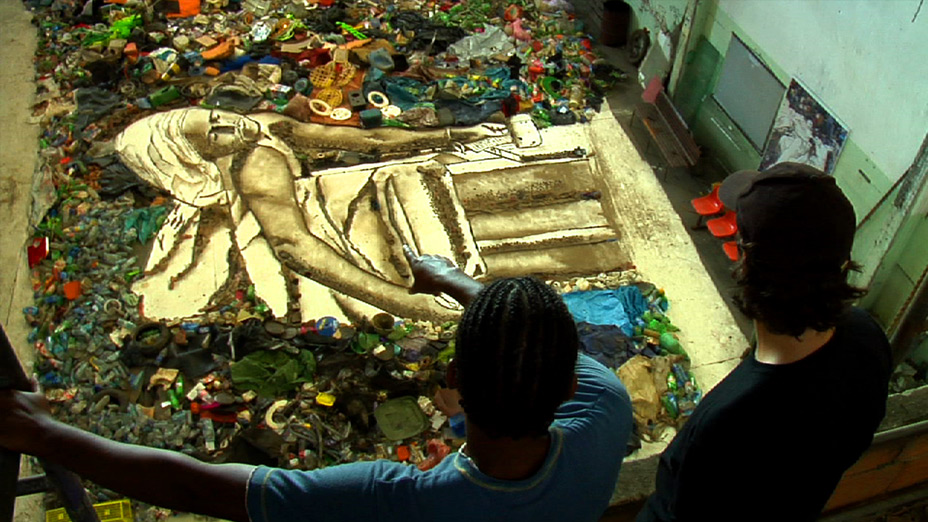
ImageWhat satisfaction would come out of re-thinking the way we look at garbage? Well, if you ask Vik Muniz, he’d say spirit, pride and timeless works of art.

Waste Land, a documentary created by artist Vik Muniz, depicts the lives of a handful of catadores (garbage pickers), who make a living by collecting recyclable material from the world’s largest dump in Rio de Janeiro, Brazil (known as “Jardim Gramacho”). In an area of Rio that is known for violence, drug trafficking, and inequality, Muniz offers a breath of fresh air by using art as a means to transform their trash into inspiring self-portraits.

Context:

This resource would be best served to a community ranging from the high school level onward. In particular, the film would best fit into the curriculum for a social science class (i.e. History). The movie acts as a modern day example of conditions that the marginalized population must endure (in some places of the world) today. It shows an example of how the unemployed resort to unique measures in order to create some source of an income. And, more importantly, it provides a peaceful means to resolve a problem; in this instance art has acted as such means (all the proceeds from Muniz’s work were given right back to the catadores, and used to build a library and create more educational opportunities). It also can help students who are more visual learners to depict what life has been like for the impoverished, especially immigrants in the early 20th century, and in what (peaceful) means they sought a better life. The movie can also be used in collaboration with the novel, The Jungle by Upton Sinclair. Using the novel, along with the movie, helps students to realize the conditions that people even in the United States had to endure through just to make a living. Although the book is fictitious, the original intentions of Sinclair were to portray the life of an immigrant in the 20th century. Thus, utilizing both resources helps to humanize a part of our nation’s history.

In this regard (using in collaboration with The Jungle), the movie could also be used for an English literature curriculum (at the high school level).

While the movie is very relevant to several aspects of high school curriculums in the public school system, the movie itself could also prove to be a valuable resource for art clubs as well. Muniz’s use of unconventional materials to create masterpieces (for a philanthropic cause) may inspire another young artist to make a difference through art.

Ways to use this resource:

For this resource, one would need to acquire the movie (find out how at the bottom of the entry), and potentially the novel The Jungle. It’s suggested that the curriculum allow the students to engage in a dialogue about the movie, after watching it. Allow them to guide the conversation, which will permit you, as the instructor, to find out the central ideas that most students drew from the film.

Using this suggested model encourages a participatory model of learning. Make the students the “spectactors” (Freire, 1968), instead of the spectators. If they have more control over the discussion, the outcome will be more beneficial to the student and the teacher.

Due to the unconventional nature of the film (a man using garbage from a dump to create art that benefits society), Muniz’s art can help to ignite the creativity within the students, and challenges them to think outside the box. His film also helps to humanize the reality of the impoverished populace, and help students understand how fortunate they are (while also understanding the inequality around them). It displays a very comprehensive, international, yet human rights theme to peace education; while also exploring development education by understanding how to explore economic opportunities in the developing world.

Continue reading

your hips don’t lie, but they do spread peace.

It’s true. I wouldn’t lie to you! “How?” You might ask. Through organizations like Dance 4 Peace. That’s right, Dance for peace. When this nonprofit popped up on my google search, I knew I had to share this absolute gem. Two of my passions combined into one?! Who doesn’t love a good twofer? And once I found out it all got started in my hometown of Bogotá, Colombia it suddenly became a threefer and just too good to pass up.

Dance 4 Peace was started by life-long dancer Sara Potler. It’s a community education program that promotes mediation skills, anger management, conflict resolution, emotional and civic engagement through dance. They  give youth social and emotional competencies for peace using music, movement, and experiences. With programs in Baltimore, DC, New York, Colombia, Nepal, and Philippines it’s a fast growing movement.

Their lessons are easy to incorporate them into any school day through physical education, music, dance, social studies, art, theater, or global studies. It could even be used as an after school activity. With so many curriculum themes (all found on their website) students are not only motivated to work out, but also develop communication, social and emotional skills that can be applied to their lives in order to promote peace. Empathy, understanding, respect, cooperation, and acceptance are all skills emphasized and developed through Dance 4 Peace. The best part? Dance doesn’t discriminate, so youth of all ages and backgrounds can partake in all the knee-bending and hip-shaking.

A lesson from Dance 4 Peace can be as short as 30 minutes or as long as 2 hours depending on what the educator wants. So, whether it’s a simple ice breaker, a bonding activity, or an entire lesson plan this program is the perfect one-size-fits-all for educators everywhere. Just have everyone grab their most comfortable kicks, open up their minds and hearts, turn up the music, and bend those knees.

In my opinion though, I think the most important thing to take away from all this is that just like Sara Potler, you can use your passions and talents to make a statement and create social change. Yes, you! You can make a difference doing what you love. So get creative, take a risk, and make your ideal twofer a reality. My motto for any such twofer: you had me at two.