High Hopes on High Ropes

Running around a track has its place, but what if your P.E. class got a facelift? High 5 Adventure Learning Center has challenged the way traditional physical education classes operate by introducing team building challenge courses that are appropriate for students k – 12. The courses can range from “low ropes” elements that engage a whole group of kids to “high ropes” elements that lift students high up into the air with a harness.  The elements that students face together are designed to bring them closer to each other as well as learn about themselves individually.

So often students are in competition to receive high grades in order to gain admission into selective universities. Rather than defaulting onto typical sports that often still allow for individuals to take the spotlight, the different elements require individuals to come together. These courses help to develop and stretch students by pushing them to rely on one another and working as a united team. An added benefit to these elements is that there often is not a single correct way to accomplish a task. Because of this, teams have to engage their creative problem solving skills. In a setting that so often has a single correct answer, this setting puts the student in the educational drivers seat.

Perhaps high adventure courses have previously been limited to those that are gutsy enough to spend a week at a summer camp, but High 5 has challenged this notion. On their website, High 5 boasts several testimonials including the NHL’s Boston Bruins team, AmeriCorps, and the Alaska National Guard. Most privy though, are the Bridgeport Public Schools. High school P.E. classes have been radically changed in Bridgeport Ct. Over 12,500 students of all ages have gone through the challenge course to date, and the schools have noticed as significant change in their students.

Ways to Use this Resource

The elements available for purchase are individually, though they suggest that groups of schools invest in a challenge course. Course building is a 2 or 3-year process and can be an expensive investment. Though there are certain benefits from investing in a specific challenge course, there are also ways to develop a teambuilding program without breaking the bank. The site offers a vast amount of reading materials and game/program bags that help teachers to hone their teambuilding skills. These books and bags are a bit more feasible for teachers that have a budget to keep in mind.

high5adventure.org
Sing for Success

“When you do what you love, things can happen for you.” When you visit the blog for the PS22 Chorus, this quote is displayed on the headline and it could not ring more true than with this amazing group of students. The PS22 Chorus was started by Greg Breinberg in Graniteville, Staten Island, New York. “Mr. B,” as his students refer to him, arrived at Pubic School 22 in 1999 after being laid off from his previous job as a music teacher. When he arrived at PS22, he was the second grade teacher however, he persuaded the principle of PS22 to let him to teach music again as well as start a chorus for the students in 2000.

Starting any type of school arts program in the year 2000 was a very risky move. In the 21st century, our schools are experiencing budget cuts from every angle and, more likely than not, arts programs are the first ones to get the axe. Too many of our politicians and policy makers fail to see the amazing difference art can make in a student’s life. Before Mr. B was given the opportunity to teach music again, he would play music in all of his classes in order to keep the students engaged in the class and to encourage their participation.

The PS22 Chorus has provided all of its members, past and present, with an amazing opportunity that they may not have had anywhere else. Many of the students that are a part of this chorus come from broken homes where their parents neglect them and they do not have a bright future to look towards. PS22 Chorus gives these students an opportunity to not only escape from the troubles they are having at home, but a chance to actually reflect on their experiences and emotions so they can grow from them. Music provides these children with an emotional outlet that they would not have been able to get anywhere else.

Something very unique about the PS22 Chorus versus other elementary school music programs is that each student is given the chance to perform a solo. The group performs a variety of songs every year highlighting each student’s strength as a singer while the rest of the group performs background vocals and provides harmonies. By allowing different students the chance to shine, the students are able to see each other as equals instead of one being better than the other. Once all the students realize that they all have an amazing gift to give, difference based on race, ethnicity, gender, height, weight and many other things can finally be overlooked and the students can unite to embrace their love of music and build strong relationships with one another that can last into the future.

Too many times the arts are forgotten. Statistics have proven that when students receive a more well rounded educational experience that includes the arts, physical activity and other alternative methods of learning, they excel in their studies. Incorporating arts into the classroom can be done very simply. Like Mr. B, you can play music as your students enter the classroom each day so the students are engaged with what you and the class from the beginning of the period. Also, providing them the time during the class to reflect on the song and what emotions it brought to light for them can help them process hardships or happiness they may be experiencing in their lives outside of the classroom.

Another way to successfully incorporate music into the classroom in order to promote critical thought and peace would be using music to enhance the teaching of subjects such as history, literature, science or math. You can enrich your history and literature lesson plans by connecting the topics you are discussing with the music of the culture from which it came. With math and science, you can help your students connect to the material more so, absorb it and fully understand it through the use of song. If you are able to stimulate your student’s mind through the use of song, they are more likely to engage with you and the rest of the class and therefore have a full educational experience.

In a time where the arts were being cast aside and looked down upon, Mr. B knew how important they were to his students’ happiness and success. Thinking about a world where are youth are denied the right to express their creativity in our school systems is absolutely heart breaking. If we want our youth to grow up to be full adults, ones who not only have the critical thinking and analysis abilities necessary to be successful members of the work force, but emotional beings who are able to express themselves and connect with peers on a deeper level in order to form strong community bonds, we must continue to promote an educational experience that incorporates the arts.

“One man’s garbage is another man’s art”

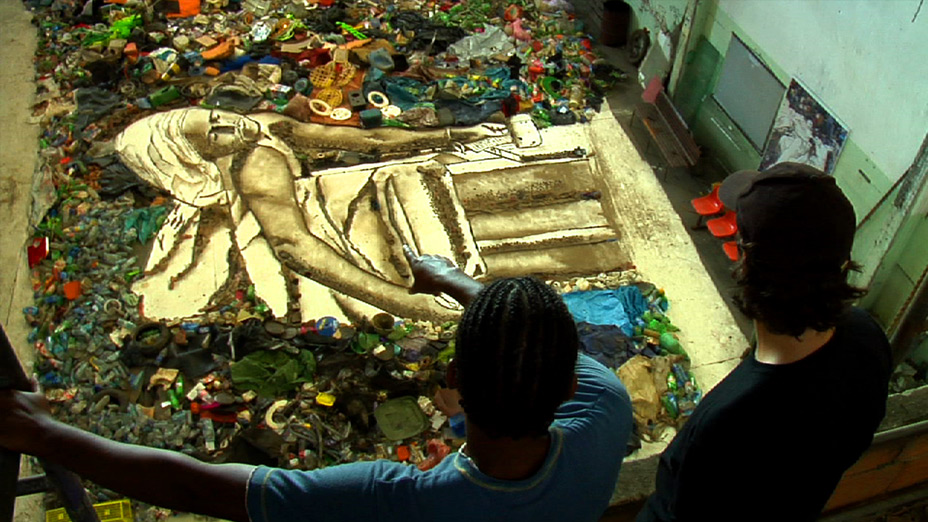
ImageWhat satisfaction would come out of re-thinking the way we look at garbage? Well, if you ask Vik Muniz, he’d say spirit, pride and timeless works of art.

Waste Land, a documentary created by artist Vik Muniz, depicts the lives of a handful of catadores (garbage pickers), who make a living by collecting recyclable material from the world’s largest dump in Rio de Janeiro, Brazil (known as “Jardim Gramacho”). In an area of Rio that is known for violence, drug trafficking, and inequality, Muniz offers a breath of fresh air by using art as a means to transform their trash into inspiring self-portraits.

Context:

This resource would be best served to a community ranging from the high school level onward. In particular, the film would best fit into the curriculum for a social science class (i.e. History). The movie acts as a modern day example of conditions that the marginalized population must endure (in some places of the world) today. It shows an example of how the unemployed resort to unique measures in order to create some source of an income. And, more importantly, it provides a peaceful means to resolve a problem; in this instance art has acted as such means (all the proceeds from Muniz’s work were given right back to the catadores, and used to build a library and create more educational opportunities). It also can help students who are more visual learners to depict what life has been like for the impoverished, especially immigrants in the early 20th century, and in what (peaceful) means they sought a better life. The movie can also be used in collaboration with the novel, The Jungle by Upton Sinclair. Using the novel, along with the movie, helps students to realize the conditions that people even in the United States had to endure through just to make a living. Although the book is fictitious, the original intentions of Sinclair were to portray the life of an immigrant in the 20th century. Thus, utilizing both resources helps to humanize a part of our nation’s history.

In this regard (using in collaboration with The Jungle), the movie could also be used for an English literature curriculum (at the high school level).

While the movie is very relevant to several aspects of high school curriculums in the public school system, the movie itself could also prove to be a valuable resource for art clubs as well. Muniz’s use of unconventional materials to create masterpieces (for a philanthropic cause) may inspire another young artist to make a difference through art.

Ways to use this resource:

For this resource, one would need to acquire the movie (find out how at the bottom of the entry), and potentially the novel The Jungle. It’s suggested that the curriculum allow the students to engage in a dialogue about the movie, after watching it. Allow them to guide the conversation, which will permit you, as the instructor, to find out the central ideas that most students drew from the film.

Using this suggested model encourages a participatory model of learning. Make the students the “spectactors” (Freire, 1968), instead of the spectators. If they have more control over the discussion, the outcome will be more beneficial to the student and the teacher.

Due to the unconventional nature of the film (a man using garbage from a dump to create art that benefits society), Muniz’s art can help to ignite the creativity within the students, and challenges them to think outside the box. His film also helps to humanize the reality of the impoverished populace, and help students understand how fortunate they are (while also understanding the inequality around them). It displays a very comprehensive, international, yet human rights theme to peace education; while also exploring development education by understanding how to explore economic opportunities in the developing world.

Continue reading

your hips don’t lie, but they do spread peace.

It’s true. I wouldn’t lie to you! “How?” You might ask. Through organizations like Dance 4 Peace. That’s right, Dance for peace. When this nonprofit popped up on my google search, I knew I had to share this absolute gem. Two of my passions combined into one?! Who doesn’t love a good twofer? And once I found out it all got started in my hometown of Bogotá, Colombia it suddenly became a threefer and just too good to pass up.

Dance 4 Peace was started by life-long dancer Sara Potler. It’s a community education program that promotes mediation skills, anger management, conflict resolution, emotional and civic engagement through dance. They  give youth social and emotional competencies for peace using music, movement, and experiences. With programs in Baltimore, DC, New York, Colombia, Nepal, and Philippines it’s a fast growing movement.

Their lessons are easy to incorporate them into any school day through physical education, music, dance, social studies, art, theater, or global studies. It could even be used as an after school activity. With so many curriculum themes (all found on their website) students are not only motivated to work out, but also develop communication, social and emotional skills that can be applied to their lives in order to promote peace. Empathy, understanding, respect, cooperation, and acceptance are all skills emphasized and developed through Dance 4 Peace. The best part? Dance doesn’t discriminate, so youth of all ages and backgrounds can partake in all the knee-bending and hip-shaking.

A lesson from Dance 4 Peace can be as short as 30 minutes or as long as 2 hours depending on what the educator wants. So, whether it’s a simple ice breaker, a bonding activity, or an entire lesson plan this program is the perfect one-size-fits-all for educators everywhere. Just have everyone grab their most comfortable kicks, open up their minds and hearts, turn up the music, and bend those knees.

In my opinion though, I think the most important thing to take away from all this is that just like Sara Potler, you can use your passions and talents to make a statement and create social change. Yes, you! You can make a difference doing what you love. So get creative, take a risk, and make your ideal twofer a reality. My motto for any such twofer: you had me at two.

From Hostility to Hospitality

William Ury’s TED talk from October 2010 is an excellent tool for introducing new learners to the field of conflict transformation. The simplicity of Ury’s language, his use of stories and visuals, and the brevity of the lecture make this video appropriate for a broad audience, and it would be best suited for students in high school or older, in both formal and informal settings. The lecture is a wonderful way to introduce the field of conflict/peace studies to students because it incorporates key concepts such as creativity, interrelatedness, perspective, narrative, and humanization through specific examples that make these ideas easy to understand for novices.

Ury’s lecture would be a good way to begin a course or training session (such as training students and/or adults in mediation or facilitation), and should be followed with small-group discussion in order to draw out and reinforce themes. As the screening and discussion could be conducted in as little as 35 minutes, this program could serve as an “icebreaker,” allowing participants to get to know one another informally (through discussion) but also setting the scene by introducing key concepts, and inspiring the group with both emotional and rational appeals.

This program incorporates aspects of multiculturalism, conflict resolution, international relations, and even human rights. Its implementation would ideally develop a basic understanding of important themes in conflict transformation, as well as a positive attitude and optimism toward the creation of peace. Ury’s talk also inspires creativity, analysis, and reflection.

(By Emily Ludwin Miller, emillerk@gmu.edu)

Jane Goodall’s Roots and Shoots

POSTED ON BEHALF OF MAGGIE MEENEHAN

One of my hero’s growing up was Dr. Jane Goodall.  Here  was a woman,  in the 1960’s, going alone into the jungles of Tanzania with a notebook and binoculars to study and save chimpanzees.    Though she met with extraordinary difficulties and  fierce adversaries,  she has managed to become a world renown authority on chimpanzees, conservation and the plight of endangered species world wide.  She is a  leading, passionate force for change  through her Jane Goodall Institute and now has “branched out” to schools and youth with her Roots and Shoots Foundation.

Dr. Jane Goodall, a UN Messenger of Peace, is the founder of the Roots and Shoots Program,  which aims to connect students to real life service learning projects of THEIR OWN choosing.   Dr. Jane began this project in 1991, when she felt that she was meeting so many children who lacked hope for the future.  She wanted to provide them with an opportunity to “think about the world’s problems and to roll up their sleeves and tackle them”.

The projects are curriculum based and encourage youth (elementary through college) to make positive changes in their own communities.  The projects have three components, which intertwine and depend upon one another.  These components are: the animal community, the human community and the environment.  The students are encouraged to identify problems and to take concrete actions.  In working together students gain a sense of empowerment that comes from helping others.

The service projects are looked upon as campaigns.   Students act as participants but also as leaders.  The web site gives examples of past campaigns but encourages students to create meaningful projects for their own communities.   The site has lesson plans to access,  Professional Development Opportunities, Career Explorations, Projects of the Month, Extension Activities,  and Family Activities.

The web site helps students and teachers plan, organize, coordinate and report/register their campaigns.  An important aspect of the projects is engaging the communities.  Dr. Jane believes that community centered conservation programs are critical to the survival of endangered species and conservation projects.

This is a fantastic, well designed and well supported,  global environmental humanitarian youth program that relies on the participants to “work for peace”.  Currently operating in  120 countries with 150,000 members, www.rootsandshoots.org  is an amazing example of a peaceable skill building and community building organization.  As we “Peacelearners” say…..check it out!

Let’s hear it for Luke Moore High Environmental Scientists!!

Luke Moore Academy, the premier alternative high school in the District of Columbia (and also where I work)  is joining DCPS in its efforts to go GREEN by starting a recycling program at the school. Students recently gave a presentation at a school wide assembly and community event stating that:

“We have started a recycling program at Luke C. Moore that will minimize the waste generation and will facilitate recycling of materials. This initiative is student-led, and will allow our students to be the leaders of this program. Our desire to become more environmentally friendly and help lead DCPS in the Healthy Schools Act, as well as develop our peers into lifelong recyclers.”

Each classroom has a recycling box (that’s a pic of my box) that the Environmental Team picks up to dump in the container in the parking lot.

Here at Luke C. Moore, we are also concerned about our use of energy, so we  use Compact Florescent Bulbs, or CFL Bulbs, which are significantly more environmentally friendly than regular light bulbs. Our CFL bulbs last TEN times as long as regular bulbs, up to 8000 hours each – compared to 750 hours of those regular bulbs. The team has determined that our school had 350 CFL bulbs that are used on a daily basis. They  then compared those numbers to schools with a similar amount of bulbs, who use regular light bulbs. Our numbers confirm that Luke Moore is saving the District $5,000 a month by using CFL bulbs. On the emissions side, Luke Moore is outputting 4000 pounds less of Carbon Dioxide per year than schools our size.

In the classroom and in the field, the team has done a lot to make sure that our school is helping out our community! Please join us in helping to make DC an environmentally friendly city by, recycling and changing your light bulbs to new CFL Bulbs! And we hope this inspires you to start a program at your school too. Peace

DCPS Goes Green: Peace through Sustainability

District of Columbia Public Schools is participating in the Be Water Wise DC project as part of its initiative to go GREEN.

“Be Water Wise DC was established by the nonprofit National Environmental Education Foundation (NEEF) and includes lesson plans and activities such as measuring water flow rates and determining total water use in school buildings and grounds. The program is made possible through the support of companies such as lead sponsor HSBC Bank, as well as local agencies and nonprofit organizations committed to protecting the region’s natural resources.

Managing stormwater is a challenge for D.C. and the region. When it rains, water flows across streets, sidewalks and parking lots. Along the way, the rainwater picks up oil, trash and other contaminants, carrying them to streams and rivers including the Anacostia and Potomac and, ultimately, the Chesapeake Bay.”

Check out this link for a detailed explanation of the project by Kaya Henderson, Chancellor of DC Public Schools: http://www.youtube.com/watch?feature=player_embedded&v=_vVDhQfajvI

The video gives a very good summary and it’s impressive that they have so many schools participating and that it involves students of different ages.  I really like that students get  very hands-on with this project with the types of activities that they do in their schools and the local communities to help with water conservation in DC, and the concluding activity where they get to present their solutions to DC officials is definitely something students would look forward to.  This projects supports community building as it involves students and officials collaborating to create solutions for a problem that affects the DC area and also is a skill building activity because students are using critical thinking for problem solving, interpersonal skills by working together, and it’s an extension of the classroom space into the community.

For more information about Be Water Wise, please visit the National Environmental Education Foundation.

Yoga for Peace in Afghanistan

Yoga in schools has been one topic covered here on PeaceLearner, but another area where Yoga and meditation are being used as approaches to peace and nonviolence is actually in Afghanistan, through the Amanuddin Foundation. Started by French human rights activist Amandine Roche, Amanuddin facilitates yoga programs for Afghan people. The program there is called Sola Yoga – “a peace initiative based on the ancient/ancestral science of Yoga and meditation,” where “participants will develop the tools they need to control their feelings and temper negative emotions such as frustration, anger, hatred, and revenge.” Sola Yoga focuses on teaching breathing exercises, concentration exercises, and non-violent practices.

Roche told Reuters: “It’s a new solution to an old problem. War starts in the minds of men, so peace starts in the minds of men. You cannot bring peace with the means of war, it’s as simple of [sic] that.” Roche believes that peace cannot be imposed from the outside, but must come from the inside of an individual.

Roche is also focused on bringing yoga to Afghans because she believes it will help them begin rebuilding their society after the devastations of war. While some might call Roche, who was detained by the Taliban in 2001, crazy for working with these gunmen, she says: “My vision is to teach meditation to all the insurgents, to organize vocational training for them to become mediation teachers, so … they can go back to society, they have a job, they can reintegrate, and they will become peaceful” (Reuters). Roche has worked with the Dalai Lama and members of the Gandhi family to learn about non-violence and meditation. She also worked for the United Nations Department of Peacekeeping and helped to organize the first Afghani presidential election.

The Amanuddin Foundation is just getting started and will surely be growing in months to come. The foundation has gotten a lot of press in recent days – to read more, see these articles:

Can yoga and meditation help bring peace to Afghans? – Reuters

Sola Yoga: Can Meditation Bring Peace to Afghanistan – Huffington Post

For This Yogi, Afghan Peace Plan Needs More Downward Dog – Wall Street Journal

Reading about the Amanuddin Foundation can be a meaningful way for learners to realize the power of nonviolence and have an example of just how effective and helpful the practices of Yoga and meditation can be. By seeing how Roche and her colleagues are affecting peace in Afghanistan, we can explore different approaches to peace and possibly adapt them to use in our own contexts. Amanuddin’s work is also a moving example of the nonviolent transformation of conflict – especially Roche’s goals of arming insurgents with vocational skills to help them rebuild their lives in Afghanistan.

MindUP- A Social and Emotional Learning Curriculum

POSTED ON BEHALF OF MAGGIE MEENEHAN

In these days of celebrity excesses and their often and very public demonstrations of questionable/objectionable behaviors;  it is refreshing to see that one celebrity is throwing her weight towards children’s success in school.

Goldie Hawn has started a foundation that focuses on the social and emotional learning of children.  She wanted to “bring children back to a sense of well-being”, and was distraught over the high dropout rates, violence in schools, the culture of bullying and was looking for a way to improve kid’s focus, energy and to help teachers to build classroom community.   Her program called MindUP has conducted research into “mindfulness” in the classroom, provides mentors for participating schools and has developed a book and curriculum to give teachers the tools to use in their classrooms.  These lessons fit into any schedule and require minimal prep time; they are geared towards grades 3 through 5.

I was most struck by the children and their reactions to MindUP.  As you can see in the video, the students really felt the benefits of mindfulness.  It helped them to calm down, to focus and to evaluate situations more clearly. They even taught the practices to their siblings and parents. Now that is true learning!

In learning “mindfulness” the children were learning about HOW they think.  They took “brain breaks” to breath and to relax, to quiet down their emotions and focus (3 or 4 times a day for two to five minutes).   In quieting down, the prefrontal cortex lights up and this is where executive functioning (creating, innovating, retaining information, and making connections) takes place.   Truly, this type of focusing is important for learning.

MindUP is currently being used in schools in the US, in Canada, Britain and Venezuela.  The research has shown so far that bullying and aggression has gone down on the playgrounds of participating schools.

There are four tenets of the MindUP program.  The first is “Let’s Get Focused” which helps the children learn about brain functionality.  The second is “Pay Attention to Our Senses” which prepares and teaches the students about mindful listening and exploring the senses.  The third is “It’s All About Attitude” helping the students choose optimism and lastly the fourth is “Taking Action Mindfully” which includes lessons on acting with gratitude.  (Recently, there have been several articles in the Washington Post on Happiness or the Pursuit of Happiness, which strongly link happiness with gratefulness).  This all sounds a bit preachy but I found it to be quite down to earth and doable.  The lessons can easily segue into language arts, science, social studies and math curriculums.

My favorite example was of a teacher who placed a huge water bottle full of water in front of her students and had them practice their “mindfulness” while she added drops of food coloring to the water.  She gradually worked this lesson into a lesson of the color chart and what happens to and how colors mix.  She let the children explain how watching the color disperses made them feel, or what it looked like to them.  It gave the students wonderful images to call upon during their daily mindfulness sessions.

The MindUP program addresses at least two pillars of peace.  Certainly, this methodology is develops Community Building by directing attention to the classroom as a place of safety and support and by going beyond the classroom to teach children concrete means of dealing with emotions and feelings.  Also, this program acts to Nurture our Emotional Intelligences by recognizing that everyone needs to take breaks during the day, to breath, to reflect, and to listen to his or her hearts.

Note:  The book MindUP Curriculum is for sale for $18.74 through Scholastic Books.  The website www.thehawnfoundation.org/mindup  outlines the process for becoming a MindUP school.