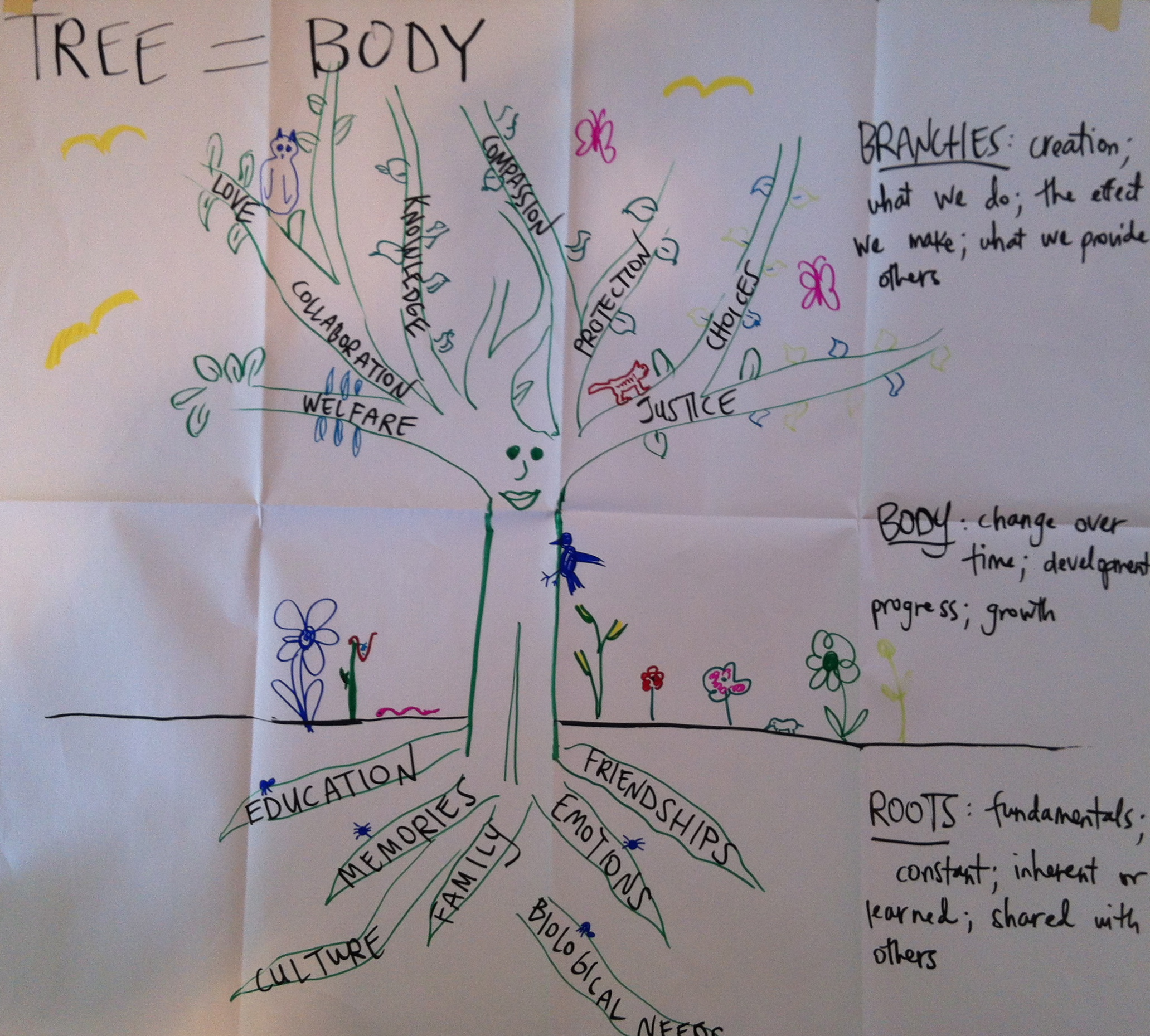
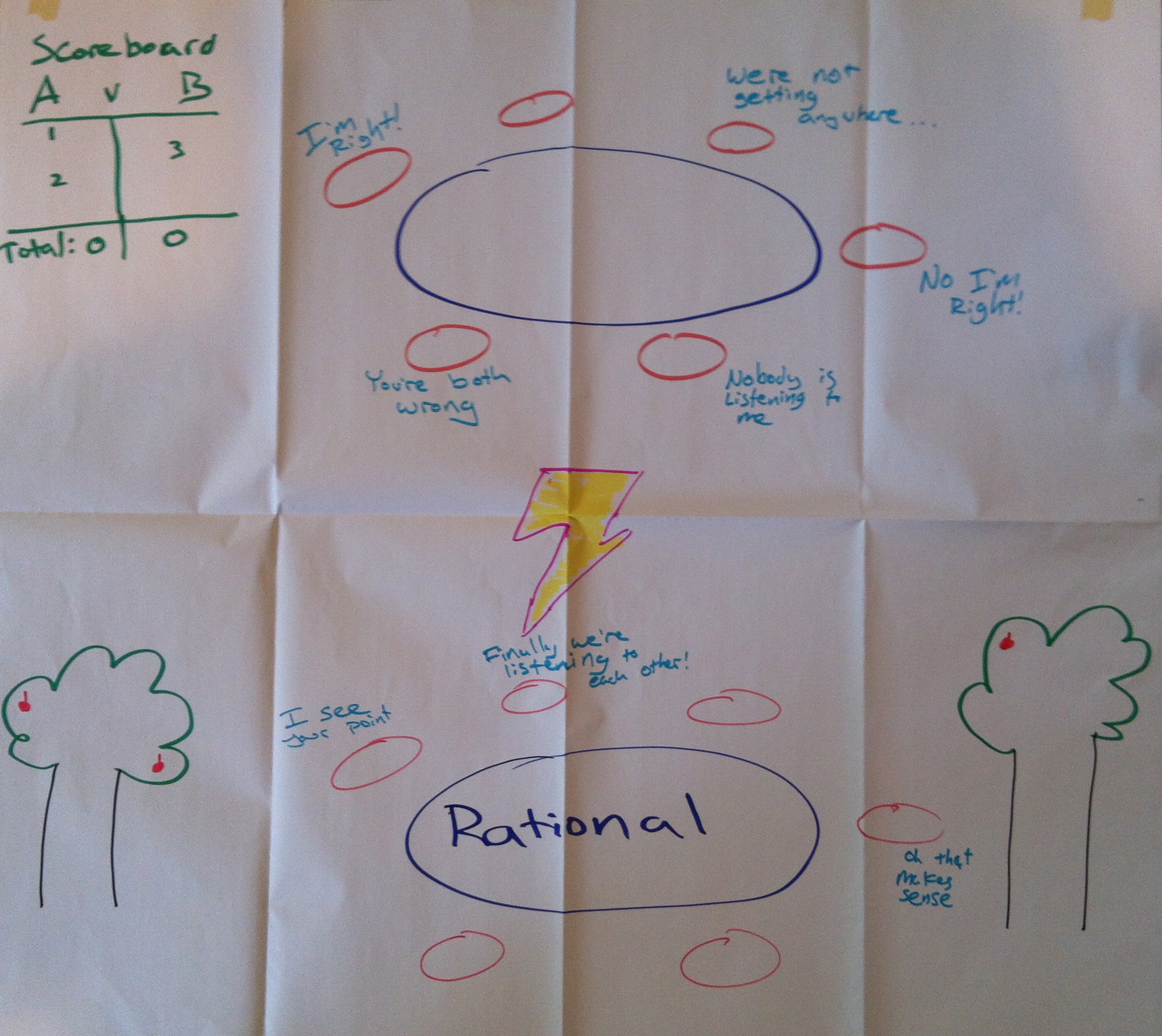
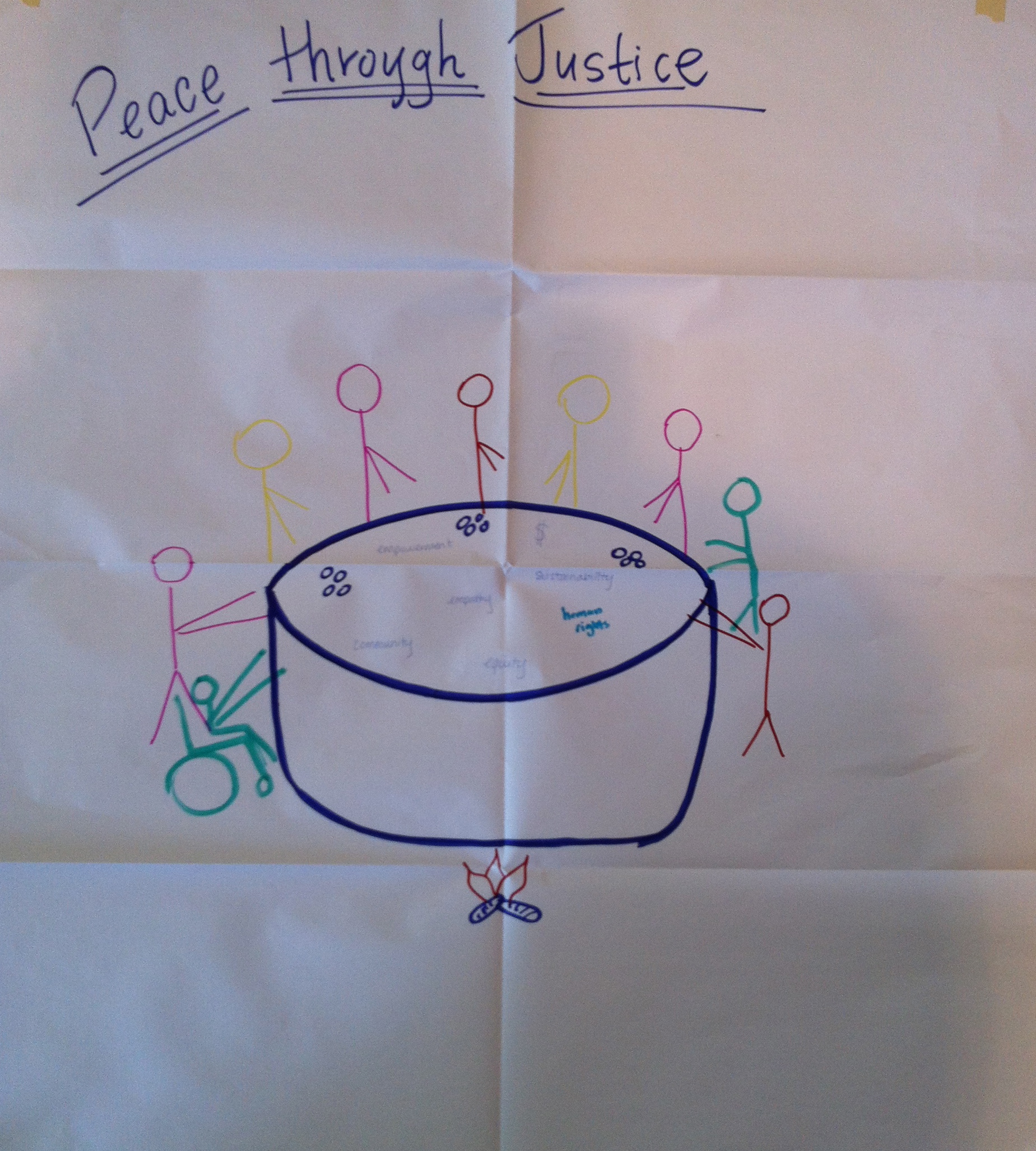
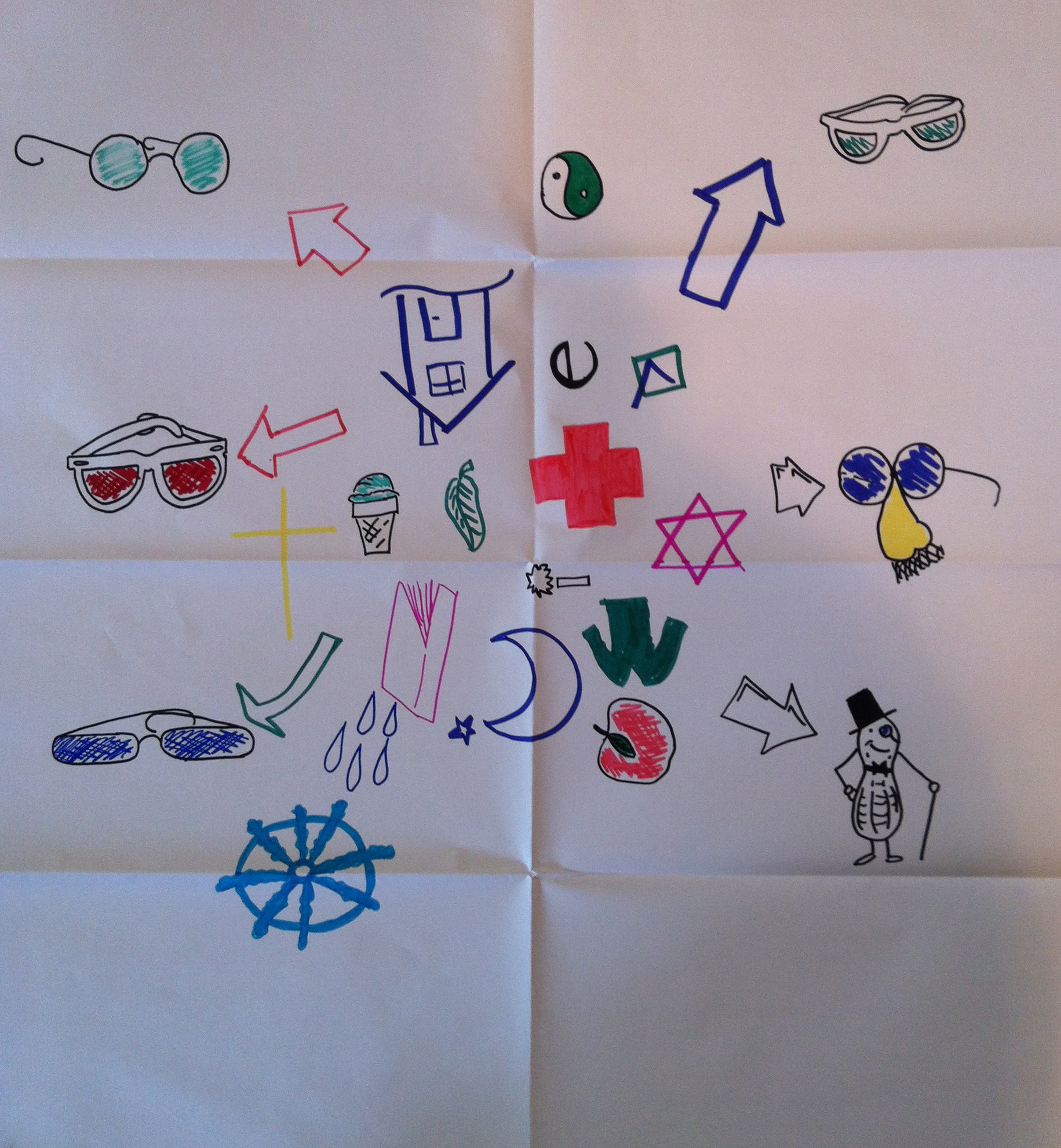
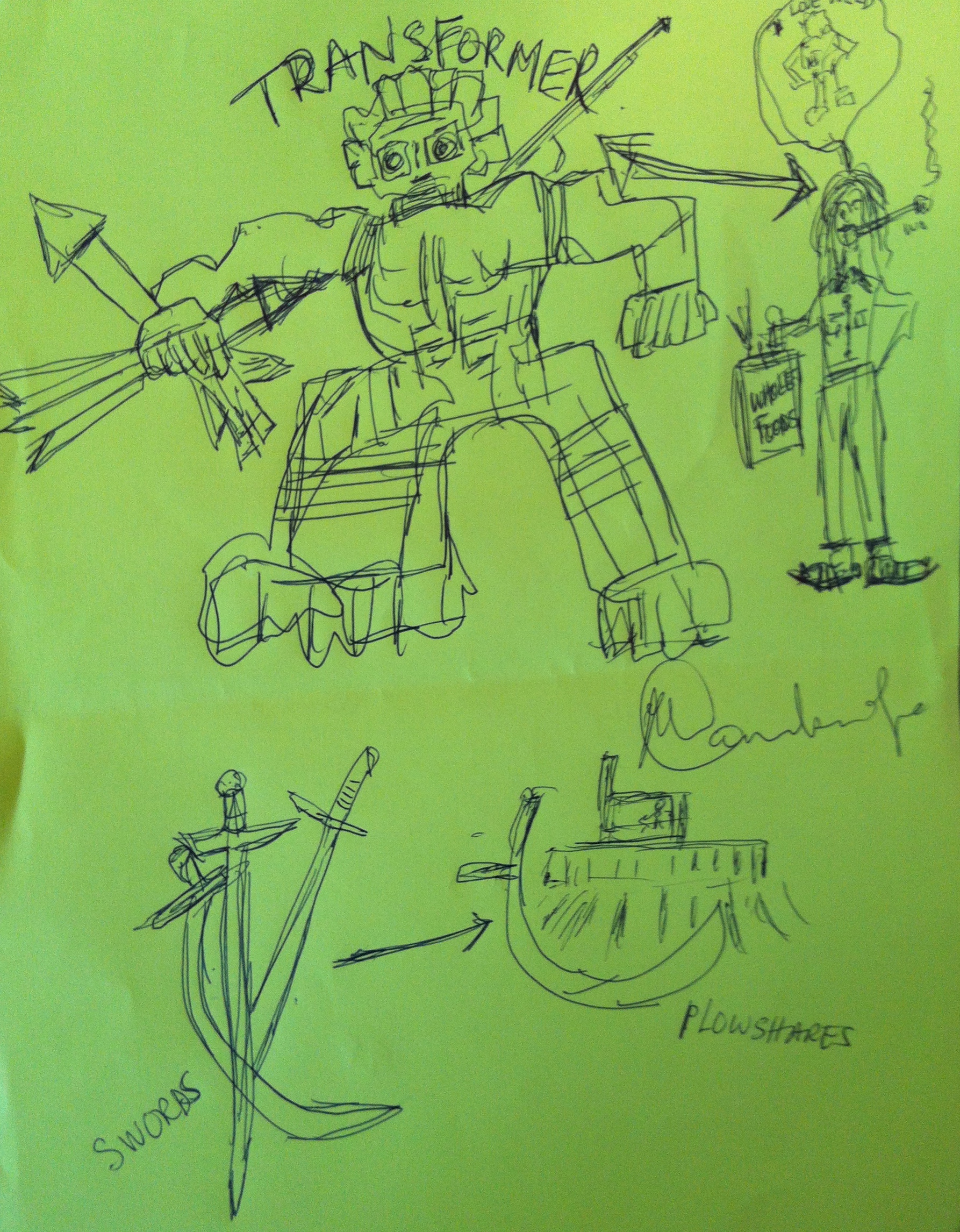
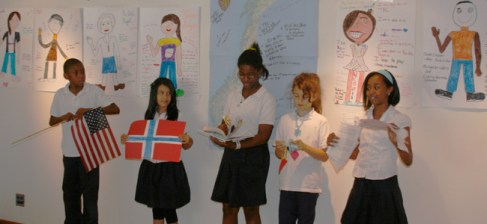
During our class on 09-19-12 we explored Ian Harris’ strategies for peace. The class broke up into groups based on which strategy for peace they felt most aligned with their worldview. Each groups was then tasked with creating a visual representation of that strategy. Here is what we created. The discussions of the artistic creations were quite enlightening.
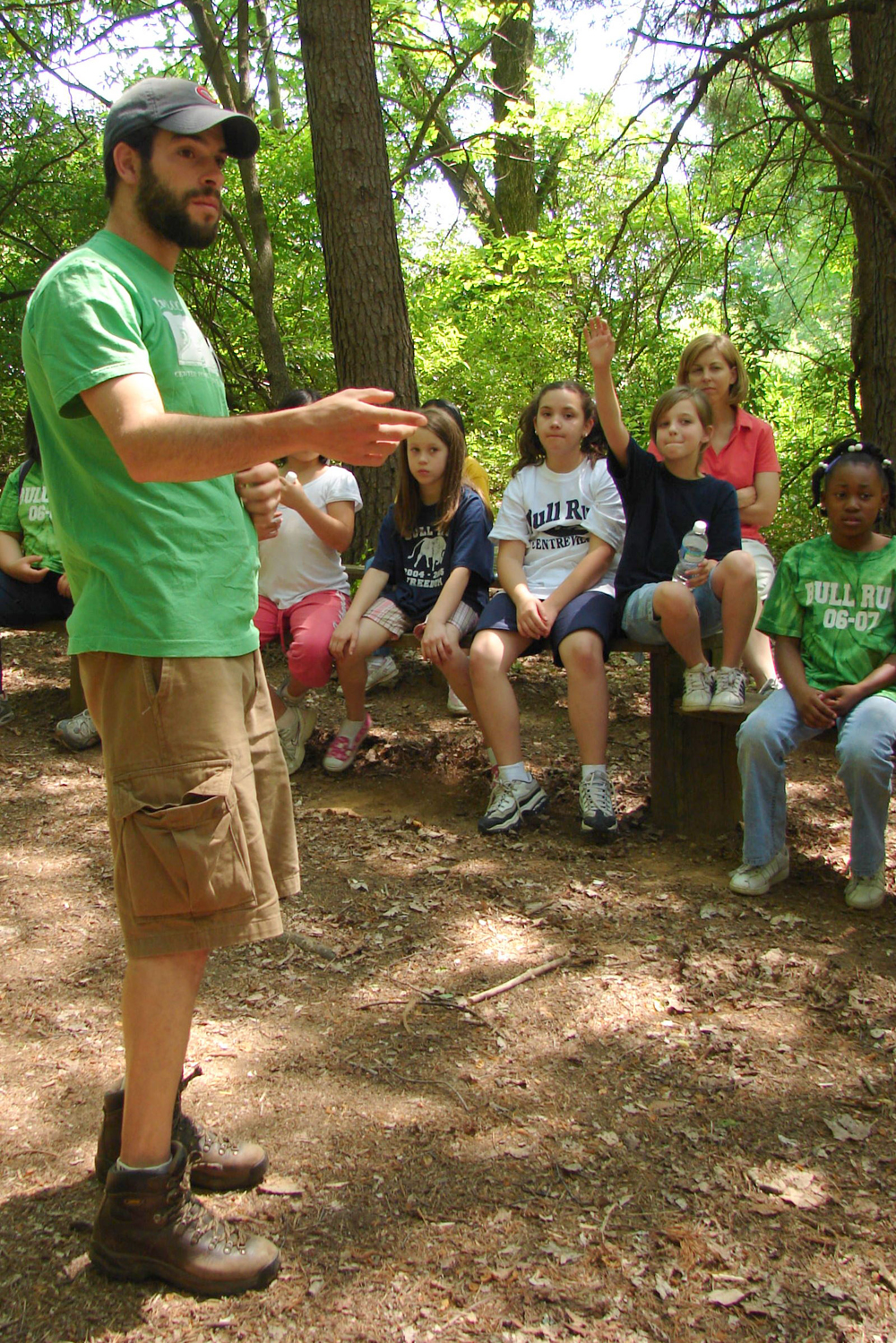
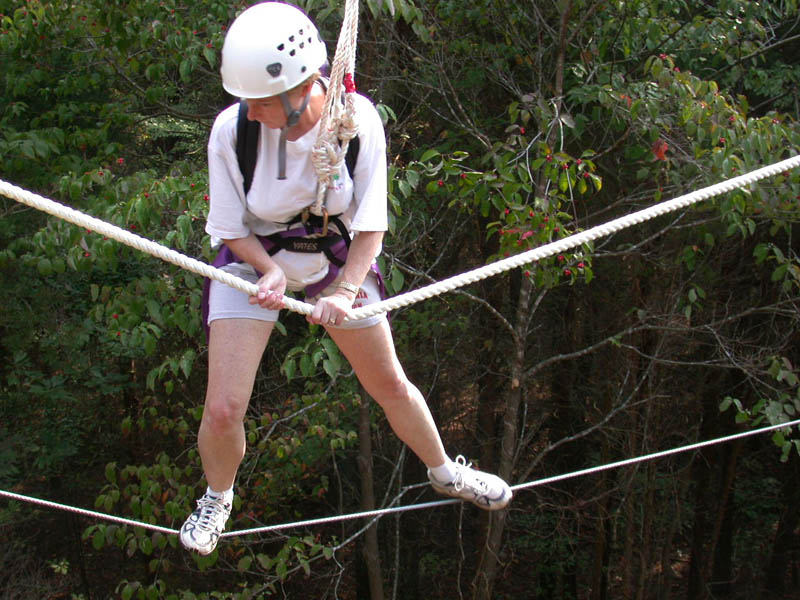
As we have learned in class, peace education is possible in many different venues, areas, as well as ways. But, one area that we may not even consider are places close to home. By this I mean our own campus at Mason! On the Prince William Campus there is a great tool that can be used for peace education called The EDGE. It is defined as an hands-on experiential learning, team building, and organizational training in the Northern Virginia/DC area.
The EDGE is a tool that could be used for any subject, age level or community, and it can also be used in a formal or informal setting. The staff at The EDGE is able to customize the experience based on the audience, and due to this dynamic feature it is able to be applied to a wide variety of educational settings. There are four main categories that groups are described as for their training: Professional, University, School, and Community.
For the Professional groups, the focus is on developing as individual professionals, growing as high functioning teams, and excelling as innovative organizations through the use of team building programs, professional development workshops, and consulting relationships.
For the University groups, the focus is on applying what is learned to everyday activities. This is done through experiences that will evolve into clear and effective communication, trust and relationship building, self-awareness, and a powerful shared experience.
For the School groups, the focus is on experiential learning done in small groups with facilitators who help students with the learning process through challenge course activities and the development of their thought processes as well.
For the Community groups, the focus is to “challenge members of the global community to better understand themselves, those around them, and their world by using innovative approaches that educate, inspire and empower.” This is done through various activities based on the Community Education program.
The overall goal of The EDGE is within their Mission Statement:
The EDGE challenges the members of the global community to better understand themselves, those around them, and their world by using innovative approaches that educate, inspire and empower.
The EDGE provides programs that will:
Energize your team with active and engaging programs
Develop skills for effective communication, collaboration and problem solving
Grow individual and group leadership functions through practical experience
Excel at identifying and capitalizing on your strengths for profound transformation
From personal experience, I have seen the effectiveness of The EDGE when I went there one Sunday afternoon with the National Pan-Hellenic Council members from Mason. We worked on building trust and an overall sense of community through out the afternoon in small groups. Even though all of our internal issues of the NPHC were not fixed in that one afternoon, it was definitely a foundation for what we have become today.
I used this resource as an example of peace education for our most recent paper we had assigned and became extremely interested in the program ever since.
The Embassy Adoption Program works with public schools in the Washington DC to bring global education to DC public schools through DC’s international community. Since 1974, the Embassy Adoption Program works with 5th and 6th graders to engage with the concept of global education in various classrooms. The concept of the program is that a certain class is “adopted” by an embassy, establishing a connection within the local and international community. Students will then spend an entire year engaged in programs that enhance in cultural competency, increase cultural communication skills, and help children understand local and global communication.
“Program highlights include classroom sessions, hosted by embassy representatives, field trips to gain hands-on experience with their adopted culture, a final presentation demonstrating acquired knowledge for the ambassador and embassy representatives, and mini United Nations event held between all DC public schools Embassy Adoption classrooms.”
This program is delivered towards the educational community within DC’s public schools. The Embassy Adoption Program demonstrates innovative practices in the field of global education and offers students a variety of challenging activities. Students are partnered up with community members that strive for a better and more globalized education. The classes that are chosen within the DC area expand in pedagogical boundaries by moving students outside of the classroom. The students are able to travel to cultural centers, museums, and also restaurants to gain experience with their “adopted” culture. This is a wonderful way to be globally inclined by allowing the youth to be engaged with others around the world and within the community.
I would think an educator would be extremely interested in this program, since it offers several different attributes toward global education. An educator would incorporate the concept of community building and the remaining pillars of peace education. Since the program already sets the attitude of being culturally inclined and allows students to engage with others in various environments aside from the classroom, the students should then gain a better understanding in peace education itself. In order to strengthen this resource, I strongly believe that the program be expanded outside the DC area. Several cities, aside from DC should be involved with the The Embassy Adoption Program because it offers students the wonderful opportunity to grasp various cultures and innovative surroundings.
Goals
Enhance students’ cultural competency
Increase cross-cultural communication skills
Aid students’ understanding of their local and global communities
Offer students a variety of challenging themes and programs
Partner with community members who demand better schools
The Embassy Adoption Program moves away from the mainstream or tradition approaches by allowing the students within the DC area to engage in cultural experiences with people abroad. The program places students in different communities and allows them to gain a life changing experience. It’s as if the students are having the great opportunity of studying abroad and understand cultural and global topics at such a young age. This displays the understanding that our time and generations have changed; we must transition to a more globally enhanced society.
The Embassy Adoption Program is a compelling opportunity that could only exist in the District of Columbia, and at DC Public Schools. It is an opportunity to expand students’ global understanding, increase interactive programming options, and continue on that road to becoming the highest performing urban district in the nation.
Two stakeholders that may be able to benefit from this post would be the DC school systems and specific students with the strive and motivation to be involved in the Embassy Adoption Program. This way, students in different regions throughout the US can partake in this this extraordinary program. My post will be able to reach out to the DC public system to attempt in changing the policy and allowing more regions to be involved in the program.
I had seen clips of the documentary the Interrupters on PBS a few times, but never got a chance to watch the full length of the movie. When I finally wanted to watch it, they weren’t airing it on T.V anymore. Luckily the PBS website had the full documentary online and for this blog I will give a summary of the movie and what I thought about it.
The documentary “The Interrupters” looks at the life of three Violence Interrupters and their work within a span of one year. These Violence Interrupters work with an organization called Ceasefire in the most conflict-reddened areas of Chicago, who try to protect these communities from violence that they were once a part of. The film was directed by Steve James, an acclaimed director known for his powerful portrayal and insight of communities and cultures in his movies and documentaries. Interrupters was filmed during a period of constant youth violence in parts of Chicago, in African American and Latino neighborhoods, and during a time when the United States had its eye on Chicago as a national symbol for the violence in our communities.
Founder of Ceasefire, Gary Slutkin, believes that the spread of violence in communities is similar to the spread of diseases and epidemics, “violence is like the great diseases of history…. violence as behavior, not as bad people.” For the young people in these neighborhoods, they see violence as their disease and they expect that they are going to die from this. Tio Hardiman, who created Ceasefires main program, “Violence Interrupters” explains that violence is a two-step process. The first thought is grievances; people come up with reasons to start a conflict for example, “He looked at my girl…he owes me money…he’s a Sunni…he’s a Palestinian, and so forth. The second thought is that these grievances justify the violence.” Tio, just like members of the Violence Interrupters has street credibility (because of his own personal history), which gives him full insight into the violence and minds of Chicago’s youth.
Violence Interrupters
The three Violence Interrupters that are followed throughout this documentary are Amina Matthews, Cobe Williams, and Eddie Bocanegra. Amina was the daughter of Jeff Ford, one of the biggest gang leaders in the history of Chicago. In the documentary Amina is what Tio calls the “golden girl,” she knows how to get them (the community youth) to open up. Being an ex-gang enforcer and one that has lived a life in shoot outs, she knows what its like to be a youth in these communities that are plagued by violence. Cobe Williams, scarred by his father’s murder, began a downwind spiral at the age of twelve. After being in and out of jail numerous times, Cobe decided to turn his life around with the help of his family. In the documentary we see that Cobe, with his humor and general good nature, “knows how to get in, he knows the language – what to say, when to say it.” Cobe too has big time credibility with the gang members because of his past, which allows him to easily insert himself within the conflict in order to resolve it. Last, but not least is Eddie Bocanegra, who is still daunted by the murder he committed at the age of seventeen. For him, his work with Ceasefire as a Violence Interrupter is a repentance for his past actions. Playing on his strength in art, Eddie is able to and concerned with spending majority of his time with young children affected by the aftermaths of violence. He teaches the children art, warns them of the trauma experienced by those who have come face to face with violence, and makes an effort to keep children off the streets and get them the support they need.
Throughout the documentary, the viewer is able to look into Ceasefire meetings and the conflicts that take place within the communities. Each Violence Interrupter has a past of their own, and each uses their history and knowledge of the streets to get closer to their goal, which is to “ stop the killing, and save a life.”
Youth
One of the first scenes we see is of a conflict-taking place right in front of the Ceasefire building. Amina Matthew quickly interrupts the conflict and has both groups separate. What is profound is that even a five-year-old girl was shouting profanities and getting involved in a conflict that had nothing to do with her. Later, Amina talks to some of the youth and is able to get them to open up through different forms of communication, one form being laughter. Amina explains, “If you get them to laugh at themselves- find that soft side, not their weak side, then you ride on that.”
In these streets the youth have been brought up with the notion that “you have to stand up no matter what happens… death before dishonor.” They have been taught violence, as violence is a learned behavior. One youth justifies, “If you don’t do it, they’re going to do it to you, you go hard or it’s your life.” They say all odds are against them, they have been brought up this way, they want to fight, and that history is up against them.
One scene in the documentary that was very overwhelming for me was a still shot of a wall of names, names of all who had been killed, murdered, and shot, and in one spot someone had written, “ I am next…” This shows how deep the youths mentality about violence is, and that they think they are stuck in it, when in reality in order to break out of it they have to find change within themselves and their peers. However, in a sense they find an honor in getting killed. They want to be known that they didn’t step down, that they fought and died, and that they know that when they die, they’ll get all the hype, both from the community and the media, that they have made normal around such drastic deaths.
Tio explains in the documentary that “Once media goes back to wherever they came from, we have to step up to the plate and make something happen up over there.” He is aware that a lot of the violence isn’t gang violence, its interpersonal conflict that deals with respect and disrespect, not being accepted in an overall society where a lot of people are ostracized, and so they try to dominate their societies. Their actions go from “zero to rage in thirty seconds” and they act out because of something that upset them earlier in their day. With this kind of anger and violence, Tio explains that they cannot mediate the conflict without full confrontation. As the documentary comes to a close, Tio explains that African American and Latino communities have been beaten for so long with poor schools, lack of jobs, hopelessness, and despair that it is “hard for people to stick with peace if they don’t have a stick that they can hold on to.”
Analysis
Although this documentary looked at the violence in Chicago communities as a whole, it also focused on specific youth whom Aminah, Cobe, and Eddie personally intervened with; Capyrsha Anderson, Lil Mikey, Flamo, Vanessa Villalba, and Kenneth. Along with these young adults, Ceasefire was able to prevent numerous outburst of violence to occur in their communities. Its impact was beyond substantial. These Violence Interrupters were right there with each act of violence from the beginning to the end, and used their knowledge and insightfulness to the best of their ability to reduce the tension of the conflicts. Each young adult the Violence Interrupters assisted have taken a full 360 in changing their lives, sometimes all one angry person needs is someone right there beside them to show them the right path.
Watching this documentary made me realize that these communities have been “brain –washed” into believing that violence is the only way to solve a conflict. However, when they have member of Violence Interrupters come in and show them alternative options, it opens up a number of other possibilities for them, with a less drastic cost that wont end up affecting them for the rest of their lives.
I could definitely see myself incorporating this type of intervention and peace education into my practice. It is always useful to have those who are knowledgeable of a conflict come in and help resolve a conflict. What I liked the most was that each Violence Interrupter had a violent past of their own which they rid themselves of, and they knew exactly what was going on in the minds of the youth. Because of their insightfulness, they were able to assist the community and individual youths to a level of nonviolence.
Stakeholders:
Stakeholders that I believe will be able to benefit from my post are anyone who lives in a community that violence plays a big role in. For older community members, this type of intervention and peace education would assist their communities to a level of nonviolence for the youth.
As a Global Affairs major, I was really interested in finding a blog topic that had a global approach and perspective to peace education. Through searching on the web, I found this amazing organization called UNOY (The United Network of Young Peacebuilders). UNOY (prounounced ‘you know why’) is a global network of young people and youth organisations committed to establishing peaceful societies. They have been around since 1989 and are based in the Netherlands. they consist of 49 member organizations in Africa, Asia, Europe, Latin America and North America.
UNOY’s mission is ” to link up young people’s initiatives for peace in a global network of young peacebuilders, to help empower their capacities and to help increase the effectiveness of their actions” They achieve this goal by implementing a wide range of activities in each of their main areas: advocacy and campaigning, capacity building and gender. UNOY believes that young people are an essential part of peacebuilding because:
Some projects that UNOY has implemented in 2012 include, the Educating for Peace seminar that brings together members from all over the world, the Peace of Mind educational program for students, and training courses on peace building. Members even traveled to Colombia, Argentina, and Nepal where they were able to teach workshops on issues such as human rights, democracy and gender to youth there!
This organization caters to a wide range of peace educators and students alike. UNOY has created excellent resources that can be incorporated into a classroom or community setting for youth. The beauty of UNOY is that the wide array of projects it creates can be applied in a global AND local context. Most importantly, UNOY gives young people the opportunity to get involved!!! I would especially recommend checking out their volunteer programs if you’re interested in working on an international level 😉 Through its broad scope of activities and projects, UNOY teaches youth the necessary skills and tools needed to become peacemakers in their own communities.
A clip describing one of UNOY’s projects in collaboration with other international youth organizations:
I was surfing the web to try to find a new and interesting peace project to share with everyone. I came across an article on Words of Peace Global website. This website tells its audience about things that are going on the world, as well as events, webcasts, and television schedules on several continents.
The article that I found talked about a specific peace education program that came into the Dominguez State Prison in San Antonio, Texas. The major finding in the article was that for the inmates that attended the workshop, there was only a 1% that returned to the prison.
This program is based off of Prem Rawat’s message of peace. Rawat has is own foundation called The Prem Rawat Foundation or TPRF. His message is simple. “Peace needs to be in everyone’s life. The peace we are looking for is within. It is in the heart, waiting to be felt. It is not the world that needs peace; it is people. When people in the world are at peace within, the world will be at peace.”
For four years volunteers for the TPRF program have taught workshops at the Dominquez Prison. The Captain of the Prison, Captain Carter is the head of the Correctional Officers and Volunteer Services. He was quoted in an interview by saying, “The offenders who attend the program, their disciplinary record has gone down. They stay out of trouble. It has a positive impact on everyone who attends the class. It is one of my best classes because of the attendance rate and the turnout. Of the seven that I have, this is by far the best.”
I think it is important for inmates to learn the meaning of peace. The reason prisons are full of prisoners is because they have committed acts that are not viewed as peaceful. Giving the prisoners something to believe in and something to strive for is something that is so important in their rehabilitation. Most people do not realize the amount of rehabilitation that goes into the prisoner’s stay in prison. A lot of the inmates in prison will be released after they serve their time. Allowing them an opportunity to learn about peace, and how they can bring it into their life is important.
On the Words of Peace website there is an interview from the Captain, which I think is something worthwhile to watch.
I found this very short video on YouTube. They do sell the full video online at a cost. My inspiration for choosing this specific one was the fact that in my elementary school there were numerous bullies and certain kids were targeted.
Context
Although the video only lasts a little over four minutes it does hit some key points. I feel it would be best placed in a certain grade level. That grade level would be 1st grade-4thgrade. It’s important that young kids learn how to solve their problems effectively and efficiently. I wish I had been able to learn these type of skills in at a younger age than I did. I feel it would have been beneficial for me but for others as well. At the end of the day, I do feel that they fit better in the Montessori setting, rather than the public school system.
Implementation: I understand that there is a purpose to Montessori schools compared to public schools. My implementation would be to take the peace education section and somehow implement it in the public school place. As far as getting ready and prepared to teach this, the teacher from the Montessori school could do a workshop with the public school teacher and walk her through the steps. When it comes to time preparation, perhaps 10-15 hours of training for each teacher would be appropriate. I think a great way to do that, would be to cut out an hour a week and focus on peace education. I think it would be very beneficial. When it comes to the use of pedagogies, I think that using the allotted time and real time situations would be successful. During the allotted time, they could learn the material and substance. In real time, if there was an incident, they could be reminded of what they have learned and hopefully use it.
Goal- I think the basics of peace education are most supported.This would be very beneficial for these young kids to learn. Even though it wouldn’t go to far into detail, the students would learn numerous skills and knowledge. They would learn about self-awareness, environmental awareness, cultural awareness, and community awareness. By learning bits and pieces of each of those, hopefully they would be able to learn more about them selves and others. At the end of the day, they will hopefully be able to be more aware of their surroundings and adapt to them better. They will learn to be responsible and take responsibility for their actions as well.
Audience- I sent this to a past teacher of mine from Elementary school and a neighbor from home who specializes in youth peer mediation training.
While surfing the internet on Peace Education programs, I came across Teachers without Borders. I began to read what this program was about and I was instantly intrigued. The first thing that caught my eye on the website was the quote “helping teachers promote peace in their classrooms and communities.” Teachers without Borders is a program that focuses on getting peace education into classrooms all around the world.
The mission of Teachers without Borders is “Teachers without Borders connects teachers to information and each other to create local change on a global scale.”
Teachers without Borders is directed at educators and is a program that can be utilized within the classroom. The site has an entire page dedicated to teacher programs and can be found here: http://teacherswithoutborders.org/programs/teacher-programs
I think that this program can be implemented by teachers in schools because if they read up on and follow the techniques talked about on the website they could use it and make drastic changes. I think the first step in peace education is getting more teachers on board and exposing them to what peace education is all about. The more willing educators are to expose themselves and their students to peace education the easier it will become to spread peace not only in local communities, but communities around the world.
Not only would teachers benefit from this program, but students would too! The students can discover new knowledge and skills through Teachers without Borders, and although it may take a little more time it would be well worth it because they’re developing new techniques. Aside from Teachers without Borders being for educators and students there is also a need for volunteers which are just as important.
There are so many programs right in front of educators, so why isn’t Peace Education a more prevalent subject? For any educators or students that come across this blog, check out http://teacherswithoutborders.org/ now!
I stumbled on the One World Youth Project website while looking online for information for another assignment. However, I was very happy I did after reading more about the project.
One World Youth Project (OWYP) was founded in 2004 by then 18 year-old Jess Rimington as a link between her high school in Massachusetts, USA and a school in Addis Ababa, Ethiopia. The project seeks to effectively respond to global change. Due to global change there is unprecedented migration and the world is experiencing a digital revolution. However, schools around the globe are not preparing youth for the interconnected world. OWYP feels that those prepared to operate within this reality will see this interconnection as an opportunity and those not prepared will see this changing landscape as a threat.
To prevent this threat, One World Youth Project links schools around the world to build mutual respect and understanding among students and provide them with global life skills needed for success in the interconnected 21st century. This is done by the organization establishing a link between education systems. With each partner university, OWYP establishes a service-learning program-a One World Hub-on their campus for the benefit of their students as well as the surrounding secondary school system. OWYP provides a series of trainings that prepare university students as facilitators of cultural exchange between local secondary school classrooms and other OWYP classrooms abroad. After this training, the university students lead a Global Citizenship curriculum in local secondary schools, preparing the younger generation for the interconnected 21st century.
The fact that the OWYP is tailored for college students to help 6th through 12th grade secondary school students is perfect. These secondary students will feel more at ease with the college students, and the college students also get a chance to learn. For a year in a formal education setting the secondary school students learn through deep reflection on intercultural communication, as well as local and global leadership.
Ways to use this resource:
The teacher is ultimately allowing a college student to come in once a week and facilitate this communication for a year (2 semesters). The secondary school students connect with other classrooms abroad through video, voice, letters and the Internet. While students move through the facilitated program once a week in their classroom, their partner peers in the abroad classroom do the same. This connection allows for deep reflection on and constant collaborative investigation of intercultural communication.
The first semesters curriculum focuses on giving students the tools to understand their own cultures and begin the process of exchanging and communicating across cultures. From there the lessons move to issues of global connections and development by introducing the ways in which goods and systems flow around the world and to the concept of the UN and the Millennium Development Goals. Using these tools, students will identify issues in their communities and create plans to address these issues.
As the students move into the second semester with OWYP, students will continue to learn about ways to communicate with people in other cultures by analyzing different forms and systems of communication. Then they will be prepared to participate in collaborative dialogues to create change by identifying key community players and exploring ways to engage them in conversations around community issues. As students move through the program, these plans will turn into actionable service learning projects.
I think it would also be beneficial if the college students that come to facilitate also have one on one time with the students too. They could interact in dialogue or the college student could facilitate experiential learning activities so that the secondary students are also learning from the older college student too.
If a teacher wanted to set up a One World hub at a University near their school, or to find out if one is already established, they could email info@oneworldyouthproject.org.
The end goal of OWYP is to create a just world built through the actions of empowered, discerning and empathetic generations of global citizens. OWYP hopes to accomplish this by facilitating intercultural communication between students of different backgrounds. This type of peace project supports one of the seven pillars of peace education, community building. This pillar focuses on finding things that unite and bind us together as a group, while at the same time respecting and celebrating our differences. Allowing students from different backgrounds to communicate across borders will create a new understanding of what makes them both different and similar. Students that engage in the program will become well-rounded citizens that are able to operate in a diverse world.
This past week was the Persian New Year. Nowruz literally meaning “a new day,” is an ancient international festival celebrating both the arrival of spring and the beginning of the New Year for those who celebrate it. It brings with it the season of blossoming and renewal, happiness, celebration, traditions, and reminds us of our rich and vibrant culture. Afghans, Azeris, Georgians, Iraqis, Kazakhs, Kurds, Persians, Russians, Tajiks, Tatars, Uzbeks, and Ukrainians and other people of the West, Central Asia and the Caucasus celebrate Nowruz.
Today, numerous nations, peoples and tribes welcome it as an occasion for reaching out not only to family and friends, but to the less privileged in their midst – it is truly a day for all humanity. Being a part of the Afghan youth, I have a keen interest in the youth of those back home. It is the youth of a nation that will determine its future, I believe as a global community we should be invested in the lives of Afghani youths so to produce a better livelihood for the people in Afghanistan. The war in Afghanistan has had a negative effect on Afghan children, who have been exposed to extreme levels of violence and often see aggression as the primary means to resolve conflict. It should be in the best interest of the international community to improve the lives of children in Afghanistan, starting with equipping them with a proper education, especially peace education, to help them improve their livelihoods. Hence, I decided to write my blog of some of the organizations and projects I have heard about that promote peace education in Afghanistan and help those who are less fortunate.
Skateistan
Skateistan is a Kabul-based Afghan NGO, which is “non-political, independent, and inclusive of all ethnicities, religions and social backgrounds.”
Skateistan uses skateboarding, as a tool for empowerment in places skateboarding hasn’t existed before. It gives young people a voice and local people agency to shape projects according to their needs.
I first heard of Skateistan through social media. A friend had posted a video of Skateistan efforts in Afghanistan and it blew me away. It was an empowering video that showed how such a simple thing as skateboarding, which is so common to many youths around where I live, brought a smile to young girls and boys faces. It gave them an escape from the chaos that was occurring around them, and I was so happy to see these children actually be kids for just a few minutes.
Skateboarding in Afghanistan
Skateistan started in 2007 when two Australian skateboarders dropped their boards in Kabul. Soon enough, they were surrounded by the eager faces of children of all ages who wanted to learn how to skate. Stretching out the three boards they had brought with them, they developed a small skate school.
A group of young Afghans around the age of 18 to 22 became naturals at skateboarding, sharing the three boards and making it a popular sport amongst the youth. The founders’ success with their first students prompted them to think bigger. They brought more boards back to Kabul and established an indoor skateboarding venue allowing them to teach many more youth, and also be able to provide older girls with a private facility to continue skateboarding. On October 29, 2009, Skateistan completed construction of an all-inclusive skate park and educational facility on 5428 square meters of land donated by the Afghan National Olympic Committee.
Skateistan has emerged as Afghanistan’s first skateboarding school, and is dedicated to teaching both male and female students. It aims to build indoor and outdoor skateboarding facilities in which youth can come together to skateboard: “here, they forge bonds that transcend social barriers. Here, they’re enabled to affect change on issues that are important to them.”
How is this important to peace education?
This is important to peace education because it teaches students a new way of interacting with one another, teaching one another, and trusting one another. It gives them a safe haven in a land that has been tormented for years. It allows them to focus their energy on something positive and something that makes them happy.
The Afghan Education Peace Foundation
The Afghan Education Peace Foundation, (AEPF) a New York City based NGO, seeks to strengthen the security of the United States by rebuilding the economic and social infrastructure of Afghanistan. AEPF sponsors the education of Afghanistan’s best and brightest students in American high schools, community colleges and universities who will return to Afghanistan to contribute their new skills to the reconstruction. A stable and prosperous Afghanistan is key to American national security.
What Afghan Education Peace Foundation Plans to Envision in the coming years…
v Eliminating ideological extremism and acts of terrorism
v Reinforcing U.S. national security by ensuring the political, social and economic stability of Afghanistan and the region
v Equipping Afghan students with the skills they need to contribute to the reconstruction
v Creating the future business and political leaders of Afghanistan
v Promoting gender equality in education and the role of women in Afghanistan’s future
v Broadening the global view of Afghan students and dispelling myths about the West and Westerners
v Broadening American students’ perception of Afghanistan and its people
v Building, nurturing and enhancing cross cultural dialogue between the United States and Afghanistan
v Promoting Afghanistan’s economic prosperity, a higher quality of life, and greater connectedness with the global economy
Advancing Peace Education in Afghanistan
The United State Institute of Peace (USIP) Grant Program has supported Help the Afghan Children (HTAC) to administer a peace education program at seven middle schools in Samangan Province in northern Afghanistan. The program has been able to educated a total of 2,800 male and female students, trained 315 teachers, and delivered a comprehensive community approach to peace education using performance metrics and paired comparison data to promote long-term impact and project sustainability.
The results of such an effort have been tremendous. The average number of observable conflicts, such as fighting, harassment, and bullying, between students has decreased from 3,457 per month to 345 per month, a 93 percent reduction. Additionally, the average number of observed potential conflicts resolved peacefully between students increased from 100 per month to 2,960 per month. Furthermore, the number of teachers observed consistently modeling peace education behaviors increased by 95 percent. While the immediate effects of training are evident in how children behave in school, the Institute is investing in behavioral change that improves the odds that Afghan youth will apply non-violent strategies to resolve conflicts over the longer term, ultimately contributing to a more peaceful society.
Peace education has wide-ranging impacts across the local community, particularly on the parents of participating students. Seven hundred and fifty parents attended a training session to learn the tenets of peace education and how to implement these values at home, providing students a comprehensive learning environment and a community support structure.
To address long-term sustainability, HTAC also began developing a Peace Education Model that identifies key characteristics and features for the expansion of peace education across Afghanistan. HTAC’s important and diligent work has earned them the support of the Afghanistan Ministry of Education, which will become an integral partner in future endeavors.



 Peace Learner